

Recognizing Sustainability in a University Campus …
773
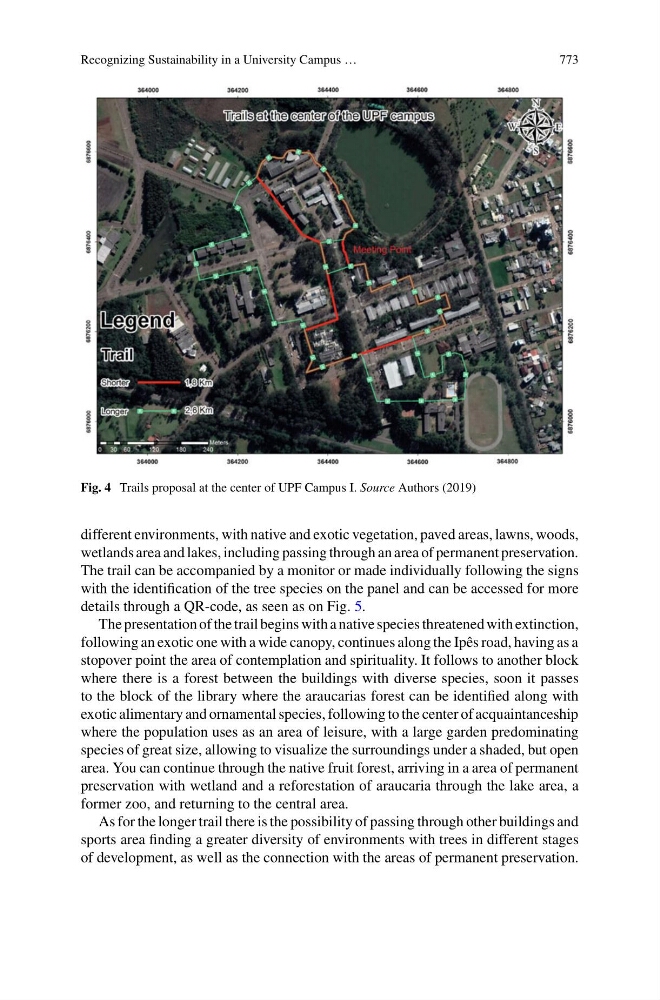
Fig. 4 Trails proposal at the center of UPF Campus I. Source Authors (2019)
different environments, with native and exotic vegetation, paved areas, lawns, woods,
wetlands area and lakes, including passing through an area of permanent preservation.
The trail can be accompanied by a monitor or made individually following the signs
with the identification of the tree species on the panel and can be accessed for more
details through a QR-code, as seen as on Fig. 5.
The presentation of the trail begins with a native species threatened with extinction,
following an exotic one with a wide canopy, continues along the Ipês road, having as a
stopover point the area of contemplation and spirituality. It follows to another block
where there is a forest between the buildings with diverse species, soon it passes
to the block of the library where the araucarias forest can be identified along with
exotic alimentary and ornamental species, following to the center of acquaintanceship
where the population uses as an area of leisure, with a large garden predominating
species of great size, allowing to visualize the surroundings under a shaded, but open
area. You can continue through the native fruit forest, arriving in a area of permanent
preservation with wetland and a reforestation of araucaria through the lake area, a
former zoo, and returning to the central area.
As for the longer trail there is the possibility of passing through other buildings and
sports area finding a greater diversity of environments with trees in different stages
of development, as well as the connection with the areas of permanent preservation.
773
Fig. 4 Trails proposal at the center of UPF Campus I. Source Authors (2019)
different environments, with native and exotic vegetation, paved areas, lawns, woods,
wetlands area and lakes, including passing through an area of permanent preservation.
The trail can be accompanied by a monitor or made individually following the signs
with the identification of the tree species on the panel and can be accessed for more
details through a QR-code, as seen as on Fig. 5.
The presentation of the trail begins with a native species threatened with extinction,
following an exotic one with a wide canopy, continues along the Ipês road, having as a
stopover point the area of contemplation and spirituality. It follows to another block
where there is a forest between the buildings with diverse species, soon it passes
to the block of the library where the araucarias forest can be identified along with
exotic alimentary and ornamental species, following to the center of acquaintanceship
where the population uses as an area of leisure, with a large garden predominating
species of great size, allowing to visualize the surroundings under a shaded, but open
area. You can continue through the native fruit forest, arriving in a area of permanent
preservation with wetland and a reforestation of araucaria through the lake area, a
former zoo, and returning to the central area.
As for the longer trail there is the possibility of passing through other buildings and
sports area finding a greater diversity of environments with trees in different stages
of development, as well as the connection with the areas of permanent preservation.