

626
V. T. da Rocha et al.
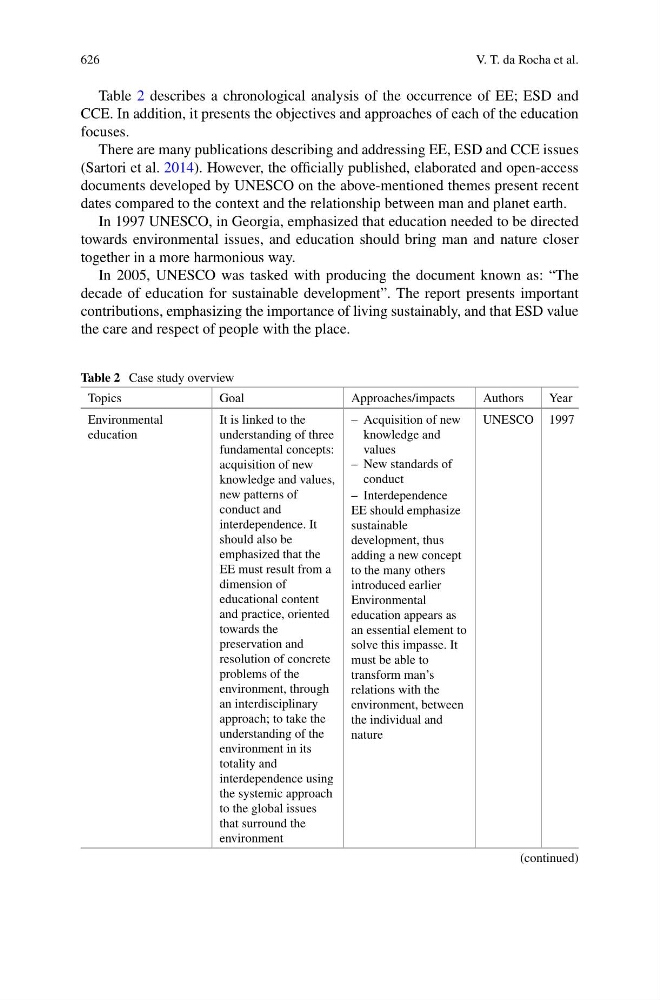
Table 2 describes a chronological analysis of the occurrence of EE; ESD and
CCE. In addition, it presents the objectives and approaches of each of the education
focuses.
There are many publications describing and addressing EE, ESD and CCE issues
(Sartori et al. 2014). However, the officially published, elaborated and open-access
documents developed by UNESCO on the above-mentioned themes present recent
dates compared to the context and the relationship between man and planet earth.
In 1997 UNESCO, in Georgia, emphasized that education needed to be directed
towards environmental issues, and education should bring man and nature closer
together in a more harmonious way.
In 2005, UNESCO was tasked with producing the document known as: “The
decade of education for sustainable development”. The report presents important
contributions, emphasizing the importance of living sustainably, and that ESD value
the care and respect of people with the place.
Table 2 Case study overview
Topics
Goal
Approaches/impacts
Authors
Year
Environmental
education
It is linked to the
understanding of three
fundamental concepts:
acquisition of new
knowledge and values,
new patterns of
conduct and
interdependence. It
should also be
emphasized that the
EE must result from a
dimension of
educational content
and practice, oriented
towards the
preservation and
resolution of concrete
problems of the
environment, through
an interdisciplinary
approach; to take the
understanding of the
environment in its
totality and
interdependence using
the systemic approach
to the global issues
that surround the
environment
– Acquisition of new
knowledge and
values
– New standards of
conduct
– Interdependence
EE should emphasize
sustainable
development, thus
adding a new concept
to the many others
introduced earlier
Environmental
education appears as
an essential element to
solve this impasse. It
must be able to
transform man’s
relations with the
environment, between
the individual and
nature
UNESCO 1997
(continued)
V. T. da Rocha et al.
Table 2 describes a chronological analysis of the occurrence of EE; ESD and
CCE. In addition, it presents the objectives and approaches of each of the education
focuses.
There are many publications describing and addressing EE, ESD and CCE issues
(Sartori et al. 2014). However, the officially published, elaborated and open-access
documents developed by UNESCO on the above-mentioned themes present recent
dates compared to the context and the relationship between man and planet earth.
In 1997 UNESCO, in Georgia, emphasized that education needed to be directed
towards environmental issues, and education should bring man and nature closer
together in a more harmonious way.
In 2005, UNESCO was tasked with producing the document known as: “The
decade of education for sustainable development”. The report presents important
contributions, emphasizing the importance of living sustainably, and that ESD value
the care and respect of people with the place.
Table 2 Case study overview
Topics
Goal
Approaches/impacts
Authors
Year
Environmental
education
It is linked to the
understanding of three
fundamental concepts:
acquisition of new
knowledge and values,
new patterns of
conduct and
interdependence. It
should also be
emphasized that the
EE must result from a
dimension of
educational content
and practice, oriented
towards the
preservation and
resolution of concrete
problems of the
environment, through
an interdisciplinary
approach; to take the
understanding of the
environment in its
totality and
interdependence using
the systemic approach
to the global issues
that surround the
environment
– Acquisition of new
knowledge and
values
– New standards of
conduct
– Interdependence
EE should emphasize
sustainable
development, thus
adding a new concept
to the many others
introduced earlier
Environmental
education appears as
an essential element to
solve this impasse. It
must be able to
transform man’s
relations with the
environment, between
the individual and
nature
UNESCO 1997
(continued)