

438
D. Vanegas and M. Bose
Neighborhood Name
N’hood Origin
Participants
_
Nueva Gloria
Santa Cecilia
Los Almendros
Informal
Informal
Informal
84
85
84
1
2
3
Ciudad Bachue I Etapa
Nueva Tibabuyes
Ciudadela El Recreo II
Osorio II
Formal
Formal
Formal
Formal
74
75
64
65
1
2
3
4
Total (n)
531
_
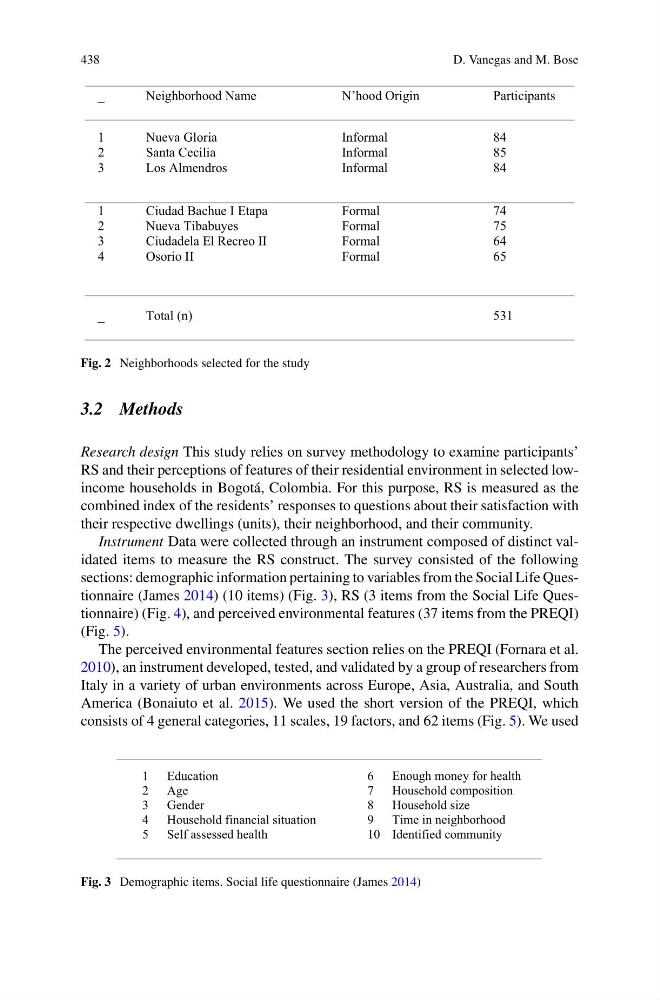
Fig. 2 Neighborhoods selected for the study
3.2 Methods
Research design This study relies on survey methodology to examine participants’
RS and their perceptions of features of their residential environment in selected lowincome households in Bogotá, Colombia. For this purpose, RS is measured as the
combined index of the residents’ responses to questions about their satisfaction with
their respective dwellings (units), their neighborhood, and their community.
Instrument Data were collected through an instrument composed of distinct validated items to measure the RS construct. The survey consisted of the following
sections: demographic information pertaining to variables from the Social Life Questionnaire (James 2014) (10 items) (Fig. 3), RS (3 items from the Social Life Questionnaire) (Fig. 4), and perceived environmental features (37 items from the PREQI)
(Fig. 5).
The perceived environmental features section relies on the PREQI (Fornara et al.
2010), an instrument developed, tested, and validated by a group of researchers from
Italy in a variety of urban environments across Europe, Asia, Australia, and South
America (Bonaiuto et al. 2015). We used the short version of the PREQI, which
consists of 4 general categories, 11 scales, 19 factors, and 62 items (Fig. 5). We used
Education
Age
Gender
Household financial situation
Self assessed health
1
2
3
4
5
Enough money for health
Household composition
Household size
Time in neighborhood
Identified community
6
7
8
9
10
Fig. 3 Demographic items. Social life questionnaire (James 2014)
D. Vanegas and M. Bose
Neighborhood Name
N’hood Origin
Participants
_
Nueva Gloria
Santa Cecilia
Los Almendros
Informal
Informal
Informal
84
85
84
1
2
3
Ciudad Bachue I Etapa
Nueva Tibabuyes
Ciudadela El Recreo II
Osorio II
Formal
Formal
Formal
Formal
74
75
64
65
1
2
3
4
Total (n)
531
_
Fig. 2 Neighborhoods selected for the study
3.2 Methods
Research design This study relies on survey methodology to examine participants’
RS and their perceptions of features of their residential environment in selected lowincome households in Bogotá, Colombia. For this purpose, RS is measured as the
combined index of the residents’ responses to questions about their satisfaction with
their respective dwellings (units), their neighborhood, and their community.
Instrument Data were collected through an instrument composed of distinct validated items to measure the RS construct. The survey consisted of the following
sections: demographic information pertaining to variables from the Social Life Questionnaire (James 2014) (10 items) (Fig. 3), RS (3 items from the Social Life Questionnaire) (Fig. 4), and perceived environmental features (37 items from the PREQI)
(Fig. 5).
The perceived environmental features section relies on the PREQI (Fornara et al.
2010), an instrument developed, tested, and validated by a group of researchers from
Italy in a variety of urban environments across Europe, Asia, Australia, and South
America (Bonaiuto et al. 2015). We used the short version of the PREQI, which
consists of 4 general categories, 11 scales, 19 factors, and 62 items (Fig. 5). We used
Education
Age
Gender
Household financial situation
Self assessed health
1
2
3
4
5
Enough money for health
Household composition
Household size
Time in neighborhood
Identified community
6
7
8
9
10
Fig. 3 Demographic items. Social life questionnaire (James 2014)