

respectively, with an ensuing drop in the pH values. A slight acidification of the bulk
material is often observed at the onset of the decomposition (Gajalakshmi and
Abbasi 2008; Manderson 2009); however, this is a transient phenomenon as the
pH rises again to sub-neutral values when organic acids are further utilized by
microbes, and CO 2 is removed by aeration (Fig. 23.2).
When the temperatures rise above 40–45
C, thermotolerant and thermophilic
microbes begin to thrive in the substrate mixture, gradually outnumbering the
mesophilic ones (Fig. 23.1). During this second stage, which is called thermophilic
phase and is considered the distinctive feature of composting, the temperature can
reach values as high as 65–70
C for a period of days to weeks. The length of this
phase and the temperature attained are largely dependent on the composting system
having been adopted, the composition of the starting material, and the aeration
regimes. Most authors and composting practitioners stress the importance of
attaining elevated temperatures (T > 55
C for some hours) to achieve an effective
inactivation of weed seeds, insect larvae, and, more importantly, plant and human
pathogens (Ahmad et al. 2007). Despite this, the biological hazard posed by compost
long, slow degradaƟon of lignin and other highly
resistant compounds, and formaƟon of resistant
organic mixture called humus
mesophilic acƟnomycetes, other bacteria,
and fungi predominate, invertebrates colonize
outdoor piles
mixed populaƟon
of thermophilic bacteria and
acƟnomycetes, and the most
heat -tolerant fungi
rapid uptake
of soluble sugars
and starches
explosive growth
of mesophilic bacteria
and fungi
MESOPHILIC PHASE
(10–40 °C)
THERMOPHILIC PHASE
(>40 °C)
MESOPHILIC PHASE
(10–40 °C)
breakdown of proteins, fats,
hemicellulose, and cellulose
0
10
20
30
40
50
60
0
3
6
9
12
15
18
21
24
27
30
33
36
TEMPERATURE (°C)
TIME (days)
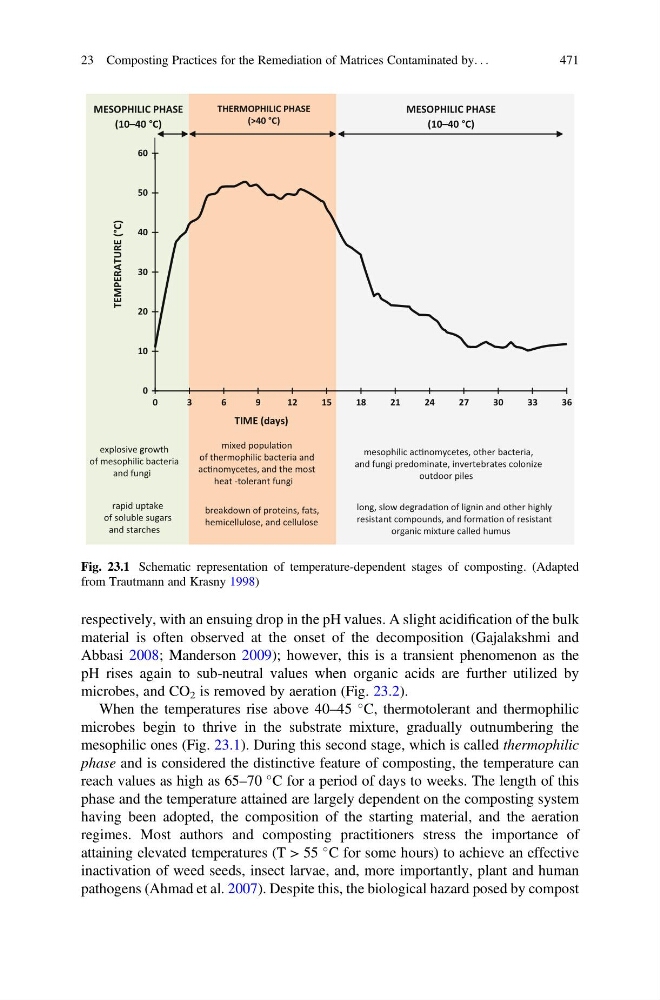
Fig. 23.1 Schematic representation of temperature-dependent stages of composting. (Adapted
from Trautmann and Krasny 1998)
23 Composting Practices for the Remediation of Matrices Contaminated by. . .
471
material is often observed at the onset of the decomposition (Gajalakshmi and
Abbasi 2008; Manderson 2009); however, this is a transient phenomenon as the
pH rises again to sub-neutral values when organic acids are further utilized by
microbes, and CO 2 is removed by aeration (Fig. 23.2).
When the temperatures rise above 40–45
C, thermotolerant and thermophilic
microbes begin to thrive in the substrate mixture, gradually outnumbering the
mesophilic ones (Fig. 23.1). During this second stage, which is called thermophilic
phase and is considered the distinctive feature of composting, the temperature can
reach values as high as 65–70
C for a period of days to weeks. The length of this
phase and the temperature attained are largely dependent on the composting system
having been adopted, the composition of the starting material, and the aeration
regimes. Most authors and composting practitioners stress the importance of
attaining elevated temperatures (T > 55
C for some hours) to achieve an effective
inactivation of weed seeds, insect larvae, and, more importantly, plant and human
pathogens (Ahmad et al. 2007). Despite this, the biological hazard posed by compost
long, slow degradaƟon of lignin and other highly
resistant compounds, and formaƟon of resistant
organic mixture called humus
mesophilic acƟnomycetes, other bacteria,
and fungi predominate, invertebrates colonize
outdoor piles
mixed populaƟon
of thermophilic bacteria and
acƟnomycetes, and the most
heat -tolerant fungi
rapid uptake
of soluble sugars
and starches
explosive growth
of mesophilic bacteria
and fungi
MESOPHILIC PHASE
(10–40 °C)
THERMOPHILIC PHASE
(>40 °C)
MESOPHILIC PHASE
(10–40 °C)
breakdown of proteins, fats,
hemicellulose, and cellulose
0
10
20
30
40
50
60
0
3
6
9
12
15
18
21
24
27
30
33
36
TEMPERATURE (°C)
TIME (days)
Fig. 23.1 Schematic representation of temperature-dependent stages of composting. (Adapted
from Trautmann and Krasny 1998)
23 Composting Practices for the Remediation of Matrices Contaminated by. . .
471