

18.4 Conclusions
The hybrid constructed wetland in Chrámce treating mixed household and agroindustrial wastewaters coming mainly from sheep farm and wine and juice production facility performed high treatment efficiencies. The main conclusions are:
• The removal efficiency for COD, BOD 5 , and TSS in high wine processing season
is 96.3%, 99.7%, and 99.6, respectively, in wetland filters but overall removal
efficiency is only 83.6%, 98.5%, and 20.1%, respectively, due to algae growth
and decay of plants in the stabilization ponds.
• The average RE of the system in seasons 2014–2015 of COD, BOD 5, and TSS
was 77%, 89%, and 76% and the mean outlet concentrations easily fulfilled the
discharge limits.
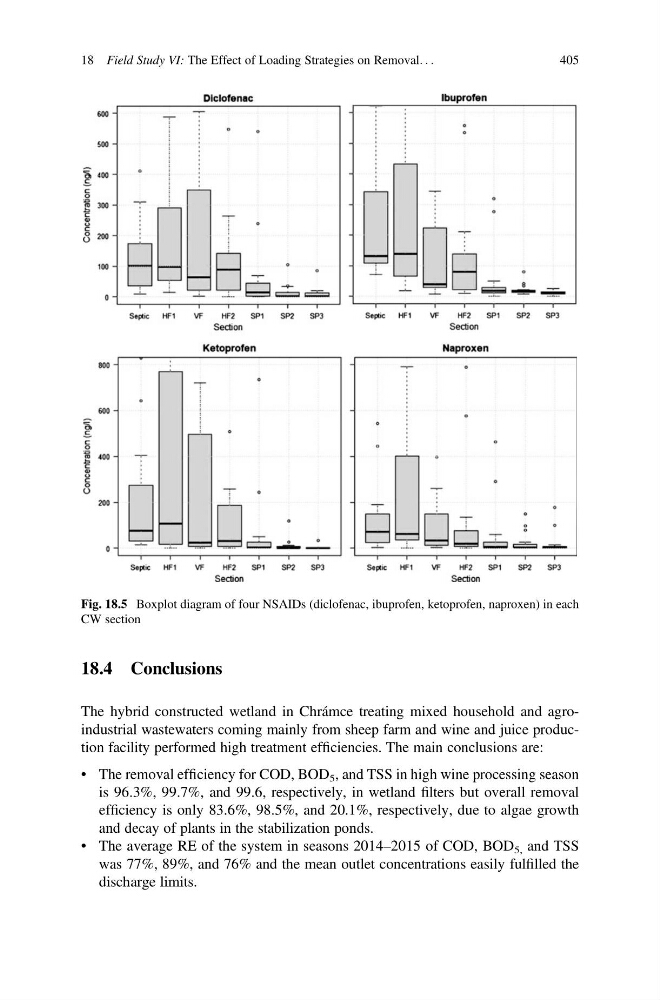
Fig. 18.5 Boxplot diagram of four NSAIDs (diclofenac, ibuprofen, ketoprofen, naproxen) in each
CW section
18 Field Study VI: The Effect of Loading Strategies on Removal. . .
405
The hybrid constructed wetland in Chrámce treating mixed household and agroindustrial wastewaters coming mainly from sheep farm and wine and juice production facility performed high treatment efficiencies. The main conclusions are:
• The removal efficiency for COD, BOD 5 , and TSS in high wine processing season
is 96.3%, 99.7%, and 99.6, respectively, in wetland filters but overall removal
efficiency is only 83.6%, 98.5%, and 20.1%, respectively, due to algae growth
and decay of plants in the stabilization ponds.
• The average RE of the system in seasons 2014–2015 of COD, BOD 5, and TSS
was 77%, 89%, and 76% and the mean outlet concentrations easily fulfilled the
discharge limits.
Fig. 18.5 Boxplot diagram of four NSAIDs (diclofenac, ibuprofen, ketoprofen, naproxen) in each
CW section
18 Field Study VI: The Effect of Loading Strategies on Removal. . .
405