

The electrochemical reaction.
½H 2 g
ð Þ ! H
þ aq
ð Þ þ e
À
ð1:10Þ
on the reference electrode under standard conditions is arbitrarily given a potential
(Eh) of 0 V. For practical reasons, redox potential is measured using other reference
electrodes with a stable potential instead of SHE. The most commonly used reference electrodes are Ag/AgCl (silver chloride) (Ives and Janz 1961) and Hg/Hg 2 Cl 2
(calomel) electrodes. Silver chloride electrodes consist of a silver wire coated with
AgCl precipitate, which is immersed in a KCl solution with a specific concentration.
Based on the KCl concentration in the solution, the potential of the electrode ranges
from 197 mV (saturated KCl) to 288.1 mV (0.1 M KCl) and is temperaturedependent. The saturated calomel electrode whose potential is about 247 mV
(at 20
C) works in a similar way. The measured potential must then be recalculated
to SHE by adding the above-mentioned values depending on the reference electrode
used and the temperature. The values not corrected to SHE are sometimes reported as
ORP (oxidation-reduction potential) compared to E h or ORP H related to SHE.
1.4 Stability of Water and Eh-pH Diagrams
The acidity and redox properties of an aqueous environment are the basic parameters
affecting the stability and mobility of substances in this environment (Violante et al.
2010). These properties and their influence on the state of a substance can be
summarized in the form of Eh-pH (or pε-pH) diagrams. The redox conditions (like
pH conditions) of an aqueous environment cannot acquire unlimited values as they
are limited by the reaction of water with other substances. Since water in most cases
is in contact with the atmosphere (either with the normal atmosphere containing
oxygen or with the soil atmosphere containing carbon dioxide or hydrogen), the
processes limiting the Eh values are the oxidation or reduction reactions of water
producing these gases. Both types of reactions are very similar in principle
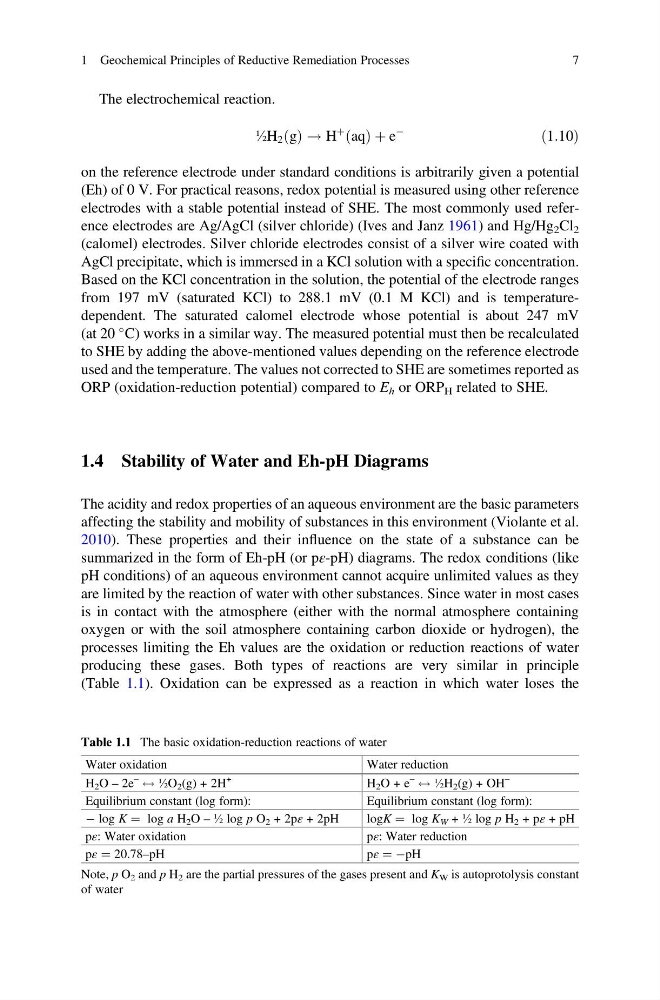
(Table 1.1). Oxidation can be expressed as a reaction in which water loses the
Table 1.1 The basic oxidation-reduction reactions of water
Water oxidation
Water reduction
H 2 O – 2e
– $ ½O 2 (g) + 2H
+
H 2 O + e
– $ ½H 2 (g) + OH
–
Equilibrium constant (log form):
Equilibrium constant (log form):
À log K ¼ log a H 2 O – ½ log p O 2 + 2pε + 2pH
logK ¼ log K W + ½ log p H 2 + pε + pH
pε: Water oxidation
pε: Water reduction
pε ¼ 20.78–pH
pε ¼ ÀpH
Note, p O 2 and p H 2 are the partial pressures of the gases present and K W is autoprotolysis constant
of water
1 Geochemical Principles of Reductive Remediation Processes
7
½H 2 g
ð Þ ! H
þ aq
ð Þ þ e
À
ð1:10Þ
on the reference electrode under standard conditions is arbitrarily given a potential
(Eh) of 0 V. For practical reasons, redox potential is measured using other reference
electrodes with a stable potential instead of SHE. The most commonly used reference electrodes are Ag/AgCl (silver chloride) (Ives and Janz 1961) and Hg/Hg 2 Cl 2
(calomel) electrodes. Silver chloride electrodes consist of a silver wire coated with
AgCl precipitate, which is immersed in a KCl solution with a specific concentration.
Based on the KCl concentration in the solution, the potential of the electrode ranges
from 197 mV (saturated KCl) to 288.1 mV (0.1 M KCl) and is temperaturedependent. The saturated calomel electrode whose potential is about 247 mV
(at 20
C) works in a similar way. The measured potential must then be recalculated
to SHE by adding the above-mentioned values depending on the reference electrode
used and the temperature. The values not corrected to SHE are sometimes reported as
ORP (oxidation-reduction potential) compared to E h or ORP H related to SHE.
1.4 Stability of Water and Eh-pH Diagrams
The acidity and redox properties of an aqueous environment are the basic parameters
affecting the stability and mobility of substances in this environment (Violante et al.
2010). These properties and their influence on the state of a substance can be
summarized in the form of Eh-pH (or pε-pH) diagrams. The redox conditions (like
pH conditions) of an aqueous environment cannot acquire unlimited values as they
are limited by the reaction of water with other substances. Since water in most cases
is in contact with the atmosphere (either with the normal atmosphere containing
oxygen or with the soil atmosphere containing carbon dioxide or hydrogen), the
processes limiting the Eh values are the oxidation or reduction reactions of water
producing these gases. Both types of reactions are very similar in principle
(Table 1.1). Oxidation can be expressed as a reaction in which water loses the
Table 1.1 The basic oxidation-reduction reactions of water
Water oxidation
Water reduction
H 2 O – 2e
– $ ½O 2 (g) + 2H
+
H 2 O + e
– $ ½H 2 (g) + OH
–
Equilibrium constant (log form):
Equilibrium constant (log form):
À log K ¼ log a H 2 O – ½ log p O 2 + 2pε + 2pH
logK ¼ log K W + ½ log p H 2 + pε + pH
pε: Water oxidation
pε: Water reduction
pε ¼ 20.78–pH
pε ¼ ÀpH
Note, p O 2 and p H 2 are the partial pressures of the gases present and K W is autoprotolysis constant
of water
1 Geochemical Principles of Reductive Remediation Processes
7