

6.3.1 Atomic Absorption Spectroscopy (AAS)
Atomic absorption spectroscopy estimates the discrete radiation absorbed by the
absorption of a photon of energy by exciting the atoms of the ground state to higher
energy levels. The radiant power of the absorbed radiation is identified using the
Beer-Lambert equation with the absorption coefficient of the ground-state atoms. In
a variety of test matrices, trace metals are widely examined by atomic absorption
using either flame or electro-thermal atomization. The choice of strategy for
atomization is mainly determined by the concentration of the analyte in the
examples being analyzed. Because of how electro-thermal atomization has more
sensitivity; for most components, identification limits are completely lower than
when using flame atomization. A superior accuracy while using flame atomization
makes it the choice technique when the concentration of the analyte is significantly
higher than the flame atomization detection limit. But flaming atomization is less
likely to interfere, takes into account a more prominent sample throughput and
requires less operator mastery.
Atomic absorption gives great selectivity and can be used to analyze more than
60 elements at or below parts per million concentrations. The analysis time when
using flame atomization is fast, using a fully automated system with a test
throughput of 250–350 determinations per hour. However, analysis using this
technique requires a wide sample preparation, which is not the case with electrochemical instruments [25].
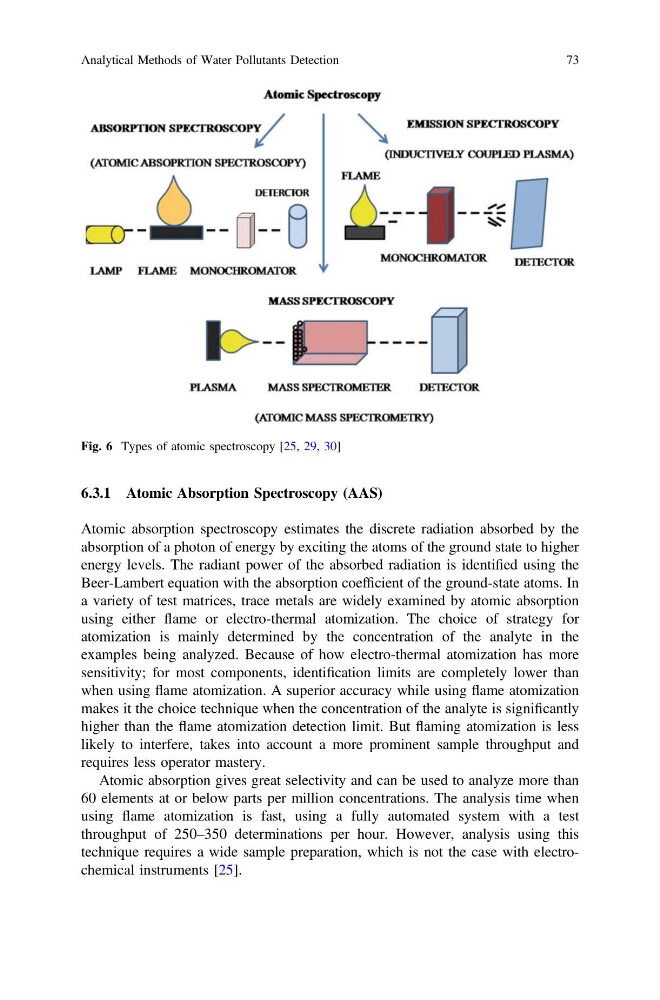
Fig. 6 Types of atomic spectroscopy [25, 29, 30]
Analytical Methods of Water Pollutants Detection
73
Atomic absorption spectroscopy estimates the discrete radiation absorbed by the
absorption of a photon of energy by exciting the atoms of the ground state to higher
energy levels. The radiant power of the absorbed radiation is identified using the
Beer-Lambert equation with the absorption coefficient of the ground-state atoms. In
a variety of test matrices, trace metals are widely examined by atomic absorption
using either flame or electro-thermal atomization. The choice of strategy for
atomization is mainly determined by the concentration of the analyte in the
examples being analyzed. Because of how electro-thermal atomization has more
sensitivity; for most components, identification limits are completely lower than
when using flame atomization. A superior accuracy while using flame atomization
makes it the choice technique when the concentration of the analyte is significantly
higher than the flame atomization detection limit. But flaming atomization is less
likely to interfere, takes into account a more prominent sample throughput and
requires less operator mastery.
Atomic absorption gives great selectivity and can be used to analyze more than
60 elements at or below parts per million concentrations. The analysis time when
using flame atomization is fast, using a fully automated system with a test
throughput of 250–350 determinations per hour. However, analysis using this
technique requires a wide sample preparation, which is not the case with electrochemical instruments [25].
Fig. 6 Types of atomic spectroscopy [25, 29, 30]
Analytical Methods of Water Pollutants Detection
73