

dual functionalized material by incorporating a chromophore, 4-(2-pyridylazo)resorcinol (PAR), onto polyacrylonitrile (PAN) fiber for the detection and removal
ability for heavy metal ions, including Hg
2+
, Cu
2+
, Pb
2+ and Ni
2+ [18].
4 Perspectives and Strategies in Colorimetric Sensor
Development “Lab-to-Market”
4.1 Colorimetric Sensors on Solid Supports
The effectiveness of any colorimetric sensor is inclined not only by the choice of
materials (e.g., chemo responsive dyes, organic ligands, metal nanoparticles
quantum dots,) but also by the selection of substrate type and materials (e.g.,
geometry of flow path and immobilization technique) [28]. The vital characteristics
of substrates include optical transparency (owing to high reflectivity), regular
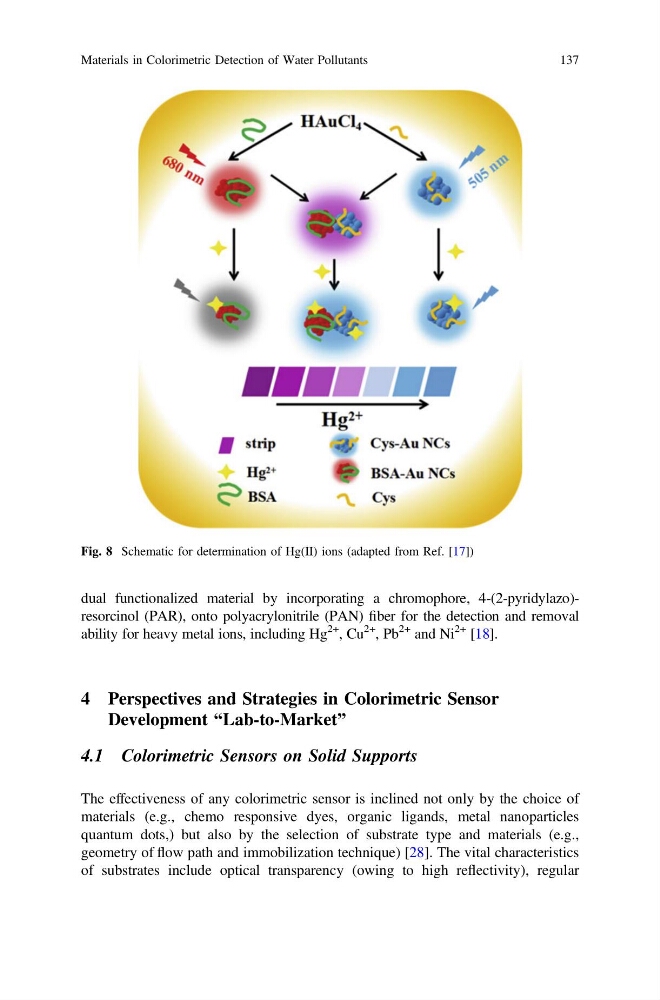
Fig. 8 Schematic for determination of Hg(II) ions (adapted from Ref. [17])
Materials in Colorimetric Detection of Water Pollutants
137
ability for heavy metal ions, including Hg
2+
, Cu
2+
, Pb
2+ and Ni
2+ [18].
4 Perspectives and Strategies in Colorimetric Sensor
Development “Lab-to-Market”
4.1 Colorimetric Sensors on Solid Supports
The effectiveness of any colorimetric sensor is inclined not only by the choice of
materials (e.g., chemo responsive dyes, organic ligands, metal nanoparticles
quantum dots,) but also by the selection of substrate type and materials (e.g.,
geometry of flow path and immobilization technique) [28]. The vital characteristics
of substrates include optical transparency (owing to high reflectivity), regular
Fig. 8 Schematic for determination of Hg(II) ions (adapted from Ref. [17])
Materials in Colorimetric Detection of Water Pollutants
137