

Similarly, the use of glucose modified copper nanoparticles (Glc-CuNPs) having
high fluorescence is reported for the visual detection of Ag(I). Upon the addition of
Ag(I) ions to the sensor assay, aggregation of Glc-CuNPs occurs, which results
decay of fluorescence and gradual change in intensity of color on increasing the
concentration of Ag(I) is observed [16].
Further, Zhao et al. reported a ratiometric probe having blue colored
L-cysteine-Au NCs as internal standard probe and red colored bovine serum
albumin-Au nanocluster as detection probes for the sensing of Hg(II) ions. In
presence of Hg(II) ions detection probe shows the fluorescence quenching but no
effect on the fluorescent signals of internal standard probe i.e. AuNCs. This causes
color variations from red to blue, and thereby enabling the visual detection of Hg(II)
ions by naked eyes as shown in Fig. 8 [17].
3.3 Other Chromogenic Materials
Apart from organic linkers, metal nanoparticles, quantum dots, there are other materials
deliberated here. Li F. et al. reported a two-fold metal-organic framework (MOF), [Co
(NPDC) (bpee)]ÁDMFÁ2H 2 O (1) (NPDC = 2-nitro phenylenedicarboxylate, bpee =
1,2-bis(4-bipyridyl) ethylene) nitro functionalized ligand (NPDC) and bipyridine type
linkers (bpee) coordinated to Co(II). The complex consists of a 3D structure which
exhibits high selectivity for the sensing of MnO 4
− and heavy metal ion Hg
2+ in water
by quenching or enhancing luminous intensity [11]. Similarly, Deng et al. reported a
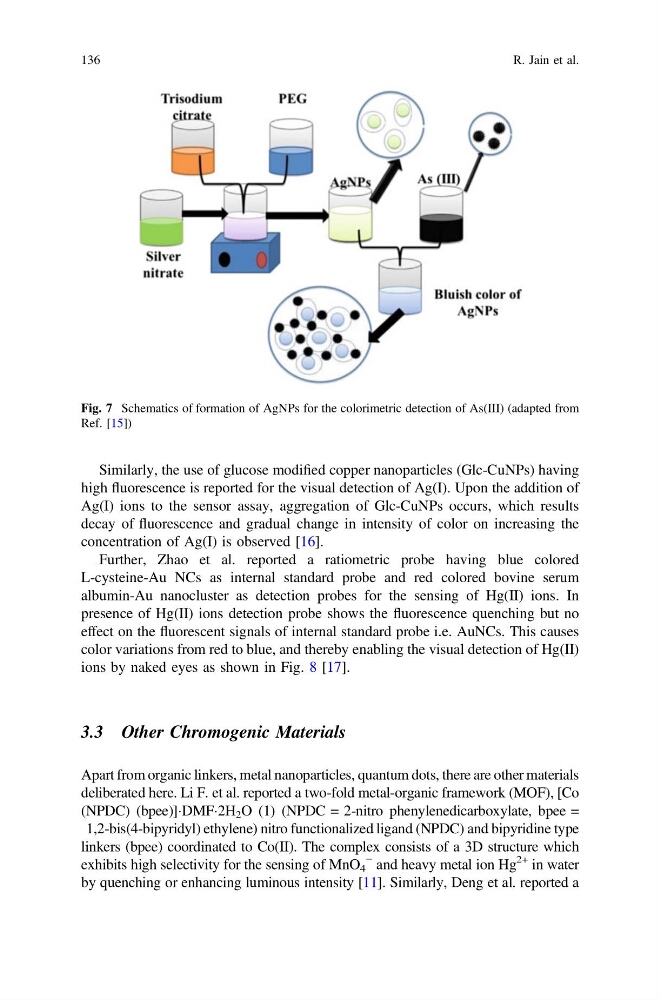
Fig. 7 Schematics of formation of AgNPs for the colorimetric detection of As(III) (adapted from
Ref. [15])
136
R. Jain et al.
high fluorescence is reported for the visual detection of Ag(I). Upon the addition of
Ag(I) ions to the sensor assay, aggregation of Glc-CuNPs occurs, which results
decay of fluorescence and gradual change in intensity of color on increasing the
concentration of Ag(I) is observed [16].
Further, Zhao et al. reported a ratiometric probe having blue colored
L-cysteine-Au NCs as internal standard probe and red colored bovine serum
albumin-Au nanocluster as detection probes for the sensing of Hg(II) ions. In
presence of Hg(II) ions detection probe shows the fluorescence quenching but no
effect on the fluorescent signals of internal standard probe i.e. AuNCs. This causes
color variations from red to blue, and thereby enabling the visual detection of Hg(II)
ions by naked eyes as shown in Fig. 8 [17].
3.3 Other Chromogenic Materials
Apart from organic linkers, metal nanoparticles, quantum dots, there are other materials
deliberated here. Li F. et al. reported a two-fold metal-organic framework (MOF), [Co
(NPDC) (bpee)]ÁDMFÁ2H 2 O (1) (NPDC = 2-nitro phenylenedicarboxylate, bpee =
1,2-bis(4-bipyridyl) ethylene) nitro functionalized ligand (NPDC) and bipyridine type
linkers (bpee) coordinated to Co(II). The complex consists of a 3D structure which
exhibits high selectivity for the sensing of MnO 4
− and heavy metal ion Hg
2+ in water
by quenching or enhancing luminous intensity [11]. Similarly, Deng et al. reported a
Fig. 7 Schematics of formation of AgNPs for the colorimetric detection of As(III) (adapted from
Ref. [15])
136
R. Jain et al.