

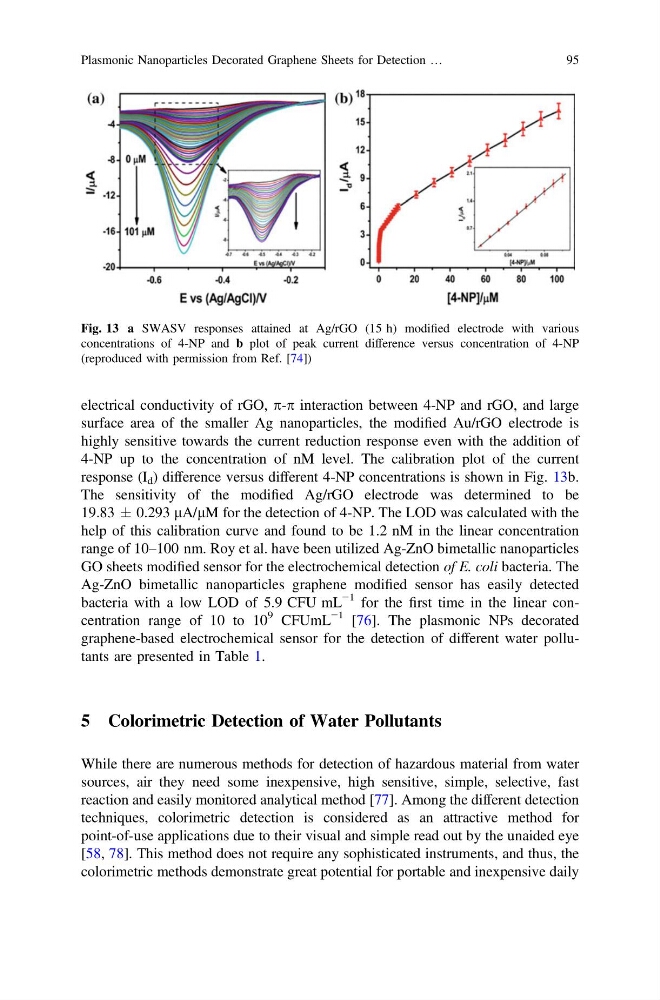
electrical conductivity of rGO, p-p interaction between 4-NP and rGO, and large
surface area of the smaller Ag nanoparticles, the modified Au/rGO electrode is
highly sensitive towards the current reduction response even with the addition of
4-NP up to the concentration of nM level. The calibration plot of the current
response (I d ) difference versus different 4-NP concentrations is shown in Fig. 13b.
The sensitivity of the modified Ag/rGO electrode was determined to be
19.83 ± 0.293 lA/lM for the detection of 4-NP. The LOD was calculated with the
help of this calibration curve and found to be 1.2 nM in the linear concentration
range of 10–100 nm. Roy et al. have been utilized Ag-ZnO bimetallic nanoparticles
GO sheets modified sensor for the electrochemical detection of E. coli bacteria. The
Ag-ZnO bimetallic nanoparticles graphene modified sensor has easily detected
bacteria with a low LOD of 5.9 CFU mL
−1 for the first time in the linear concentration range of 10 to 10
9 CFUmL
−1 [76]. The plasmonic NPs decorated
graphene-based electrochemical sensor for the detection of different water pollutants are presented in Table 1.
5 Colorimetric Detection of Water Pollutants
While there are numerous methods for detection of hazardous material from water
sources, air they need some inexpensive, high sensitive, simple, selective, fast
reaction and easily monitored analytical method [77]. Among the different detection
techniques, colorimetric detection is considered as an attractive method for
point-of-use applications due to their visual and simple read out by the unaided eye
[58, 78]. This method does not require any sophisticated instruments, and thus, the
colorimetric methods demonstrate great potential for portable and inexpensive daily
Fig. 13 a SWASV responses attained at Ag/rGO (15 h) modified electrode with various
concentrations of 4-NP and b plot of peak current difference versus concentration of 4-NP
(reproduced with permission from Ref. [74])
Plasmonic Nanoparticles Decorated Graphene Sheets for Detection …
95
surface area of the smaller Ag nanoparticles, the modified Au/rGO electrode is
highly sensitive towards the current reduction response even with the addition of
4-NP up to the concentration of nM level. The calibration plot of the current
response (I d ) difference versus different 4-NP concentrations is shown in Fig. 13b.
The sensitivity of the modified Ag/rGO electrode was determined to be
19.83 ± 0.293 lA/lM for the detection of 4-NP. The LOD was calculated with the
help of this calibration curve and found to be 1.2 nM in the linear concentration
range of 10–100 nm. Roy et al. have been utilized Ag-ZnO bimetallic nanoparticles
GO sheets modified sensor for the electrochemical detection of E. coli bacteria. The
Ag-ZnO bimetallic nanoparticles graphene modified sensor has easily detected
bacteria with a low LOD of 5.9 CFU mL
−1 for the first time in the linear concentration range of 10 to 10
9 CFUmL
−1 [76]. The plasmonic NPs decorated
graphene-based electrochemical sensor for the detection of different water pollutants are presented in Table 1.
5 Colorimetric Detection of Water Pollutants
While there are numerous methods for detection of hazardous material from water
sources, air they need some inexpensive, high sensitive, simple, selective, fast
reaction and easily monitored analytical method [77]. Among the different detection
techniques, colorimetric detection is considered as an attractive method for
point-of-use applications due to their visual and simple read out by the unaided eye
[58, 78]. This method does not require any sophisticated instruments, and thus, the
colorimetric methods demonstrate great potential for portable and inexpensive daily
Fig. 13 a SWASV responses attained at Ag/rGO (15 h) modified electrode with various
concentrations of 4-NP and b plot of peak current difference versus concentration of 4-NP
(reproduced with permission from Ref. [74])
Plasmonic Nanoparticles Decorated Graphene Sheets for Detection …
95