

life applications [79, 80]. Amanulla et al. utilized chitosan stabilized Au
nanoparticles incorporated on rGO for sensitive and selective detection of nitrite
ions (NO
2− ). They reported that with the insertion of various concentration of NO
2−
ions, the color of the Au nanoparticles/rGO composites changes from wine red to
purple. Based on this color change, the concentration of NO
2− was detected
quantitatively by monitoring the UV-visible spectroscopy. The reported sensor was
able to detect NO
2− ions with a limit of detection 0.1 µM in a linear range 1 to
20 µM by spectroscopic method in (Fig. 14) [81].
Dong and his group utilized a colorimetric technique based on the variation of
color of gallic acid capped gold nanoparticles (GA-Au nanoparticles) for the
selective detection of Cr(III) and Cr(VI). They reported the limit of detections
(LODs) of a mixture of Cr(III) and Cr(VI) are 1.5 and 2 lM, respectively by naked
eye vision whereas the LOD value was found to be 0.05, 0.1 and 0.1 lM,
respectively when monitored by UV-visible spectrometer. They also reported the
selectivity of the nanoparticles with other ion, which shows visual colour changed
(Fig. 15) [82].
Ag-CoFe 2 O 4 /rGO nanocomposites synthesized by simple one-pot microwave
assisted treatment was used as a sensing probe for colorimetric as well as detection
of SERS for toxic Hg
2+ ions based on its intrinsic oxidase-like activity towards the
oxidation of TMB. The reaction between Ag and Hg
2+ nanoparticles takes place
within a very short period and results in the formation of Ag-Hg alloy with the
simultaneous reduction of Hg
2+ . The formation of such alloy can enhance the
oxidase-like activity and makes it enable for sensitive towards Hg
2+ . They reported
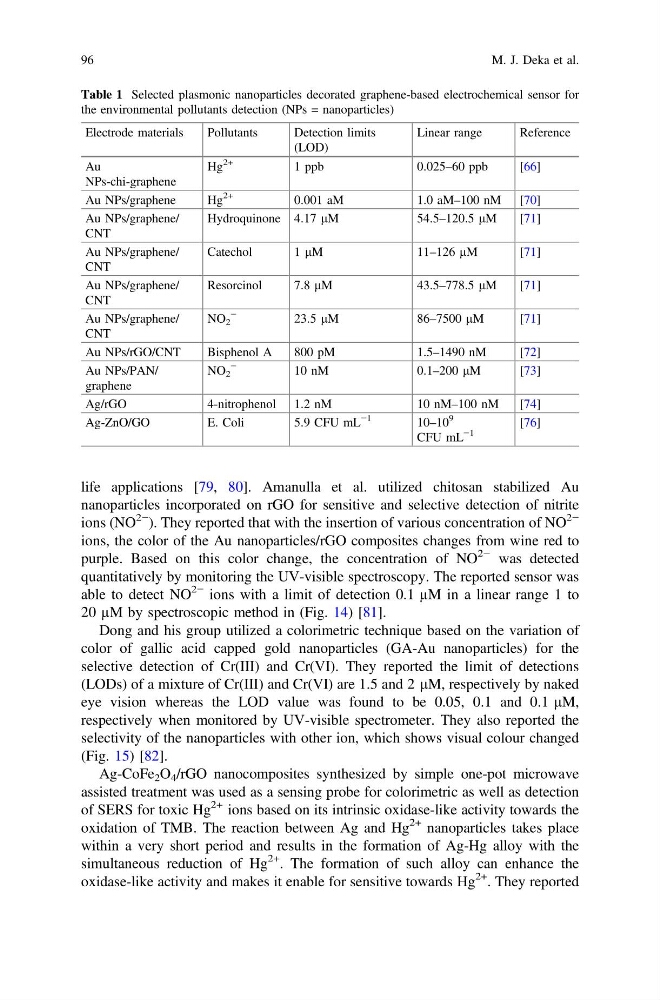
Table 1 Selected plasmonic nanoparticles decorated graphene-based electrochemical sensor for
the environmental pollutants detection (NPs = nanoparticles)
Electrode materials
Pollutants
Detection limits
(LOD)
Linear range
Reference
Au
NPs-chi-graphene
Hg
2+
1 ppb
0.025–60 ppb
[66]
Au NPs/graphene
Hg
2+
0.001 aM
1.0 aM–100 nM [70]
Au NPs/graphene/
CNT
Hydroquinone 4.17 lM
54.5–120.5 lM
[71]
Au NPs/graphene/
CNT
Catechol
1 lM
1 1 –126 lM
[ 71]
Au NPs/graphene/
CNT
Resorcinol
7.8 lM
43.5–778.5 lM
[71]
Au NPs/graphene/
CNT
NO 2
−
23.5 lM
8 6 –7500 lM
[ 71]
Au NPs/rGO/CNT
Bisphenol A
800 pM
1.5–1490 nM
[72]
Au NPs/PAN/
graphene
NO 2
−
10 nM
0.1–200 lM
[ 73]
Ag/rGO
4-nitrophenol 1.2 nM
10 nM–100 nM
[74]
Ag-ZnO/GO
E. Coli
5.9 CFU mL
−1
10–10
9
CFU mL
−1
[76]
96
M. J. Deka et al.
nanoparticles incorporated on rGO for sensitive and selective detection of nitrite
ions (NO
2− ). They reported that with the insertion of various concentration of NO
2−
ions, the color of the Au nanoparticles/rGO composites changes from wine red to
purple. Based on this color change, the concentration of NO
2− was detected
quantitatively by monitoring the UV-visible spectroscopy. The reported sensor was
able to detect NO
2− ions with a limit of detection 0.1 µM in a linear range 1 to
20 µM by spectroscopic method in (Fig. 14) [81].
Dong and his group utilized a colorimetric technique based on the variation of
color of gallic acid capped gold nanoparticles (GA-Au nanoparticles) for the
selective detection of Cr(III) and Cr(VI). They reported the limit of detections
(LODs) of a mixture of Cr(III) and Cr(VI) are 1.5 and 2 lM, respectively by naked
eye vision whereas the LOD value was found to be 0.05, 0.1 and 0.1 lM,
respectively when monitored by UV-visible spectrometer. They also reported the
selectivity of the nanoparticles with other ion, which shows visual colour changed
(Fig. 15) [82].
Ag-CoFe 2 O 4 /rGO nanocomposites synthesized by simple one-pot microwave
assisted treatment was used as a sensing probe for colorimetric as well as detection
of SERS for toxic Hg
2+ ions based on its intrinsic oxidase-like activity towards the
oxidation of TMB. The reaction between Ag and Hg
2+ nanoparticles takes place
within a very short period and results in the formation of Ag-Hg alloy with the
simultaneous reduction of Hg
2+ . The formation of such alloy can enhance the
oxidase-like activity and makes it enable for sensitive towards Hg
2+ . They reported
Table 1 Selected plasmonic nanoparticles decorated graphene-based electrochemical sensor for
the environmental pollutants detection (NPs = nanoparticles)
Electrode materials
Pollutants
Detection limits
(LOD)
Linear range
Reference
Au
NPs-chi-graphene
Hg
2+
1 ppb
0.025–60 ppb
[66]
Au NPs/graphene
Hg
2+
0.001 aM
1.0 aM–100 nM [70]
Au NPs/graphene/
CNT
Hydroquinone 4.17 lM
54.5–120.5 lM
[71]
Au NPs/graphene/
CNT
Catechol
1 lM
1 1 –126 lM
[ 71]
Au NPs/graphene/
CNT
Resorcinol
7.8 lM
43.5–778.5 lM
[71]
Au NPs/graphene/
CNT
NO 2
−
23.5 lM
8 6 –7500 lM
[ 71]
Au NPs/rGO/CNT
Bisphenol A
800 pM
1.5–1490 nM
[72]
Au NPs/PAN/
graphene
NO 2
−
10 nM
0.1–200 lM
[ 73]
Ag/rGO
4-nitrophenol 1.2 nM
10 nM–100 nM
[74]
Ag-ZnO/GO
E. Coli
5.9 CFU mL
−1
10–10
9
CFU mL
−1
[76]
96
M. J. Deka et al.