

49
input is needed, which is provided by the adenosine triphosphate molecule hydrolysis (Berg 2011).
The Calvin–Benson–Bassham cycle, shown in Fig. 2.1, is the biologically ubiquitous pathway and, therefore, has received more scientific attention, where more
than 90% of inorganic carbon of nature is bioconverted by this cycle (Ducat and
Silver 2012; Gong et al. 2018). The metabolic Calvin cycle comprises 13 reactions
catalyzed by 11 different enzymes and subdivided into 3 steps: (i) carboxylation, (ii)
reduction, and finally (iii) regeneration (Paul 2013; Noreña-Caro and Benton 2018).
The carboxylation phase is catalyzed by ribulose-1,5-bisphosphate carboxylase/
oxygenase, which is the most relevant enzyme in the Calvin–Benson–Bassham
cycle, and probably the earth’s most abundant protein, where three molecular structures of carbon dioxide are fused with three molecular structures of ribulose
1,5-bisphosphate to obtain six 3-phosphoglycerate (Blankenship 2008; Paul 2013).
During the reduction phase, nicotinamide adenine dinucleotide phosphate and
adenosine triphosphate, generated during photosynthesis, are used to reduce
3- phosphoglycerate to 1,3-bisphosphoglycerate, being degraded to glyceraldehyde3- phosphate and dihydroxyacetone phosphate (Noreña-Caro and Benton 2018).
Carbon atom gets out the Calvin cycle for the biosynthesis of multiproduct, such
as glyceraldehyde-3-phosphate, to synthesize structures with six carbon atoms
(hexose). A representative fraction of microalgae uses the Embden–Meyerhof–
Parnas pathway to transform hexose molecule to pyruvate. However, five-sixths of
the carbon is withheld in cycle itself to regenerate the acceptor molecule and thus
keep it running (Paul 2013).
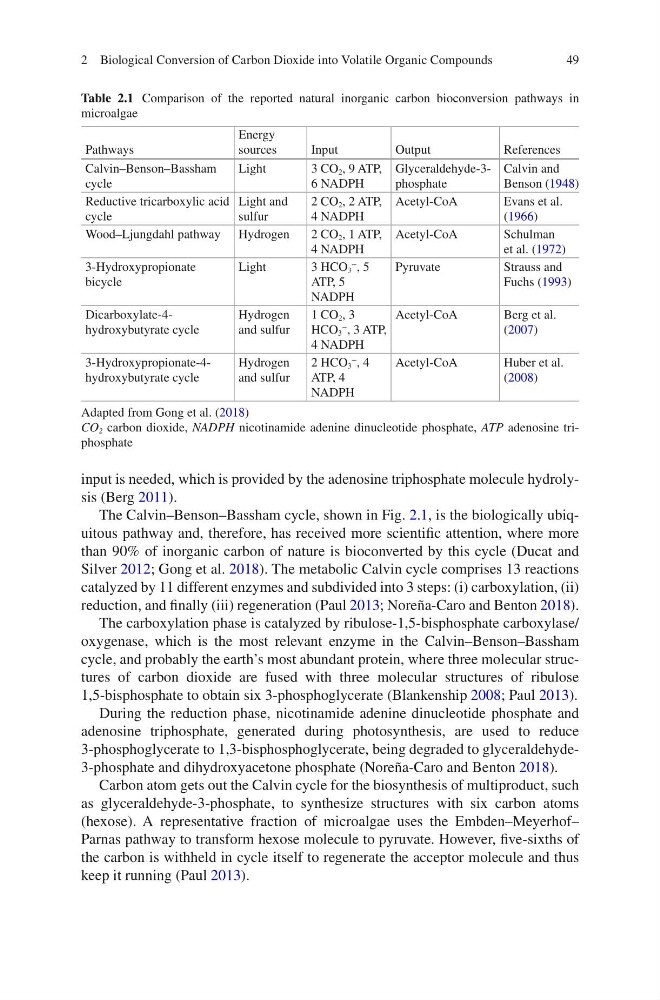
Table 2.1 Comparison of the reported natural inorganic carbon bioconversion pathways in
microalgae
Pathways
Energy
sources
Input
Output
References
Calvin–Benson–Bassham
cycle
Light
3 CO 2 , 9 ATP,
6 NADPH
Glyceraldehyde-3phosphate
Calvin and
Benson (1948)
Reductive tricarboxylic acid
cycle
Light and
sulfur
2 CO 2 , 2 ATP,
4 NADPH
Acetyl-CoA
Evans et al.
(1966)
Wood–Ljungdahl pathway Hydrogen
2 CO 2 , 1 ATP,
4 NADPH
Acetyl-CoA
Schulman
et al. (1972)
3-Hydroxypropionate
bicycle
Light
3 HCO 3
−
, 5
ATP, 5
NADPH
Pyruvate
Strauss and
Fuchs (1993)
Dicarboxylate-4hydroxybutyrate cycle
Hydrogen
and sulfur
1 CO 2 , 3
HCO 3
−
, 3 ATP,
4 NADPH
Acetyl-CoA
Berg et al.
(2007)
3-Hydroxypropionate-4hydroxybutyrate cycle
Hydrogen
and sulfur
2 HCO 3
−
, 4
ATP, 4
NADPH
Acetyl-CoA
Huber et al.
(2008)
Adapted from Gong et al. (2018)
CO 2 carbon dioxide, NADPH nicotinamide adenine dinucleotide phosphate, ATP adenosine triphosphate
2 Biological Conversion of Carbon Dioxide into Volatile Organic Compounds
input is needed, which is provided by the adenosine triphosphate molecule hydrolysis (Berg 2011).
The Calvin–Benson–Bassham cycle, shown in Fig. 2.1, is the biologically ubiquitous pathway and, therefore, has received more scientific attention, where more
than 90% of inorganic carbon of nature is bioconverted by this cycle (Ducat and
Silver 2012; Gong et al. 2018). The metabolic Calvin cycle comprises 13 reactions
catalyzed by 11 different enzymes and subdivided into 3 steps: (i) carboxylation, (ii)
reduction, and finally (iii) regeneration (Paul 2013; Noreña-Caro and Benton 2018).
The carboxylation phase is catalyzed by ribulose-1,5-bisphosphate carboxylase/
oxygenase, which is the most relevant enzyme in the Calvin–Benson–Bassham
cycle, and probably the earth’s most abundant protein, where three molecular structures of carbon dioxide are fused with three molecular structures of ribulose
1,5-bisphosphate to obtain six 3-phosphoglycerate (Blankenship 2008; Paul 2013).
During the reduction phase, nicotinamide adenine dinucleotide phosphate and
adenosine triphosphate, generated during photosynthesis, are used to reduce
3- phosphoglycerate to 1,3-bisphosphoglycerate, being degraded to glyceraldehyde3- phosphate and dihydroxyacetone phosphate (Noreña-Caro and Benton 2018).
Carbon atom gets out the Calvin cycle for the biosynthesis of multiproduct, such
as glyceraldehyde-3-phosphate, to synthesize structures with six carbon atoms
(hexose). A representative fraction of microalgae uses the Embden–Meyerhof–
Parnas pathway to transform hexose molecule to pyruvate. However, five-sixths of
the carbon is withheld in cycle itself to regenerate the acceptor molecule and thus
keep it running (Paul 2013).
Table 2.1 Comparison of the reported natural inorganic carbon bioconversion pathways in
microalgae
Pathways
Energy
sources
Input
Output
References
Calvin–Benson–Bassham
cycle
Light
3 CO 2 , 9 ATP,
6 NADPH
Glyceraldehyde-3phosphate
Calvin and
Benson (1948)
Reductive tricarboxylic acid
cycle
Light and
sulfur
2 CO 2 , 2 ATP,
4 NADPH
Acetyl-CoA
Evans et al.
(1966)
Wood–Ljungdahl pathway Hydrogen
2 CO 2 , 1 ATP,
4 NADPH
Acetyl-CoA
Schulman
et al. (1972)
3-Hydroxypropionate
bicycle
Light
3 HCO 3
−
, 5
ATP, 5
NADPH
Pyruvate
Strauss and
Fuchs (1993)
Dicarboxylate-4hydroxybutyrate cycle
Hydrogen
and sulfur
1 CO 2 , 3
HCO 3
−
, 3 ATP,
4 NADPH
Acetyl-CoA
Berg et al.
(2007)
3-Hydroxypropionate-4hydroxybutyrate cycle
Hydrogen
and sulfur
2 HCO 3
−
, 4
ATP, 4
NADPH
Acetyl-CoA
Huber et al.
(2008)
Adapted from Gong et al. (2018)
CO 2 carbon dioxide, NADPH nicotinamide adenine dinucleotide phosphate, ATP adenosine triphosphate
2 Biological Conversion of Carbon Dioxide into Volatile Organic Compounds