

115
5.2 Thermodynamic Equilibrium of Carbon Dioxide
Hydrogenation
The hydrogenation of carbon dioxide implies different chemical equilibria. The
main reactions which can take place when mixing hydrogen with carbon dioxide are
given in Table 5.1. Thus, from a mixture of hydrogen and carbon dioxide, different
products can be formed such as carbon monoxide, methane, methanol, water, solid
carbon, and also hydrocarbons of higher molecular masses like ethane, formic acid,
and acetic acid.
The chemical reaction of the hydrogenation of carbon dioxide into methanol
(Eq. (1)) is slightly exothermic. Thus, increasing the temperature will theoretically
be unfavorable for this reaction. Also, the stoichiometry of this reaction indicates
that increasing the total pressure will favor this reaction.
Work has been done on the investigation of the thermodynamic aspect of carbon
dioxide hydrogenation (Tursunov et al. 2017; Stangeland et al. 2018; Hus et al.
2017a, b; Tang et al. 2018; Miguel et al. 2015). The common method of these studies is based on the minimization of the Gibbs free energy (Tursunov et al. 2017; Hus
et al. 2017a, b; Tang et al. 2018; Miguel et al. 2015; Pham Minh et al. 2018). This
allows modeling simultaneous phase and chemical equilibria and does not require
specification of the reactions involved and their stoichiometry (Miguel et al. 2015).
Different numerical tools are available for thermodynamic study such as Aspen Plus
Table 5.1 Main chemical reaction which could take place when mixing hydrogen with carbon
dioxide; the values of ∅ r
o
H 298 were calculated from the standard molar enthalpy (heat) of formation
at 298 K according to Lide (Lide 2003–2004); all molecules are under the gas state except C s
which is under the solid state
Reaction
∅ r
o
H 298 (kJ/mol)
Equation
3H 2(g) + CO 2(g) → CH 3 OH (g) + H 2 O (g)
−49.3
(1)
2H 2(g) + CO (g) → CH 3 OH (g)
−90.5
(2)
H 2(g) + CO 2(g) → CO (g) + H 2 O (g)
+41.2
(3)
4H 2(g) + CO 2(g) → CH 4(g) + 2H 2 O (g)
−164.7
(4)
3H 2(g) + CO (g) → CH 4(g) + H 2 O (g)
−205.9
(5)
2CO (g) → C (s) + CO 2(g)
−172.5
(6)
CO (g) + H 2(g) → C (s) + H 2 O (g)
−131.3
(7)
CH 4(g) → C s + 2H 2(g)
+74.6
(8)
CH 4(g) + CO 2(g) → 2CO (g) + 2H 2(g)
+247.1
(9)
2H 2(g) + CO 2(g) → C (s) + 2H 2 O (g)
−90.1
(10)
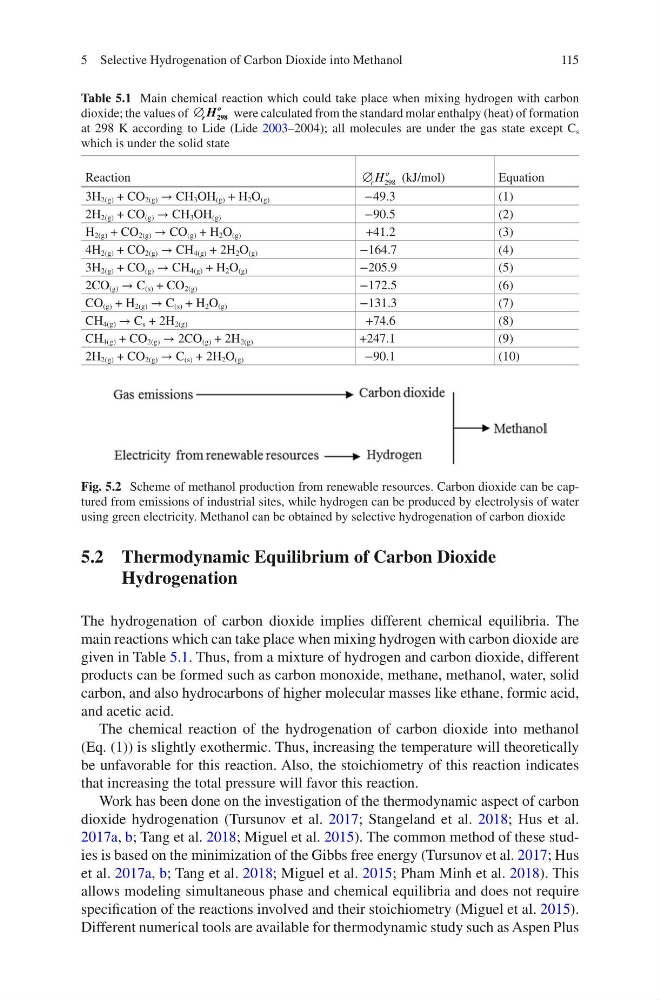
Fig. 5.2 Scheme of methanol production from renewable resources. Carbon dioxide can be captured from emissions of industrial sites, while hydrogen can be produced by electrolysis of water
using green electricity. Methanol can be obtained by selective hydrogenation of carbon dioxide
5 Selective Hydrogenation of Carbon Dioxide into Methanol
5.2 Thermodynamic Equilibrium of Carbon Dioxide
Hydrogenation
The hydrogenation of carbon dioxide implies different chemical equilibria. The
main reactions which can take place when mixing hydrogen with carbon dioxide are
given in Table 5.1. Thus, from a mixture of hydrogen and carbon dioxide, different
products can be formed such as carbon monoxide, methane, methanol, water, solid
carbon, and also hydrocarbons of higher molecular masses like ethane, formic acid,
and acetic acid.
The chemical reaction of the hydrogenation of carbon dioxide into methanol
(Eq. (1)) is slightly exothermic. Thus, increasing the temperature will theoretically
be unfavorable for this reaction. Also, the stoichiometry of this reaction indicates
that increasing the total pressure will favor this reaction.
Work has been done on the investigation of the thermodynamic aspect of carbon
dioxide hydrogenation (Tursunov et al. 2017; Stangeland et al. 2018; Hus et al.
2017a, b; Tang et al. 2018; Miguel et al. 2015). The common method of these studies is based on the minimization of the Gibbs free energy (Tursunov et al. 2017; Hus
et al. 2017a, b; Tang et al. 2018; Miguel et al. 2015; Pham Minh et al. 2018). This
allows modeling simultaneous phase and chemical equilibria and does not require
specification of the reactions involved and their stoichiometry (Miguel et al. 2015).
Different numerical tools are available for thermodynamic study such as Aspen Plus
Table 5.1 Main chemical reaction which could take place when mixing hydrogen with carbon
dioxide; the values of ∅ r
o
H 298 were calculated from the standard molar enthalpy (heat) of formation
at 298 K according to Lide (Lide 2003–2004); all molecules are under the gas state except C s
which is under the solid state
Reaction
∅ r
o
H 298 (kJ/mol)
Equation
3H 2(g) + CO 2(g) → CH 3 OH (g) + H 2 O (g)
−49.3
(1)
2H 2(g) + CO (g) → CH 3 OH (g)
−90.5
(2)
H 2(g) + CO 2(g) → CO (g) + H 2 O (g)
+41.2
(3)
4H 2(g) + CO 2(g) → CH 4(g) + 2H 2 O (g)
−164.7
(4)
3H 2(g) + CO (g) → CH 4(g) + H 2 O (g)
−205.9
(5)
2CO (g) → C (s) + CO 2(g)
−172.5
(6)
CO (g) + H 2(g) → C (s) + H 2 O (g)
−131.3
(7)
CH 4(g) → C s + 2H 2(g)
+74.6
(8)
CH 4(g) + CO 2(g) → 2CO (g) + 2H 2(g)
+247.1
(9)
2H 2(g) + CO 2(g) → C (s) + 2H 2 O (g)
−90.1
(10)
Fig. 5.2 Scheme of methanol production from renewable resources. Carbon dioxide can be captured from emissions of industrial sites, while hydrogen can be produced by electrolysis of water
using green electricity. Methanol can be obtained by selective hydrogenation of carbon dioxide
5 Selective Hydrogenation of Carbon Dioxide into Methanol