

14 Perspectives of Aptamers for Medical Applications
413
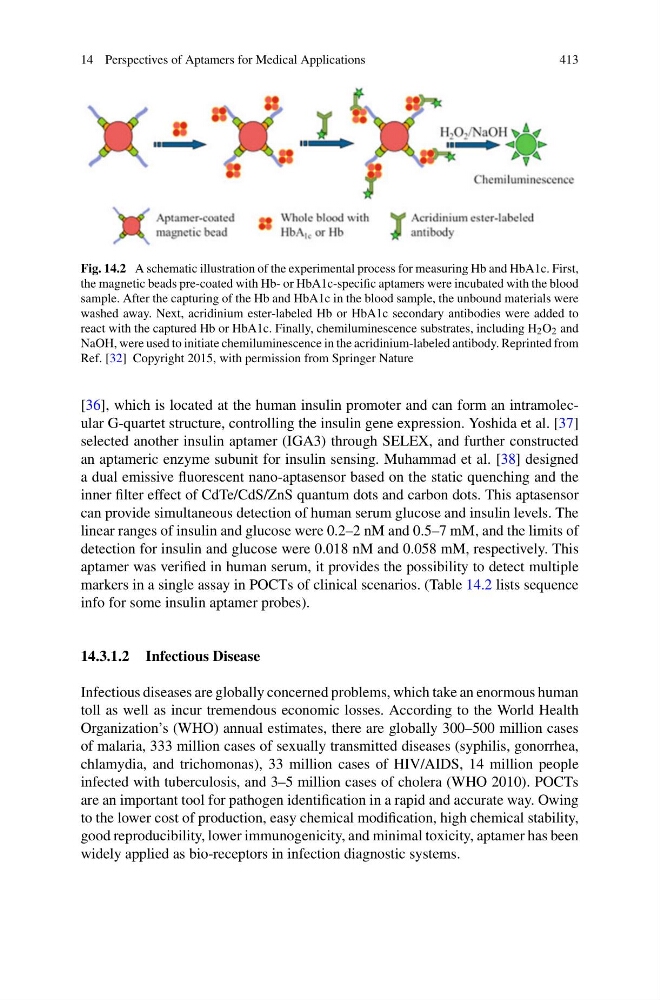
Fig. 14.2 A schematic illustration of the experimental process for measuring Hb and HbA1c. First,
the magnetic beads pre-coated with Hb- or HbA1c-specific aptamers were incubated with the blood
sample. After the capturing of the Hb and HbA1c in the blood sample, the unbound materials were
washed away. Next, acridinium ester-labeled Hb or HbA1c secondary antibodies were added to
react with the captured Hb or HbA1c. Finally, chemiluminescence substrates, including H 2 O 2 and
NaOH, were used to initiate chemiluminescence in the acridinium-labeled antibody. Reprinted from
Ref. [32] Copyright 2015, with permission from Springer Nature
[36], which is located at the human insulin promoter and can form an intramolecular G-quartet structure, controlling the insulin gene expression. Yoshida et al. [37]
selected another insulin aptamer (IGA3) through SELEX, and further constructed
an aptameric enzyme subunit for insulin sensing. Muhammad et al. [38] designed
a dual emissive fluorescent nano-aptasensor based on the static quenching and the
inner filter effect of CdTe/CdS/ZnS quantum dots and carbon dots. This aptasensor
can provide simultaneous detection of human serum glucose and insulin levels. The
linear ranges of insulin and glucose were 0.2–2 nM and 0.5–7 mM, and the limits of
detection for insulin and glucose were 0.018 nM and 0.058 mM, respectively. This
aptamer was verified in human serum, it provides the possibility to detect multiple
markers in a single assay in POCTs of clinical scenarios. (Table 14.2 lists sequence
info for some insulin aptamer probes).
14.3.1.2 Infectious Disease
Infectious diseases are globally concerned problems, which take an enormous human
toll as well as incur tremendous economic losses. According to the World Health
Organization’s (WHO) annual estimates, there are globally 300–500 million cases
of malaria, 333 million cases of sexually transmitted diseases (syphilis, gonorrhea,
chlamydia, and trichomonas), 33 million cases of HIV/AIDS, 14 million people
infected with tuberculosis, and 3–5 million cases of cholera (WHO 2010). POCTs
are an important tool for pathogen identification in a rapid and accurate way. Owing
to the lower cost of production, easy chemical modification, high chemical stability,
good reproducibility, lower immunogenicity, and minimal toxicity, aptamer has been
widely applied as bio-receptors in infection diagnostic systems.
413
Fig. 14.2 A schematic illustration of the experimental process for measuring Hb and HbA1c. First,
the magnetic beads pre-coated with Hb- or HbA1c-specific aptamers were incubated with the blood
sample. After the capturing of the Hb and HbA1c in the blood sample, the unbound materials were
washed away. Next, acridinium ester-labeled Hb or HbA1c secondary antibodies were added to
react with the captured Hb or HbA1c. Finally, chemiluminescence substrates, including H 2 O 2 and
NaOH, were used to initiate chemiluminescence in the acridinium-labeled antibody. Reprinted from
Ref. [32] Copyright 2015, with permission from Springer Nature
[36], which is located at the human insulin promoter and can form an intramolecular G-quartet structure, controlling the insulin gene expression. Yoshida et al. [37]
selected another insulin aptamer (IGA3) through SELEX, and further constructed
an aptameric enzyme subunit for insulin sensing. Muhammad et al. [38] designed
a dual emissive fluorescent nano-aptasensor based on the static quenching and the
inner filter effect of CdTe/CdS/ZnS quantum dots and carbon dots. This aptasensor
can provide simultaneous detection of human serum glucose and insulin levels. The
linear ranges of insulin and glucose were 0.2–2 nM and 0.5–7 mM, and the limits of
detection for insulin and glucose were 0.018 nM and 0.058 mM, respectively. This
aptamer was verified in human serum, it provides the possibility to detect multiple
markers in a single assay in POCTs of clinical scenarios. (Table 14.2 lists sequence
info for some insulin aptamer probes).
14.3.1.2 Infectious Disease
Infectious diseases are globally concerned problems, which take an enormous human
toll as well as incur tremendous economic losses. According to the World Health
Organization’s (WHO) annual estimates, there are globally 300–500 million cases
of malaria, 333 million cases of sexually transmitted diseases (syphilis, gonorrhea,
chlamydia, and trichomonas), 33 million cases of HIV/AIDS, 14 million people
infected with tuberculosis, and 3–5 million cases of cholera (WHO 2010). POCTs
are an important tool for pathogen identification in a rapid and accurate way. Owing
to the lower cost of production, easy chemical modification, high chemical stability,
good reproducibility, lower immunogenicity, and minimal toxicity, aptamer has been
widely applied as bio-receptors in infection diagnostic systems.