

412
H. Jin
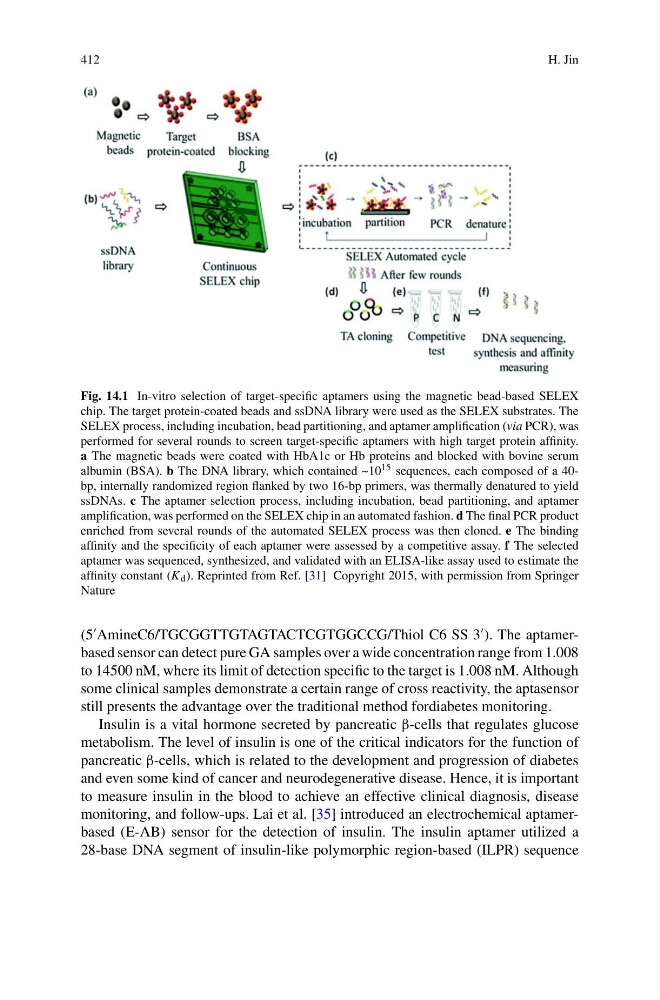
Fig. 14.1 In-vitro selection of target-specific aptamers using the magnetic bead-based SELEX
chip. The target protein-coated beads and ssDNA library were used as the SELEX substrates. The
SELEX process, including incubation, bead partitioning, and aptamer amplification (via PCR), was
performed for several rounds to screen target-specific aptamers with high target protein affinity.
a The magnetic beads were coated with HbA1c or Hb proteins and blocked with bovine serum
albumin (BSA). b The DNA library, which contained ~10 15 sequences, each composed of a 40bp, internally randomized region flanked by two 16-bp primers, was thermally denatured to yield
ssDNAs. c The aptamer selection process, including incubation, bead partitioning, and aptamer
amplification, was performed on the SELEX chip in an automated fashion. d The final PCR product
enriched from several rounds of the automated SELEX process was then cloned. e The binding
affinity and the specificity of each aptamer were assessed by a competitive assay. f The selected
aptamer was sequenced, synthesized, and validated with an ELISA-like assay used to estimate the
affinity constant (K d ). Reprinted from Ref. [31] Copyright 2015, with permission from Springer
Nature
(5
AmineC6/TGCGGTTGTAGTACTCGTGGCCG/Thiol C6 SS 3
). The aptamerbased sensor can detect pure GA samples over a wide concentration range from 1.008
to 14500 nM, where its limit of detection specific to the target is 1.008 nM. Although
some clinical samples demonstrate a certain range of cross reactivity, the aptasensor
still presents the advantage over the traditional method fordiabetes monitoring.
Insulin is a vital hormone secreted by pancreatic β-cells that regulates glucose
metabolism. The level of insulin is one of the critical indicators for the function of
pancreatic β-cells, which is related to the development and progression of diabetes
and even some kind of cancer and neurodegenerative disease. Hence, it is important
to measure insulin in the blood to achieve an effective clinical diagnosis, disease
monitoring, and follow-ups. Lai et al. [35] introduced an electrochemical aptamerbased (E-AB) sensor for the detection of insulin. The insulin aptamer utilized a
28-base DNA segment of insulin-like polymorphic region-based (ILPR) sequence
H. Jin
Fig. 14.1 In-vitro selection of target-specific aptamers using the magnetic bead-based SELEX
chip. The target protein-coated beads and ssDNA library were used as the SELEX substrates. The
SELEX process, including incubation, bead partitioning, and aptamer amplification (via PCR), was
performed for several rounds to screen target-specific aptamers with high target protein affinity.
a The magnetic beads were coated with HbA1c or Hb proteins and blocked with bovine serum
albumin (BSA). b The DNA library, which contained ~10 15 sequences, each composed of a 40bp, internally randomized region flanked by two 16-bp primers, was thermally denatured to yield
ssDNAs. c The aptamer selection process, including incubation, bead partitioning, and aptamer
amplification, was performed on the SELEX chip in an automated fashion. d The final PCR product
enriched from several rounds of the automated SELEX process was then cloned. e The binding
affinity and the specificity of each aptamer were assessed by a competitive assay. f The selected
aptamer was sequenced, synthesized, and validated with an ELISA-like assay used to estimate the
affinity constant (K d ). Reprinted from Ref. [31] Copyright 2015, with permission from Springer
Nature
(5
AmineC6/TGCGGTTGTAGTACTCGTGGCCG/Thiol C6 SS 3
). The aptamerbased sensor can detect pure GA samples over a wide concentration range from 1.008
to 14500 nM, where its limit of detection specific to the target is 1.008 nM. Although
some clinical samples demonstrate a certain range of cross reactivity, the aptasensor
still presents the advantage over the traditional method fordiabetes monitoring.
Insulin is a vital hormone secreted by pancreatic β-cells that regulates glucose
metabolism. The level of insulin is one of the critical indicators for the function of
pancreatic β-cells, which is related to the development and progression of diabetes
and even some kind of cancer and neurodegenerative disease. Hence, it is important
to measure insulin in the blood to achieve an effective clinical diagnosis, disease
monitoring, and follow-ups. Lai et al. [35] introduced an electrochemical aptamerbased (E-AB) sensor for the detection of insulin. The insulin aptamer utilized a
28-base DNA segment of insulin-like polymorphic region-based (ILPR) sequence