

Programming Material Intelligence
41
A
B
C
D
WOODEN
ACTUATOR
ANISOTROPIC
CONTAINMENT
8 cm
X
Y
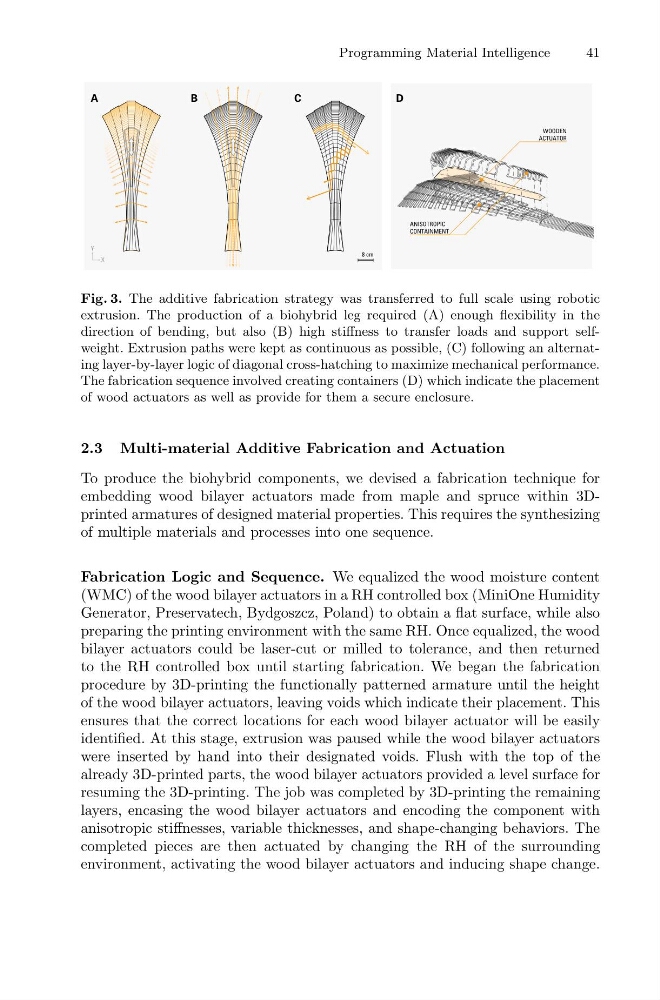
Fig. 3. The additive fabrication strategy was transferred to full scale using robotic
extrusion. The production of a biohybrid leg required (A) enough flexibility in the
direction of bending, but also (B) high stiffness to transfer loads and support selfweight. Extrusion paths were kept as continuous as possible, (C) following an alternating layer-by-layer logic of diagonal cross-hatching to maximize mechanical performance.
The fabrication sequence involved creating containers (D) which indicate the placement
of wood actuators as well as provide for them a secure enclosure.
2.3 Multi-material Additive Fabrication and Actuation
To produce the biohybrid components, we devised a fabrication technique for
embedding wood bilayer actuators made from maple and spruce within 3Dprinted armatures of designed material properties. This requires the synthesizing
of multiple materials and processes into one sequence.
Fabrication Logic and Sequence. We equalized the wood moisture content
(WMC) of the wood bilayer actuators in a RH controlled box (MiniOne Humidity
Generator, Preservatech, Bydgoszcz, Poland) to obtain a flat surface, while also
preparing the printing environment with the same RH. Once equalized, the wood
bilayer actuators could be laser-cut or milled to tolerance, and then returned
to the RH controlled box until starting fabrication. We began the fabrication
procedure by 3D-printing the functionally patterned armature until the height
of the wood bilayer actuators, leaving voids which indicate their placement. This
ensures that the correct locations for each wood bilayer actuator will be easily
identified. At this stage, extrusion was paused while the wood bilayer actuators
were inserted by hand into their designated voids. Flush with the top of the
already 3D-printed parts, the wood bilayer actuators provided a level surface for
resuming the 3D-printing. The job was completed by 3D-printing the remaining
layers, encasing the wood bilayer actuators and encoding the component with
anisotropic stiffnesses, variable thicknesses, and shape-changing behaviors. The
completed pieces are then actuated by changing the RH of the surrounding
environment, activating the wood bilayer actuators and inducing shape change.
41
A
B
C
D
WOODEN
ACTUATOR
ANISOTROPIC
CONTAINMENT
8 cm
X
Y
Fig. 3. The additive fabrication strategy was transferred to full scale using robotic
extrusion. The production of a biohybrid leg required (A) enough flexibility in the
direction of bending, but also (B) high stiffness to transfer loads and support selfweight. Extrusion paths were kept as continuous as possible, (C) following an alternating layer-by-layer logic of diagonal cross-hatching to maximize mechanical performance.
The fabrication sequence involved creating containers (D) which indicate the placement
of wood actuators as well as provide for them a secure enclosure.
2.3 Multi-material Additive Fabrication and Actuation
To produce the biohybrid components, we devised a fabrication technique for
embedding wood bilayer actuators made from maple and spruce within 3Dprinted armatures of designed material properties. This requires the synthesizing
of multiple materials and processes into one sequence.
Fabrication Logic and Sequence. We equalized the wood moisture content
(WMC) of the wood bilayer actuators in a RH controlled box (MiniOne Humidity
Generator, Preservatech, Bydgoszcz, Poland) to obtain a flat surface, while also
preparing the printing environment with the same RH. Once equalized, the wood
bilayer actuators could be laser-cut or milled to tolerance, and then returned
to the RH controlled box until starting fabrication. We began the fabrication
procedure by 3D-printing the functionally patterned armature until the height
of the wood bilayer actuators, leaving voids which indicate their placement. This
ensures that the correct locations for each wood bilayer actuator will be easily
identified. At this stage, extrusion was paused while the wood bilayer actuators
were inserted by hand into their designated voids. Flush with the top of the
already 3D-printed parts, the wood bilayer actuators provided a level surface for
resuming the 3D-printing. The job was completed by 3D-printing the remaining
layers, encasing the wood bilayer actuators and encoding the component with
anisotropic stiffnesses, variable thicknesses, and shape-changing behaviors. The
completed pieces are then actuated by changing the RH of the surrounding
environment, activating the wood bilayer actuators and inducing shape change.