

Biomimetic Design of a Soft Robotic Fish for High Speed Locomotion
373
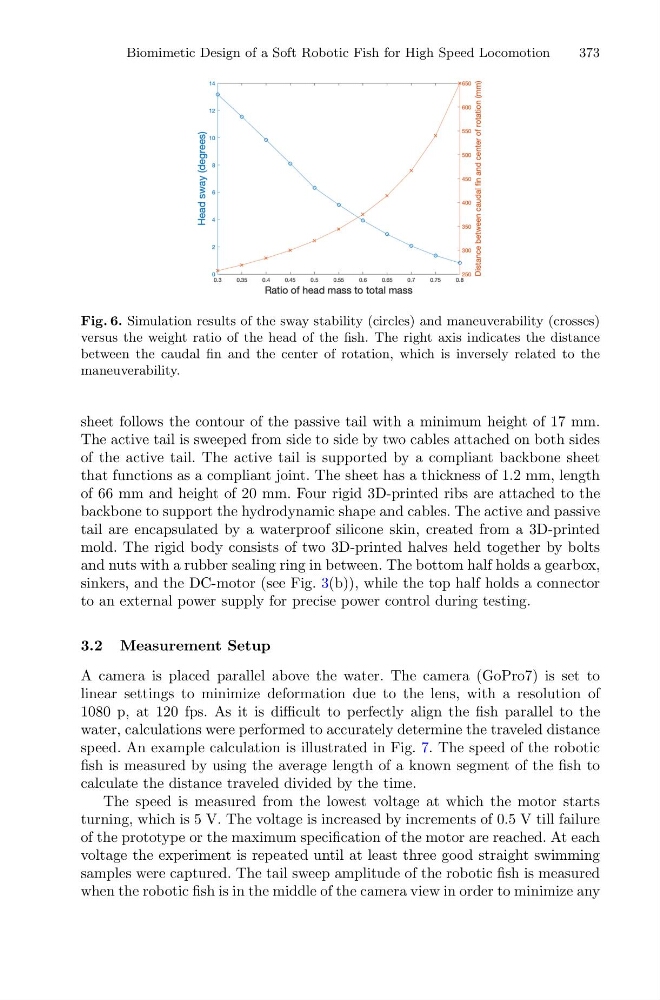
Fig. 6. Simulation results of the sway stability (circles) and maneuverability (crosses)
versus the weight ratio of the head of the fish. The right axis indicates the distance
between the caudal fin and the center of rotation, which is inversely related to the
maneuverability.
sheet follows the contour of the passive tail with a minimum height of 17 mm.
The active tail is sweeped from side to side by two cables attached on both sides
of the active tail. The active tail is supported by a compliant backbone sheet
that functions as a compliant joint. The sheet has a thickness of 1.2 mm, length
of 66 mm and height of 20 mm. Four rigid 3D-printed ribs are attached to the
backbone to support the hydrodynamic shape and cables. The active and passive
tail are encapsulated by a waterproof silicone skin, created from a 3D-printed
mold. The rigid body consists of two 3D-printed halves held together by bolts
and nuts with a rubber sealing ring in between. The bottom half holds a gearbox,
sinkers, and the DC-motor (see Fig. 3(b)), while the top half holds a connector
to an external power supply for precise power control during testing.
3.2 Measurement Setup
A camera is placed parallel above the water. The camera (GoPro7) is set to
linear settings to minimize deformation due to the lens, with a resolution of
1080 p, at 120 fps. As it is difficult to perfectly align the fish parallel to the
water, calculations were performed to accurately determine the traveled distance
speed. An example calculation is illustrated in Fig. 7. The speed of the robotic
fish is measured by using the average length of a known segment of the fish to
calculate the distance traveled divided by the time.
The speed is measured from the lowest voltage at which the motor starts
turning, which is 5 V. The voltage is increased by increments of 0.5 V till failure
of the prototype or the maximum specification of the motor are reached. At each
voltage the experiment is repeated until at least three good straight swimming
samples were captured. The tail sweep amplitude of the robotic fish is measured
when the robotic fish is in the middle of the camera view in order to minimize any
373
Fig. 6. Simulation results of the sway stability (circles) and maneuverability (crosses)
versus the weight ratio of the head of the fish. The right axis indicates the distance
between the caudal fin and the center of rotation, which is inversely related to the
maneuverability.
sheet follows the contour of the passive tail with a minimum height of 17 mm.
The active tail is sweeped from side to side by two cables attached on both sides
of the active tail. The active tail is supported by a compliant backbone sheet
that functions as a compliant joint. The sheet has a thickness of 1.2 mm, length
of 66 mm and height of 20 mm. Four rigid 3D-printed ribs are attached to the
backbone to support the hydrodynamic shape and cables. The active and passive
tail are encapsulated by a waterproof silicone skin, created from a 3D-printed
mold. The rigid body consists of two 3D-printed halves held together by bolts
and nuts with a rubber sealing ring in between. The bottom half holds a gearbox,
sinkers, and the DC-motor (see Fig. 3(b)), while the top half holds a connector
to an external power supply for precise power control during testing.
3.2 Measurement Setup
A camera is placed parallel above the water. The camera (GoPro7) is set to
linear settings to minimize deformation due to the lens, with a resolution of
1080 p, at 120 fps. As it is difficult to perfectly align the fish parallel to the
water, calculations were performed to accurately determine the traveled distance
speed. An example calculation is illustrated in Fig. 7. The speed of the robotic
fish is measured by using the average length of a known segment of the fish to
calculate the distance traveled divided by the time.
The speed is measured from the lowest voltage at which the motor starts
turning, which is 5 V. The voltage is increased by increments of 0.5 V till failure
of the prototype or the maximum specification of the motor are reached. At each
voltage the experiment is repeated until at least three good straight swimming
samples were captured. The tail sweep amplitude of the robotic fish is measured
when the robotic fish is in the middle of the camera view in order to minimize any