

330
J. Stankiewicz and B. Webb
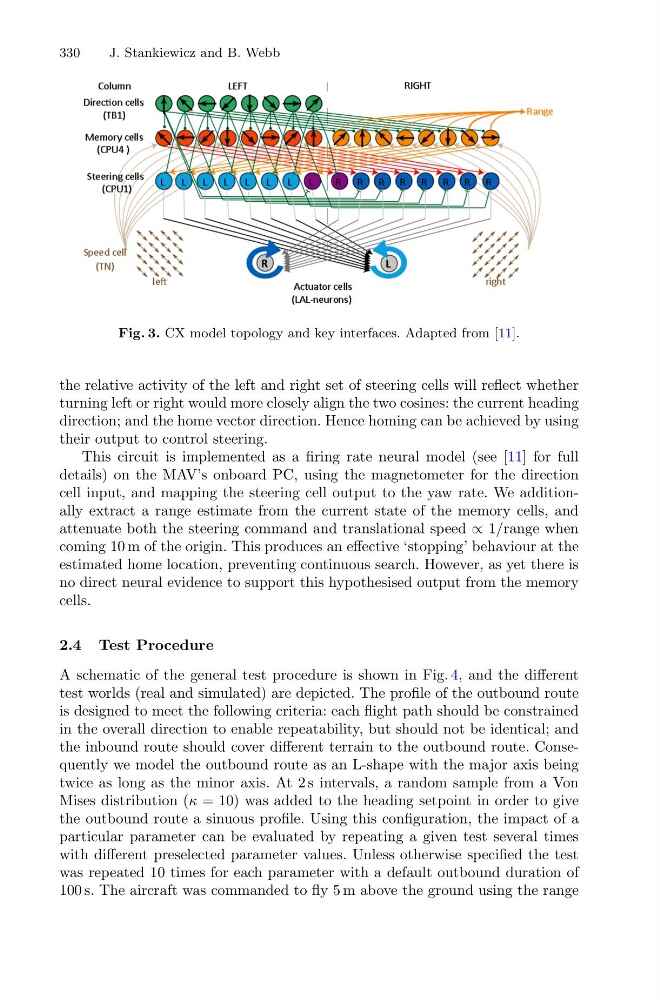
Fig. 3. CX model topology and key interfaces. Adapted from [11].
the relative activity of the left and right set of steering cells will reflect whether
turning left or right would more closely align the two cosines: the current heading
direction; and the home vector direction. Hence homing can be achieved by using
their output to control steering.
This circuit is implemented as a firing rate neural model (see [11] for full
details) on the MAV’s onboard PC, using the magnetometer for the direction
cell input, and mapping the steering cell output to the yaw rate. We additionally extract a range estimate from the current state of the memory cells, and
attenuate both the steering command and translational speed ∝ 1/range when
coming 10 m of the origin. This produces an effective ‘stopping’ behaviour at the
estimated home location, preventing continuous search. However, as yet there is
no direct neural evidence to support this hypothesised output from the memory
cells.
2.4 Test Procedure
A schematic of the general test procedure is shown in Fig. 4, and the different
test worlds (real and simulated) are depicted. The profile of the outbound route
is designed to meet the following criteria: each flight path should be constrained
in the overall direction to enable repeatability, but should not be identical; and
the inbound route should cover different terrain to the outbound route. Consequently we model the outbound route as an L-shape with the major axis being
twice as long as the minor axis. At 2 s intervals, a random sample from a Von
Mises distribution (κ = 10) was added to the heading setpoint in order to give
the outbound route a sinuous profile. Using this configuration, the impact of a
particular parameter can be evaluated by repeating a given test several times
with different preselected parameter values. Unless otherwise specified the test
was repeated 10 times for each parameter with a default outbound duration of
100 s. The aircraft was commanded to fly 5 m above the ground using the range
J. Stankiewicz and B. Webb
Fig. 3. CX model topology and key interfaces. Adapted from [11].
the relative activity of the left and right set of steering cells will reflect whether
turning left or right would more closely align the two cosines: the current heading
direction; and the home vector direction. Hence homing can be achieved by using
their output to control steering.
This circuit is implemented as a firing rate neural model (see [11] for full
details) on the MAV’s onboard PC, using the magnetometer for the direction
cell input, and mapping the steering cell output to the yaw rate. We additionally extract a range estimate from the current state of the memory cells, and
attenuate both the steering command and translational speed ∝ 1/range when
coming 10 m of the origin. This produces an effective ‘stopping’ behaviour at the
estimated home location, preventing continuous search. However, as yet there is
no direct neural evidence to support this hypothesised output from the memory
cells.
2.4 Test Procedure
A schematic of the general test procedure is shown in Fig. 4, and the different
test worlds (real and simulated) are depicted. The profile of the outbound route
is designed to meet the following criteria: each flight path should be constrained
in the overall direction to enable repeatability, but should not be identical; and
the inbound route should cover different terrain to the outbound route. Consequently we model the outbound route as an L-shape with the major axis being
twice as long as the minor axis. At 2 s intervals, a random sample from a Von
Mises distribution (κ = 10) was added to the heading setpoint in order to give
the outbound route a sinuous profile. Using this configuration, the impact of a
particular parameter can be evaluated by repeating a given test several times
with different preselected parameter values. Unless otherwise specified the test
was repeated 10 times for each parameter with a default outbound duration of
100 s. The aircraft was commanded to fly 5 m above the ground using the range