

Biohybrid Wind Energy Generators Based on Living Plants
239
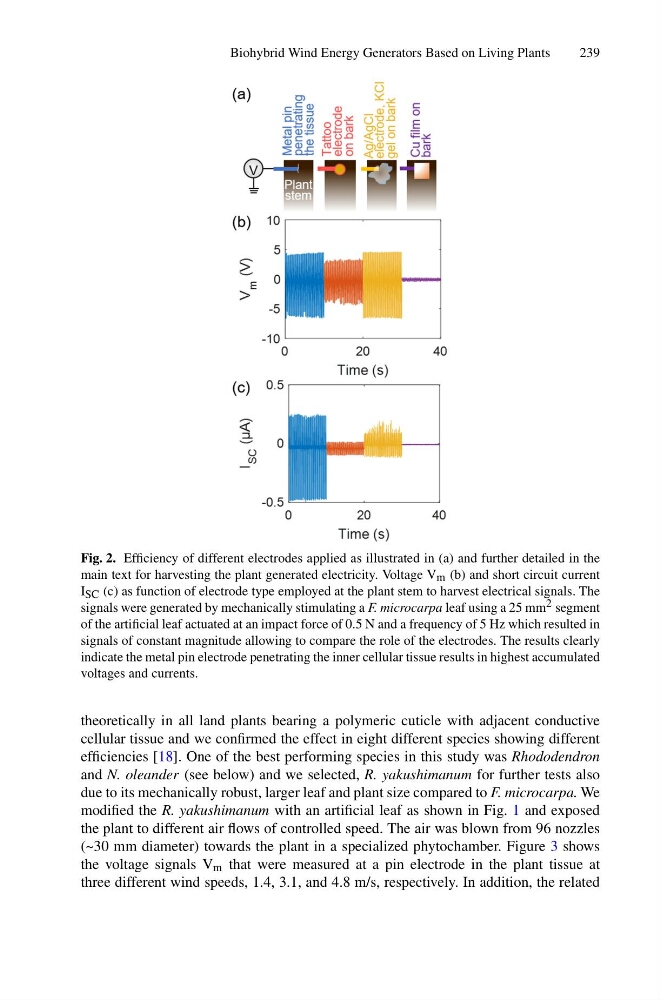
Fig. 2. Efficiency of different electrodes applied as illustrated in (a) and further detailed in the
main text for harvesting the plant generated electricity. Voltage V m (b) and short circuit current
I SC (c) as function of electrode type employed at the plant stem to harvest electrical signals. The
signals were generated by mechanically stimulating a F. microcarpa leaf using a 25 mm 2 segment
of the artificial leaf actuated at an impact force of 0.5 N and a frequency of 5 Hz which resulted in
signals of constant magnitude allowing to compare the role of the electrodes. The results clearly
indicate the metal pin electrode penetrating the inner cellular tissue results in highest accumulated
voltages and currents.
theoretically in all land plants bearing a polymeric cuticle with adjacent conductive
cellular tissue and we confirmed the effect in eight different species showing different
efficiencies [18]. One of the best performing species in this study was Rhododendron
and N. oleander (see below) and we selected, R. yakushimanum for further tests also
due to its mechanically robust, larger leaf and plant size compared to F. microcarpa. We
modified the R. yakushimanum with an artificial leaf as shown in Fig. 1 and exposed
the plant to different air flows of controlled speed. The air was blown from 96 nozzles
(~30 mm diameter) towards the plant in a specialized phytochamber. Figure 3 shows
the voltage signals V m that were measured at a pin electrode in the plant tissue at
three different wind speeds, 1.4, 3.1, and 4.8 m/s, respectively. In addition, the related
239
Fig. 2. Efficiency of different electrodes applied as illustrated in (a) and further detailed in the
main text for harvesting the plant generated electricity. Voltage V m (b) and short circuit current
I SC (c) as function of electrode type employed at the plant stem to harvest electrical signals. The
signals were generated by mechanically stimulating a F. microcarpa leaf using a 25 mm 2 segment
of the artificial leaf actuated at an impact force of 0.5 N and a frequency of 5 Hz which resulted in
signals of constant magnitude allowing to compare the role of the electrodes. The results clearly
indicate the metal pin electrode penetrating the inner cellular tissue results in highest accumulated
voltages and currents.
theoretically in all land plants bearing a polymeric cuticle with adjacent conductive
cellular tissue and we confirmed the effect in eight different species showing different
efficiencies [18]. One of the best performing species in this study was Rhododendron
and N. oleander (see below) and we selected, R. yakushimanum for further tests also
due to its mechanically robust, larger leaf and plant size compared to F. microcarpa. We
modified the R. yakushimanum with an artificial leaf as shown in Fig. 1 and exposed
the plant to different air flows of controlled speed. The air was blown from 96 nozzles
(~30 mm diameter) towards the plant in a specialized phytochamber. Figure 3 shows
the voltage signals V m that were measured at a pin electrode in the plant tissue at
three different wind speeds, 1.4, 3.1, and 4.8 m/s, respectively. In addition, the related