

238
F. Meder et al.
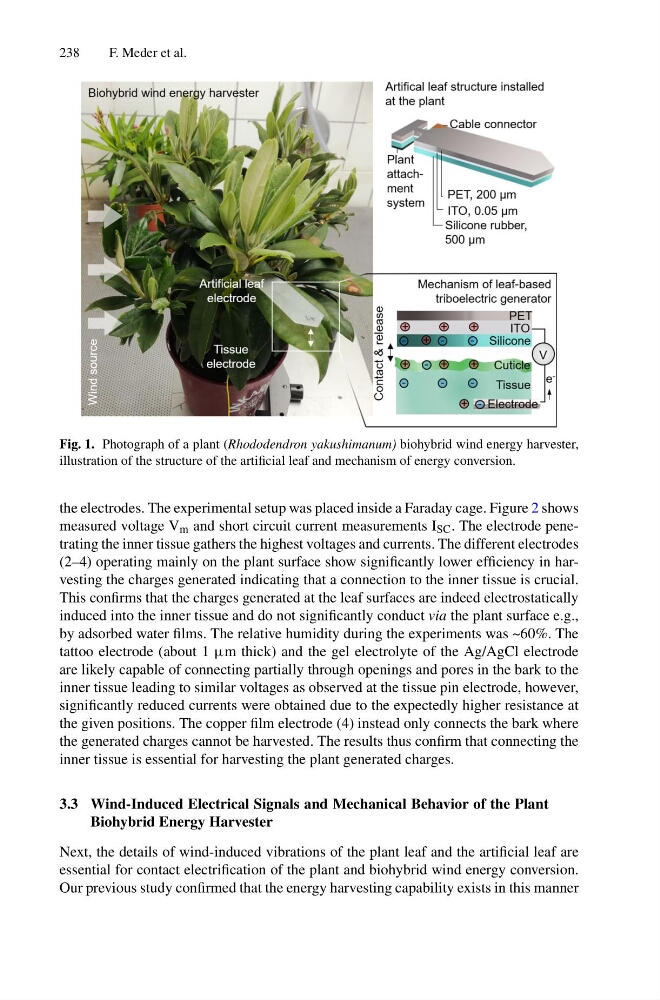
Fig. 1. Photograph of a plant (Rhododendron yakushimanum) biohybrid wind energy harvester,
illustration of the structure of the artificial leaf and mechanism of energy conversion.
the electrodes. The experimental setup was placed inside a Faraday cage. Figure 2 shows
measured voltage V m and short circuit current measurements I SC . The electrode penetrating the inner tissue gathers the highest voltages and currents. The different electrodes
(2–4) operating mainly on the plant surface show significantly lower efficiency in harvesting the charges generated indicating that a connection to the inner tissue is crucial.
This confirms that the charges generated at the leaf surfaces are indeed electrostatically
induced into the inner tissue and do not significantly conduct via the plant surface e.g.,
by adsorbed water films. The relative humidity during the experiments was ~60%. The
tattoo electrode (about 1 µm thick) and the gel electrolyte of the Ag/AgCl electrode
are likely capable of connecting partially through openings and pores in the bark to the
inner tissue leading to similar voltages as observed at the tissue pin electrode, however,
significantly reduced currents were obtained due to the expectedly higher resistance at
the given positions. The copper film electrode (4) instead only connects the bark where
the generated charges cannot be harvested. The results thus confirm that connecting the
inner tissue is essential for harvesting the plant generated charges.
3.3 Wind-Induced Electrical Signals and Mechanical Behavior of the Plant
Biohybrid Energy Harvester
Next, the details of wind-induced vibrations of the plant leaf and the artificial leaf are
essential for contact electrification of the plant and biohybrid wind energy conversion.
Our previous study confirmed that the energy harvesting capability exists in this manner
F. Meder et al.
Fig. 1. Photograph of a plant (Rhododendron yakushimanum) biohybrid wind energy harvester,
illustration of the structure of the artificial leaf and mechanism of energy conversion.
the electrodes. The experimental setup was placed inside a Faraday cage. Figure 2 shows
measured voltage V m and short circuit current measurements I SC . The electrode penetrating the inner tissue gathers the highest voltages and currents. The different electrodes
(2–4) operating mainly on the plant surface show significantly lower efficiency in harvesting the charges generated indicating that a connection to the inner tissue is crucial.
This confirms that the charges generated at the leaf surfaces are indeed electrostatically
induced into the inner tissue and do not significantly conduct via the plant surface e.g.,
by adsorbed water films. The relative humidity during the experiments was ~60%. The
tattoo electrode (about 1 µm thick) and the gel electrolyte of the Ag/AgCl electrode
are likely capable of connecting partially through openings and pores in the bark to the
inner tissue leading to similar voltages as observed at the tissue pin electrode, however,
significantly reduced currents were obtained due to the expectedly higher resistance at
the given positions. The copper film electrode (4) instead only connects the bark where
the generated charges cannot be harvested. The results thus confirm that connecting the
inner tissue is essential for harvesting the plant generated charges.
3.3 Wind-Induced Electrical Signals and Mechanical Behavior of the Plant
Biohybrid Energy Harvester
Next, the details of wind-induced vibrations of the plant leaf and the artificial leaf are
essential for contact electrification of the plant and biohybrid wind energy conversion.
Our previous study confirmed that the energy harvesting capability exists in this manner