

Split-Belt Adaptation Model of a Decerebrate Cat
225
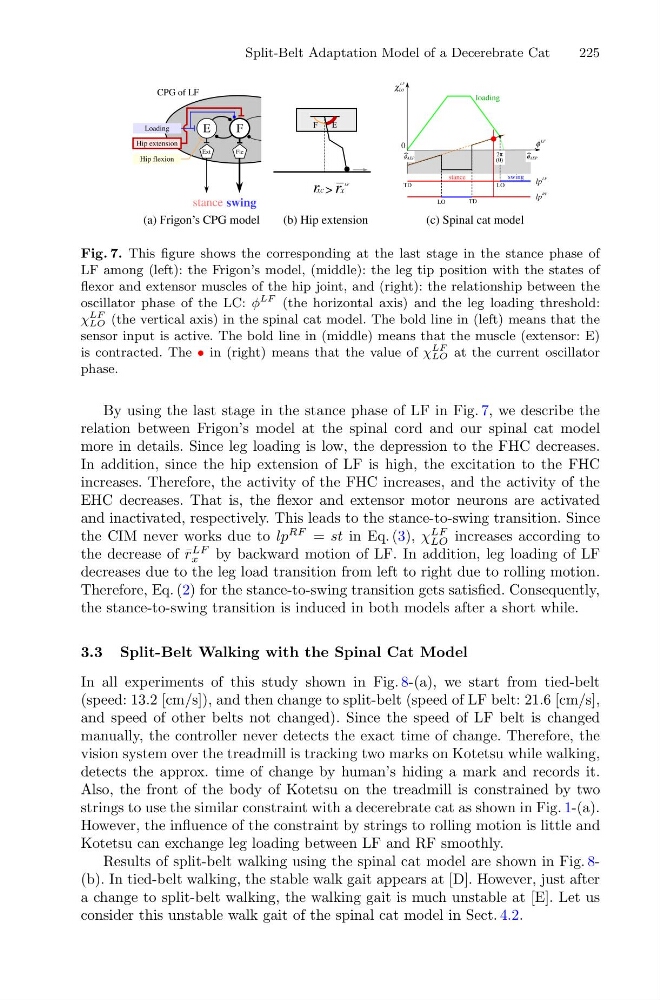
Fig. 7. This figure shows the corresponding at the last stage in the stance phase of
LF among (left): the Frigon’s model, (middle): the leg tip position with the states of
flexor and extensor muscles of the hip joint, and (right): the relationship between the
oscillator phase of the LC: φ
LF (the horizontal axis) and the leg loading threshold:
χ
LF
LO (the vertical axis) in the spinal cat model. The bold line in (left) means that the
sensor input is active. The bold line in (middle) means that the muscle (extensor: E)
is contracted. The • in (right) means that the value of χ
LF
LO at the current oscillator
phase.
By using the last stage in the stance phase of LF in Fig. 7, we describe the
relation between Frigon’s model at the spinal cord and our spinal cat model
more in details. Since leg loading is low, the depression to the FHC decreases.
In addition, since the hip extension of LF is high, the excitation to the FHC
increases. Therefore, the activity of the FHC increases, and the activity of the
EHC decreases. That is, the flexor and extensor motor neurons are activated
and inactivated, respectively. This leads to the stance-to-swing transition. Since
the CIM never works due to lp
RF = st in Eq. (3), χ
LF
LO increases according to
the decrease of ¯
r
LF
x
by backward motion of LF. In addition, leg loading of LF
decreases due to the leg load transition from left to right due to rolling motion.
Therefore, Eq. (2) for the stance-to-swing transition gets satisfied. Consequently,
the stance-to-swing transition is induced in both models after a short while.
3.3 Split-Belt Walking with the Spinal Cat Model
In all experiments of this study shown in Fig. 8-(a), we start from tied-belt
(speed: 13.2 [cm/s]), and then change to split-belt (speed of LF belt: 21.6 [cm/s],
and speed of other belts not changed). Since the speed of LF belt is changed
manually, the controller never detects the exact time of change. Therefore, the
vision system over the treadmill is tracking two marks on Kotetsu while walking,
detects the approx. time of change by human’s hiding a mark and records it.
Also, the front of the body of Kotetsu on the treadmill is constrained by two
strings to use the similar constraint with a decerebrate cat as shown in Fig. 1-(a).
However, the influence of the constraint by strings to rolling motion is little and
Kotetsu can exchange leg loading between LF and RF smoothly.
Results of split-belt walking using the spinal cat model are shown in Fig. 8(b). In tied-belt walking, the stable walk gait appears at [D]. However, just after
a change to split-belt walking, the walking gait is much unstable at [E]. Let us
consider this unstable walk gait of the spinal cat model in Sect. 4.2.
225
Fig. 7. This figure shows the corresponding at the last stage in the stance phase of
LF among (left): the Frigon’s model, (middle): the leg tip position with the states of
flexor and extensor muscles of the hip joint, and (right): the relationship between the
oscillator phase of the LC: φ
LF (the horizontal axis) and the leg loading threshold:
χ
LF
LO (the vertical axis) in the spinal cat model. The bold line in (left) means that the
sensor input is active. The bold line in (middle) means that the muscle (extensor: E)
is contracted. The • in (right) means that the value of χ
LF
LO at the current oscillator
phase.
By using the last stage in the stance phase of LF in Fig. 7, we describe the
relation between Frigon’s model at the spinal cord and our spinal cat model
more in details. Since leg loading is low, the depression to the FHC decreases.
In addition, since the hip extension of LF is high, the excitation to the FHC
increases. Therefore, the activity of the FHC increases, and the activity of the
EHC decreases. That is, the flexor and extensor motor neurons are activated
and inactivated, respectively. This leads to the stance-to-swing transition. Since
the CIM never works due to lp
RF = st in Eq. (3), χ
LF
LO increases according to
the decrease of ¯
r
LF
x
by backward motion of LF. In addition, leg loading of LF
decreases due to the leg load transition from left to right due to rolling motion.
Therefore, Eq. (2) for the stance-to-swing transition gets satisfied. Consequently,
the stance-to-swing transition is induced in both models after a short while.
3.3 Split-Belt Walking with the Spinal Cat Model
In all experiments of this study shown in Fig. 8-(a), we start from tied-belt
(speed: 13.2 [cm/s]), and then change to split-belt (speed of LF belt: 21.6 [cm/s],
and speed of other belts not changed). Since the speed of LF belt is changed
manually, the controller never detects the exact time of change. Therefore, the
vision system over the treadmill is tracking two marks on Kotetsu while walking,
detects the approx. time of change by human’s hiding a mark and records it.
Also, the front of the body of Kotetsu on the treadmill is constrained by two
strings to use the similar constraint with a decerebrate cat as shown in Fig. 1-(a).
However, the influence of the constraint by strings to rolling motion is little and
Kotetsu can exchange leg loading between LF and RF smoothly.
Results of split-belt walking using the spinal cat model are shown in Fig. 8(b). In tied-belt walking, the stable walk gait appears at [D]. However, just after
a change to split-belt walking, the walking gait is much unstable at [E]. Let us
consider this unstable walk gait of the spinal cat model in Sect. 4.2.