

198
A. Jimenez-Rodriguez et al.
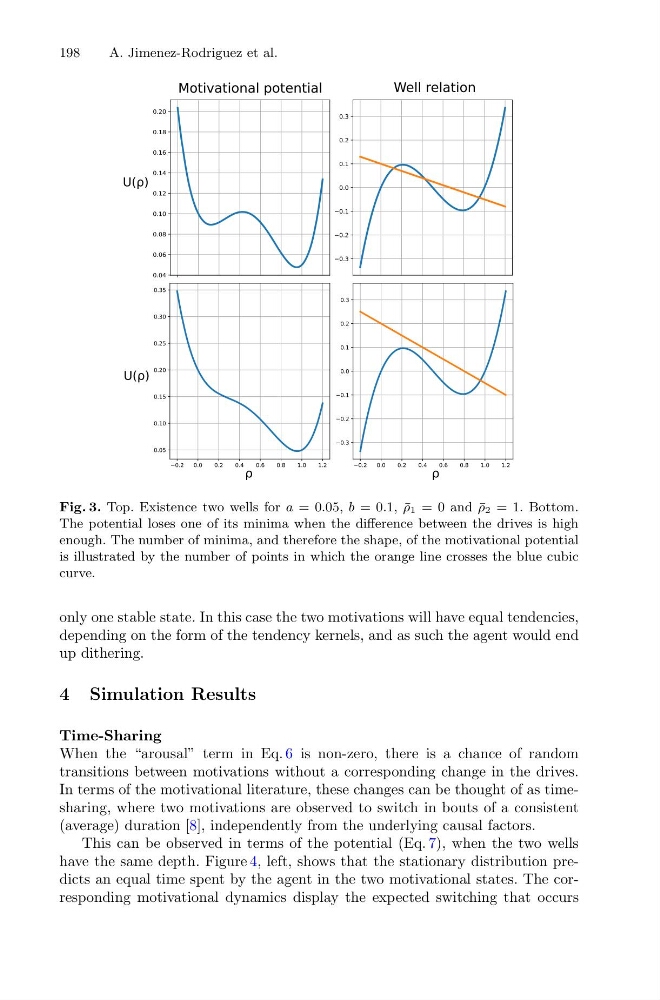
Fig. 3. Top. Existence two wells for a = 0.05, b = 0.1, ¯
ρ1 = 0 and ¯
ρ2 = 1. Bottom.
The potential loses one of its minima when the difference between the drives is high
enough. The number of minima, and therefore the shape, of the motivational potential
is illustrated by the number of points in which the orange line crosses the blue cubic
curve.
only one stable state. In this case the two motivations will have equal tendencies,
depending on the form of the tendency kernels, and as such the agent would end
up dithering.
4 Simulation Results
Time-Sharing
When the “arousal” term in Eq. 6 is non-zero, there is a chance of random
transitions between motivations without a corresponding change in the drives.
In terms of the motivational literature, these changes can be thought of as timesharing, where two motivations are observed to switch in bouts of a consistent
(average) duration [8], independently from the underlying causal factors.
This can be observed in terms of the potential (Eq. 7), when the two wells
have the same depth. Figure 4, left, shows that the stationary distribution predicts an equal time spent by the agent in the two motivational states. The corresponding motivational dynamics display the expected switching that occurs
A. Jimenez-Rodriguez et al.
Fig. 3. Top. Existence two wells for a = 0.05, b = 0.1, ¯
ρ1 = 0 and ¯
ρ2 = 1. Bottom.
The potential loses one of its minima when the difference between the drives is high
enough. The number of minima, and therefore the shape, of the motivational potential
is illustrated by the number of points in which the orange line crosses the blue cubic
curve.
only one stable state. In this case the two motivations will have equal tendencies,
depending on the form of the tendency kernels, and as such the agent would end
up dithering.
4 Simulation Results
Time-Sharing
When the “arousal” term in Eq. 6 is non-zero, there is a chance of random
transitions between motivations without a corresponding change in the drives.
In terms of the motivational literature, these changes can be thought of as timesharing, where two motivations are observed to switch in bouts of a consistent
(average) duration [8], independently from the underlying causal factors.
This can be observed in terms of the potential (Eq. 7), when the two wells
have the same depth. Figure 4, left, shows that the stationary distribution predicts an equal time spent by the agent in the two motivational states. The corresponding motivational dynamics display the expected switching that occurs