

12
C. Hu and G. Popescu
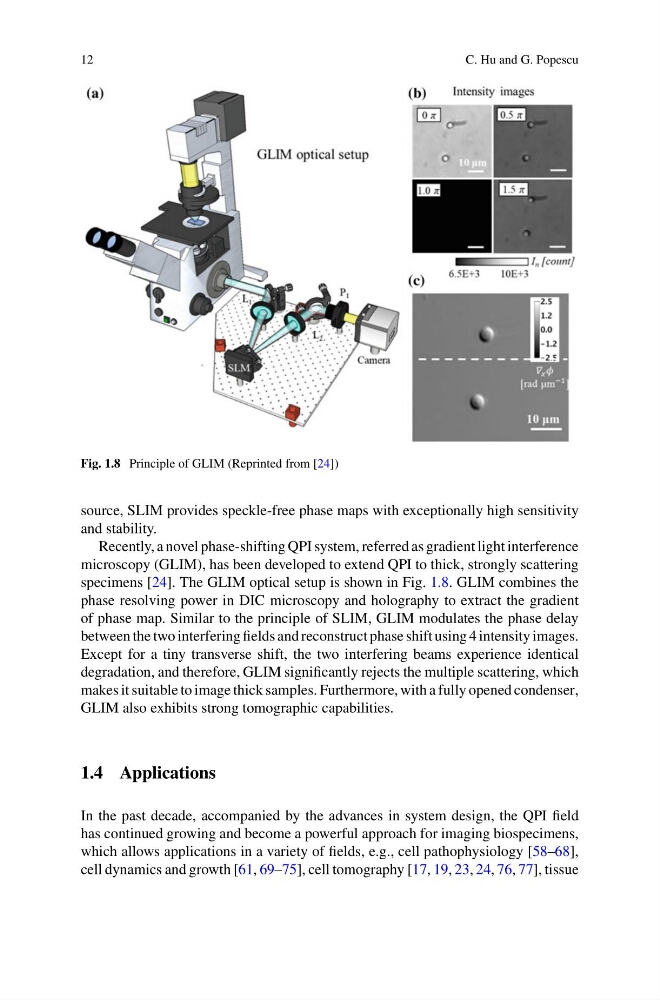
Fig. 1.8 Principle of GLIM (Reprinted from [24])
source, SLIM provides speckle-free phase maps with exceptionally high sensitivity
and stability.
Recently, a novel phase-shifting QPI system, referred as gradient light interference
microscopy (GLIM), has been developed to extend QPI to thick, strongly scattering
specimens [24]. The GLIM optical setup is shown in Fig. 1.8. GLIM combines the
phase resolving power in DIC microscopy and holography to extract the gradient
of phase map. Similar to the principle of SLIM, GLIM modulates the phase delay
between the two interfering fields and reconstruct phase shift using 4 intensity images.
Except for a tiny transverse shift, the two interfering beams experience identical
degradation, and therefore, GLIM significantly rejects the multiple scattering, which
makes it suitable to image thick samples. Furthermore, with a fully opened condenser,
GLIM also exhibits strong tomographic capabilities.
1.4 Applications
In the past decade, accompanied by the advances in system design, the QPI field
has continued growing and become a powerful approach for imaging biospecimens,
which allows applications in a variety of fields, e.g., cell pathophysiology [58–68],
cell dynamics and growth [61, 69–75], cell tomography [17, 19, 23, 24, 76, 77], tissue
C. Hu and G. Popescu
Fig. 1.8 Principle of GLIM (Reprinted from [24])
source, SLIM provides speckle-free phase maps with exceptionally high sensitivity
and stability.
Recently, a novel phase-shifting QPI system, referred as gradient light interference
microscopy (GLIM), has been developed to extend QPI to thick, strongly scattering
specimens [24]. The GLIM optical setup is shown in Fig. 1.8. GLIM combines the
phase resolving power in DIC microscopy and holography to extract the gradient
of phase map. Similar to the principle of SLIM, GLIM modulates the phase delay
between the two interfering fields and reconstruct phase shift using 4 intensity images.
Except for a tiny transverse shift, the two interfering beams experience identical
degradation, and therefore, GLIM significantly rejects the multiple scattering, which
makes it suitable to image thick samples. Furthermore, with a fully opened condenser,
GLIM also exhibits strong tomographic capabilities.
1.4 Applications
In the past decade, accompanied by the advances in system design, the QPI field
has continued growing and become a powerful approach for imaging biospecimens,
which allows applications in a variety of fields, e.g., cell pathophysiology [58–68],
cell dynamics and growth [61, 69–75], cell tomography [17, 19, 23, 24, 76, 77], tissue