

10
C. Hu and G. Popescu
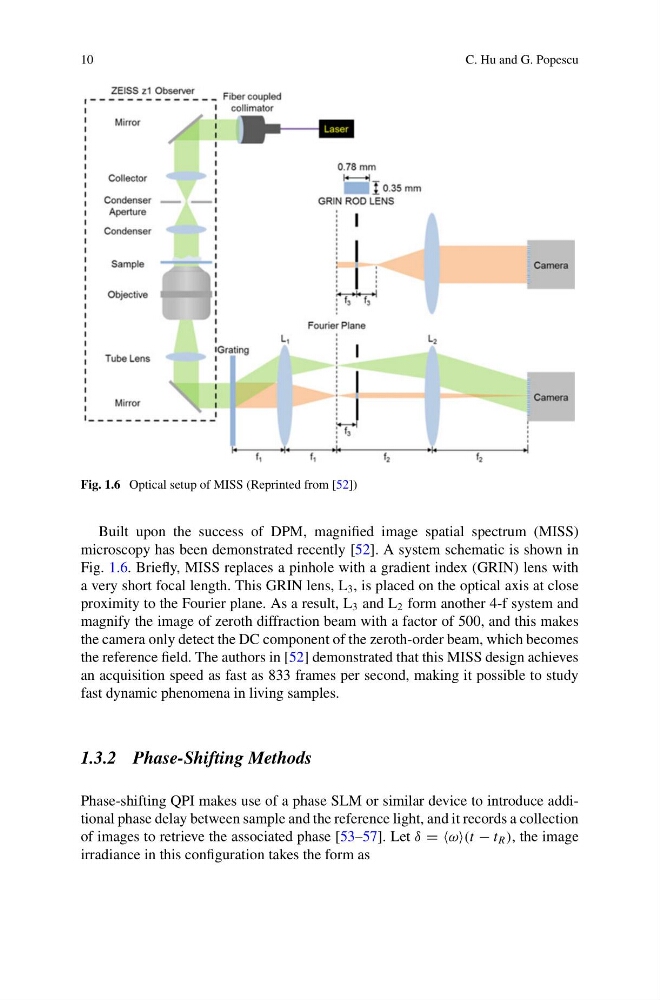
Fig. 1.6 Optical setup of MISS (Reprinted from [52])
Built upon the success of DPM, magnified image spatial spectrum (MISS)
microscopy has been demonstrated recently [52]. A system schematic is shown in
Fig. 1.6. Briefly, MISS replaces a pinhole with a gradient index (GRIN) lens with
a very short focal length. This GRIN lens, L 3 , is placed on the optical axis at close
proximity to the Fourier plane. As a result, L 3 and L 2 form another 4-f system and
magnify the image of zeroth diffraction beam with a factor of 500, and this makes
the camera only detect the DC component of the zeroth-order beam, which becomes
the reference field. The authors in [52] demonstrated that this MISS design achieves
an acquisition speed as fast as 833 frames per second, making it possible to study
fast dynamic phenomena in living samples.
1.3.2 Phase-Shifting Methods
Phase-shifting QPI makes use of a phase SLM or similar device to introduce additional phase delay between sample and the reference light, and it records a collection
of images to retrieve the associated phase [53–57]. Let δ = ω(t − t R ), the image
irradiance in this configuration takes the form as
C. Hu and G. Popescu
Fig. 1.6 Optical setup of MISS (Reprinted from [52])
Built upon the success of DPM, magnified image spatial spectrum (MISS)
microscopy has been demonstrated recently [52]. A system schematic is shown in
Fig. 1.6. Briefly, MISS replaces a pinhole with a gradient index (GRIN) lens with
a very short focal length. This GRIN lens, L 3 , is placed on the optical axis at close
proximity to the Fourier plane. As a result, L 3 and L 2 form another 4-f system and
magnify the image of zeroth diffraction beam with a factor of 500, and this makes
the camera only detect the DC component of the zeroth-order beam, which becomes
the reference field. The authors in [52] demonstrated that this MISS design achieves
an acquisition speed as fast as 833 frames per second, making it possible to study
fast dynamic phenomena in living samples.
1.3.2 Phase-Shifting Methods
Phase-shifting QPI makes use of a phase SLM or similar device to introduce additional phase delay between sample and the reference light, and it records a collection
of images to retrieve the associated phase [53–57]. Let δ = ω(t − t R ), the image
irradiance in this configuration takes the form as