

226
H. Pinhas et al.
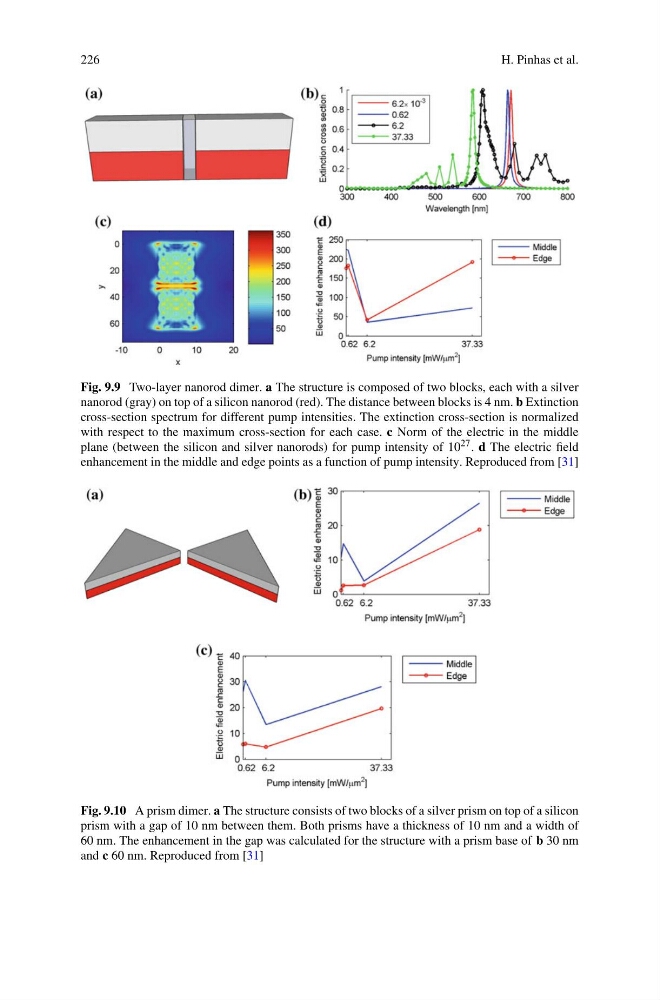
Fig. 9.9 Two-layer nanorod dimer. a The structure is composed of two blocks, each with a silver
nanorod (gray) on top of a silicon nanorod (red). The distance between blocks is 4 nm. b Extinction
cross-section spectrum for different pump intensities. The extinction cross-section is normalized
with respect to the maximum cross-section for each case. c Norm of the electric in the middle
plane (between the silicon and silver nanorods) for pump intensity of 10 27 . d The electric field
enhancement in the middle and edge points as a function of pump intensity. Reproduced from [31]
Fig. 9.10 A prism dimer. a The structure consists of two blocks of a silver prism on top of a silicon
prism with a gap of 10 nm between them. Both prisms have a thickness of 10 nm and a width of
60 nm. The enhancement in the gap was calculated for the structure with a prism base of b 30 nm
and c 60 nm. Reproduced from [31]
H. Pinhas et al.
Fig. 9.9 Two-layer nanorod dimer. a The structure is composed of two blocks, each with a silver
nanorod (gray) on top of a silicon nanorod (red). The distance between blocks is 4 nm. b Extinction
cross-section spectrum for different pump intensities. The extinction cross-section is normalized
with respect to the maximum cross-section for each case. c Norm of the electric in the middle
plane (between the silicon and silver nanorods) for pump intensity of 10 27 . d The electric field
enhancement in the middle and edge points as a function of pump intensity. Reproduced from [31]
Fig. 9.10 A prism dimer. a The structure consists of two blocks of a silver prism on top of a silicon
prism with a gap of 10 nm between them. Both prisms have a thickness of 10 nm and a width of
60 nm. The enhancement in the gap was calculated for the structure with a prism base of b 30 nm
and c 60 nm. Reproduced from [31]