

10 Finite Element Algorithms for Computational Biomechanics of the Brain
245
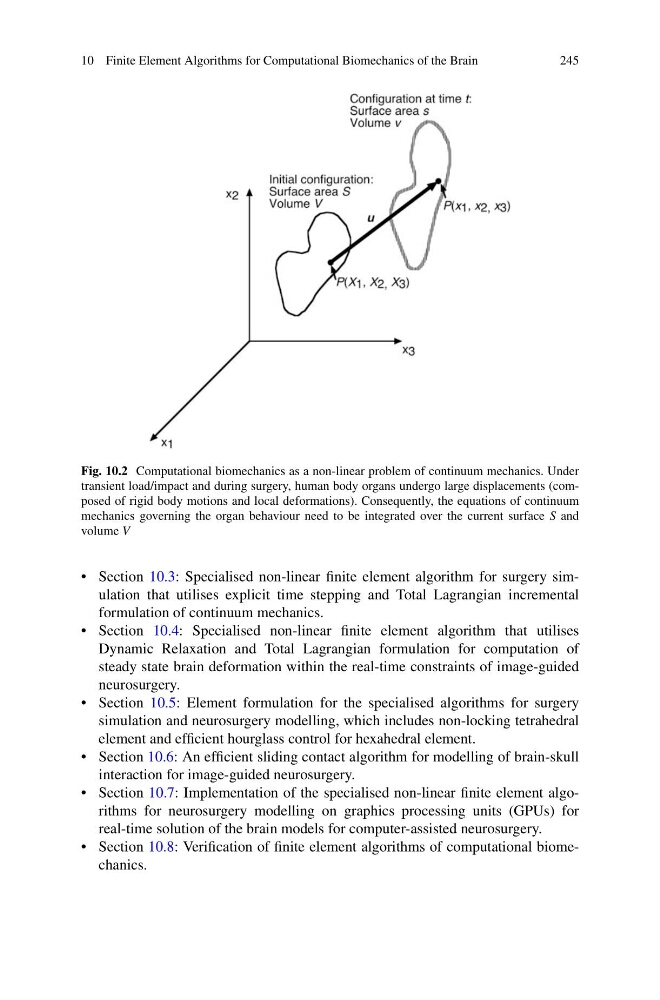
Fig. 10.2 Computational biomechanics as a non-linear problem of continuum mechanics. Under
transient load/impact and during surgery, human body organs undergo large displacements (composed of rigid body motions and local deformations). Consequently, the equations of continuum
mechanics governing the organ behaviour need to be integrated over the current surface S and
volume V
• Section 10.3: Specialised non-linear finite element algorithm for surgery simulation that utilises explicit time stepping and Total Lagrangian incremental
formulation of continuum mechanics.
• Section 10.4: Specialised non-linear finite element algorithm that utilises
Dynamic Relaxation and Total Lagrangian formulation for computation of
steady state brain deformation within the real-time constraints of image-guided
neurosurgery.
• Section 10.5: Element formulation for the specialised algorithms for surgery
simulation and neurosurgery modelling, which includes non-locking tetrahedral
element and efficient hourglass control for hexahedral element.
• Section 10.6: An efficient sliding contact algorithm for modelling of brain-skull
interaction for image-guided neurosurgery.
• Section 10.7: Implementation of the specialised non-linear finite element algorithms for neurosurgery modelling on graphics processing units (GPUs) for
real-time solution of the brain models for computer-assisted neurosurgery.
• Section 10.8: Verification of finite element algorithms of computational biomechanics.
245
Fig. 10.2 Computational biomechanics as a non-linear problem of continuum mechanics. Under
transient load/impact and during surgery, human body organs undergo large displacements (composed of rigid body motions and local deformations). Consequently, the equations of continuum
mechanics governing the organ behaviour need to be integrated over the current surface S and
volume V
• Section 10.3: Specialised non-linear finite element algorithm for surgery simulation that utilises explicit time stepping and Total Lagrangian incremental
formulation of continuum mechanics.
• Section 10.4: Specialised non-linear finite element algorithm that utilises
Dynamic Relaxation and Total Lagrangian formulation for computation of
steady state brain deformation within the real-time constraints of image-guided
neurosurgery.
• Section 10.5: Element formulation for the specialised algorithms for surgery
simulation and neurosurgery modelling, which includes non-locking tetrahedral
element and efficient hourglass control for hexahedral element.
• Section 10.6: An efficient sliding contact algorithm for modelling of brain-skull
interaction for image-guided neurosurgery.
• Section 10.7: Implementation of the specialised non-linear finite element algorithms for neurosurgery modelling on graphics processing units (GPUs) for
real-time solution of the brain models for computer-assisted neurosurgery.
• Section 10.8: Verification of finite element algorithms of computational biomechanics.