

8 Dynamics of Cerebrospinal Fluid: From Theoretical Models to Clinical Applications
209
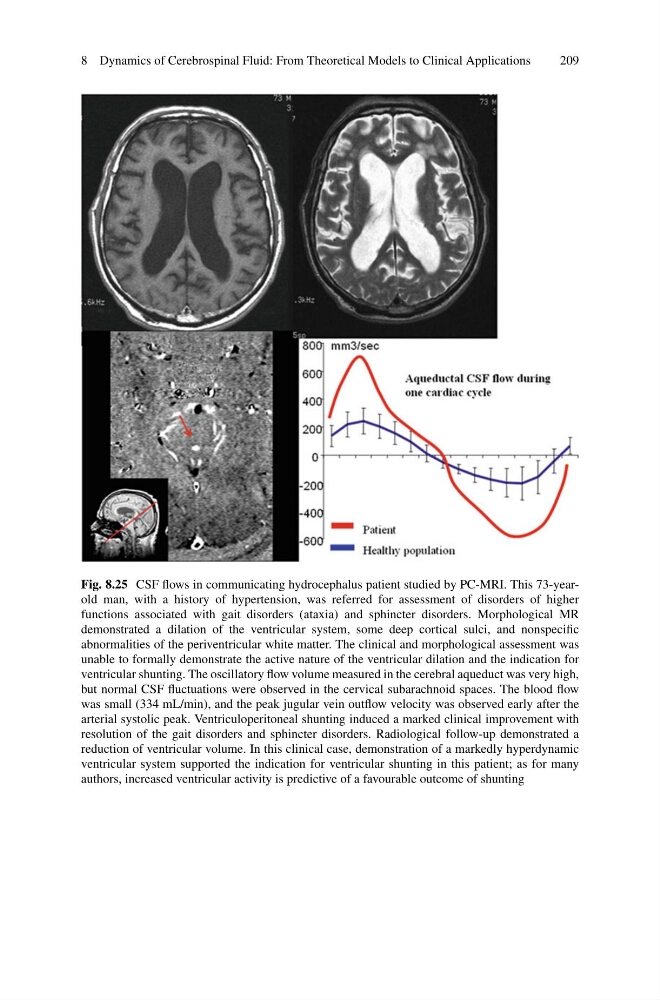
Fig. 8.25 CSF flows in communicating hydrocephalus patient studied by PC-MRI. This 73-yearold man, with a history of hypertension, was referred for assessment of disorders of higher
functions associated with gait disorders (ataxia) and sphincter disorders. Morphological MR
demonstrated a dilation of the ventricular system, some deep cortical sulci, and nonspecific
abnormalities of the periventricular white matter. The clinical and morphological assessment was
unable to formally demonstrate the active nature of the ventricular dilation and the indication for
ventricular shunting. The oscillatory flow volume measured in the cerebral aqueduct was very high,
but normal CSF fluctuations were observed in the cervical subarachnoid spaces. The blood flow
was small (334 mL/min), and the peak jugular vein outflow velocity was observed early after the
arterial systolic peak. Ventriculoperitoneal shunting induced a marked clinical improvement with
resolution of the gait disorders and sphincter disorders. Radiological follow-up demonstrated a
reduction of ventricular volume. In this clinical case, demonstration of a markedly hyperdynamic
ventricular system supported the indication for ventricular shunting in this patient; as for many
authors, increased ventricular activity is predictive of a favourable outcome of shunting
209
Fig. 8.25 CSF flows in communicating hydrocephalus patient studied by PC-MRI. This 73-yearold man, with a history of hypertension, was referred for assessment of disorders of higher
functions associated with gait disorders (ataxia) and sphincter disorders. Morphological MR
demonstrated a dilation of the ventricular system, some deep cortical sulci, and nonspecific
abnormalities of the periventricular white matter. The clinical and morphological assessment was
unable to formally demonstrate the active nature of the ventricular dilation and the indication for
ventricular shunting. The oscillatory flow volume measured in the cerebral aqueduct was very high,
but normal CSF fluctuations were observed in the cervical subarachnoid spaces. The blood flow
was small (334 mL/min), and the peak jugular vein outflow velocity was observed early after the
arterial systolic peak. Ventriculoperitoneal shunting induced a marked clinical improvement with
resolution of the gait disorders and sphincter disorders. Radiological follow-up demonstrated a
reduction of ventricular volume. In this clinical case, demonstration of a markedly hyperdynamic
ventricular system supported the indication for ventricular shunting in this patient; as for many
authors, increased ventricular activity is predictive of a favourable outcome of shunting