

208
L. Geregele et al.
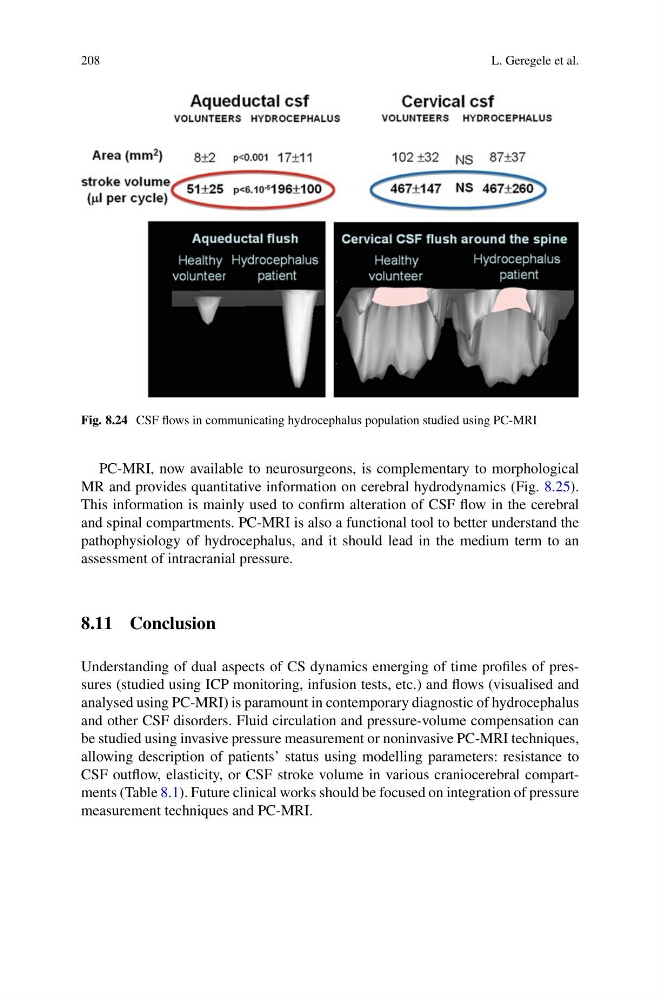
Fig. 8.24 CSF flows in communicating hydrocephalus population studied using PC-MRI
PC-MRI, now available to neurosurgeons, is complementary to morphological
MR and provides quantitative information on cerebral hydrodynamics (Fig. 8.25).
This information is mainly used to confirm alteration of CSF flow in the cerebral
and spinal compartments. PC-MRI is also a functional tool to better understand the
pathophysiology of hydrocephalus, and it should lead in the medium term to an
assessment of intracranial pressure.
8.11 Conclusion
Understanding of dual aspects of CS dynamics emerging of time profiles of pressures (studied using ICP monitoring, infusion tests, etc.) and flows (visualised and
analysed using PC-MRI) is paramount in contemporary diagnostic of hydrocephalus
and other CSF disorders. Fluid circulation and pressure-volume compensation can
be studied using invasive pressure measurement or noninvasive PC-MRI techniques,
allowing description of patients’ status using modelling parameters: resistance to
CSF outflow, elasticity, or CSF stroke volume in various craniocerebral compartments (Table 8.1). Future clinical works should be focused on integration of pressure
measurement techniques and PC-MRI.
L. Geregele et al.
Fig. 8.24 CSF flows in communicating hydrocephalus population studied using PC-MRI
PC-MRI, now available to neurosurgeons, is complementary to morphological
MR and provides quantitative information on cerebral hydrodynamics (Fig. 8.25).
This information is mainly used to confirm alteration of CSF flow in the cerebral
and spinal compartments. PC-MRI is also a functional tool to better understand the
pathophysiology of hydrocephalus, and it should lead in the medium term to an
assessment of intracranial pressure.
8.11 Conclusion
Understanding of dual aspects of CS dynamics emerging of time profiles of pressures (studied using ICP monitoring, infusion tests, etc.) and flows (visualised and
analysed using PC-MRI) is paramount in contemporary diagnostic of hydrocephalus
and other CSF disorders. Fluid circulation and pressure-volume compensation can
be studied using invasive pressure measurement or noninvasive PC-MRI techniques,
allowing description of patients’ status using modelling parameters: resistance to
CSF outflow, elasticity, or CSF stroke volume in various craniocerebral compartments (Table 8.1). Future clinical works should be focused on integration of pressure
measurement techniques and PC-MRI.