

210
L. Geregele et al.
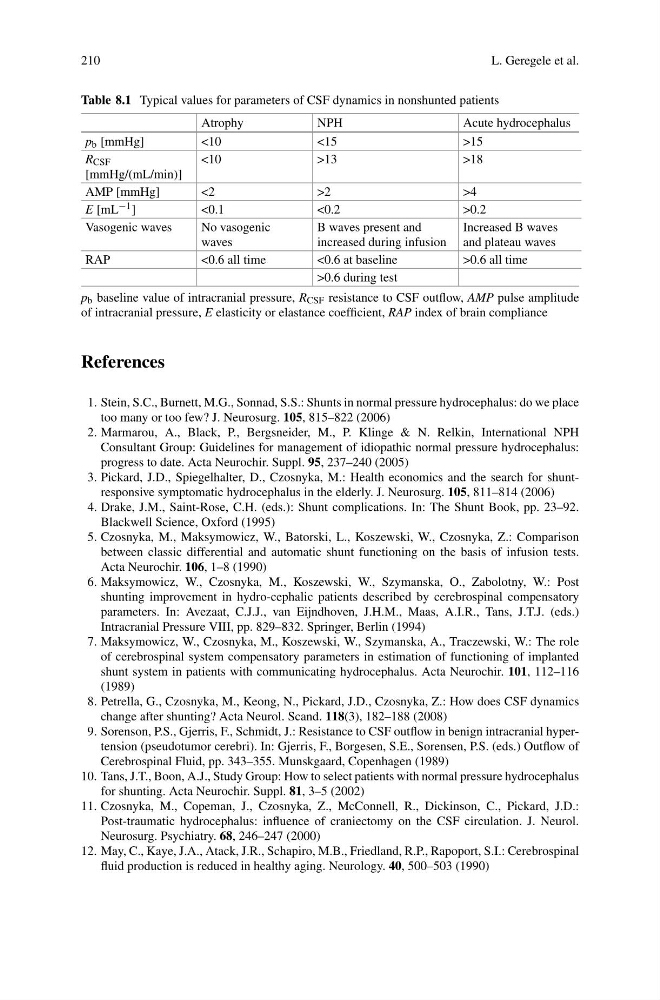
Table 8.1 Typical values for parameters of CSF dynamics in nonshunted patients
Atrophy
NPH
Acute hydrocephalus
p b [mmHg]
<10
<15
>15
R CSF
[mmHg/(mL/min)]
<10
>13
>18
AMP [mmHg]
<2
>2
>4
E [mL −1 ]
<0.1
<0.2
>0.2
Vasogenic waves
No vasogenic
waves
B waves present and
increased during infusion
Increased B waves
and plateau waves
RAP
<0.6 all time
<0.6 at baseline
>0.6 all time
>0.6 during test
p b baseline value of intracranial pressure, R CSF resistance to CSF outflow, AMP pulse amplitude
of intracranial pressure, E elasticity or elastance coefficient, RAP index of brain compliance
References
1. Stein, S.C., Burnett, M.G., Sonnad, S.S.: Shunts in normal pressure hydrocephalus: do we place
too many or too few? J. Neurosurg. 105, 815–822 (2006)
2. Marmarou, A., Black, P., Bergsneider, M., P. Klinge & N. Relkin, International NPH
Consultant Group: Guidelines for management of idiopathic normal pressure hydrocephalus:
progress to date. Acta Neurochir. Suppl. 95, 237–240 (2005)
3. Pickard, J.D., Spiegelhalter, D., Czosnyka, M.: Health economics and the search for shuntresponsive symptomatic hydrocephalus in the elderly. J. Neurosurg. 105, 811–814 (2006)
4. Drake, J.M., Saint-Rose, C.H. (eds.): Shunt complications. In: The Shunt Book, pp. 23–92.
Blackwell Science, Oxford (1995)
5. Czosnyka, M., Maksymowicz, W., Batorski, L., Koszewski, W., Czosnyka, Z.: Comparison
between classic differential and automatic shunt functioning on the basis of infusion tests.
Acta Neurochir. 106, 1–8 (1990)
6. Maksymowicz, W., Czosnyka, M., Koszewski, W., Szymanska, O., Zabolotny, W.: Post
shunting improvement in hydro-cephalic patients described by cerebrospinal compensatory
parameters. In: Avezaat, C.J.J., van Eijndhoven, J.H.M., Maas, A.I.R., Tans, J.T.J. (eds.)
Intracranial Pressure VIII, pp. 829–832. Springer, Berlin (1994)
7. Maksymowicz, W., Czosnyka, M., Koszewski, W., Szymanska, A., Traczewski, W.: The role
of cerebrospinal system compensatory parameters in estimation of functioning of implanted
shunt system in patients with communicating hydrocephalus. Acta Neurochir. 101, 112–116
(1989)
8. Petrella, G., Czosnyka, M., Keong, N., Pickard, J.D., Czosnyka, Z.: How does CSF dynamics
change after shunting? Acta Neurol. Scand. 118(3), 182–188 (2008)
9. Sorenson, P.S., Gjerris, F., Schmidt, J.: Resistance to CSF outflow in benign intracranial hypertension (pseudotumor cerebri). In: Gjerris, F., Borgesen, S.E., Sorensen, P.S. (eds.) Outflow of
Cerebrospinal Fluid, pp. 343–355. Munskgaard, Copenhagen (1989)
10. Tans, J.T., Boon, A.J., Study Group: How to select patients with normal pressure hydrocephalus
for shunting. Acta Neurochir. Suppl. 81, 3–5 (2002)
11. Czosnyka, M., Copeman, J., Czosnyka, Z., McConnell, R., Dickinson, C., Pickard, J.D.:
Post-traumatic hydrocephalus: influence of craniectomy on the CSF circulation. J. Neurol.
Neurosurg. Psychiatry. 68, 246–247 (2000)
12. May, C., Kaye, J.A., Atack, J.R., Schapiro, M.B., Friedland, R.P., Rapoport, S.I.: Cerebrospinal
fluid production is reduced in healthy aging. Neurology. 40, 500–503 (1990)
L. Geregele et al.
Table 8.1 Typical values for parameters of CSF dynamics in nonshunted patients
Atrophy
NPH
Acute hydrocephalus
p b [mmHg]
<10
<15
>15
R CSF
[mmHg/(mL/min)]
<10
>13
>18
AMP [mmHg]
<2
>2
>4
E [mL −1 ]
<0.1
<0.2
>0.2
Vasogenic waves
No vasogenic
waves
B waves present and
increased during infusion
Increased B waves
and plateau waves
RAP
<0.6 all time
<0.6 at baseline
>0.6 all time
>0.6 during test
p b baseline value of intracranial pressure, R CSF resistance to CSF outflow, AMP pulse amplitude
of intracranial pressure, E elasticity or elastance coefficient, RAP index of brain compliance
References
1. Stein, S.C., Burnett, M.G., Sonnad, S.S.: Shunts in normal pressure hydrocephalus: do we place
too many or too few? J. Neurosurg. 105, 815–822 (2006)
2. Marmarou, A., Black, P., Bergsneider, M., P. Klinge & N. Relkin, International NPH
Consultant Group: Guidelines for management of idiopathic normal pressure hydrocephalus:
progress to date. Acta Neurochir. Suppl. 95, 237–240 (2005)
3. Pickard, J.D., Spiegelhalter, D., Czosnyka, M.: Health economics and the search for shuntresponsive symptomatic hydrocephalus in the elderly. J. Neurosurg. 105, 811–814 (2006)
4. Drake, J.M., Saint-Rose, C.H. (eds.): Shunt complications. In: The Shunt Book, pp. 23–92.
Blackwell Science, Oxford (1995)
5. Czosnyka, M., Maksymowicz, W., Batorski, L., Koszewski, W., Czosnyka, Z.: Comparison
between classic differential and automatic shunt functioning on the basis of infusion tests.
Acta Neurochir. 106, 1–8 (1990)
6. Maksymowicz, W., Czosnyka, M., Koszewski, W., Szymanska, O., Zabolotny, W.: Post
shunting improvement in hydro-cephalic patients described by cerebrospinal compensatory
parameters. In: Avezaat, C.J.J., van Eijndhoven, J.H.M., Maas, A.I.R., Tans, J.T.J. (eds.)
Intracranial Pressure VIII, pp. 829–832. Springer, Berlin (1994)
7. Maksymowicz, W., Czosnyka, M., Koszewski, W., Szymanska, A., Traczewski, W.: The role
of cerebrospinal system compensatory parameters in estimation of functioning of implanted
shunt system in patients with communicating hydrocephalus. Acta Neurochir. 101, 112–116
(1989)
8. Petrella, G., Czosnyka, M., Keong, N., Pickard, J.D., Czosnyka, Z.: How does CSF dynamics
change after shunting? Acta Neurol. Scand. 118(3), 182–188 (2008)
9. Sorenson, P.S., Gjerris, F., Schmidt, J.: Resistance to CSF outflow in benign intracranial hypertension (pseudotumor cerebri). In: Gjerris, F., Borgesen, S.E., Sorensen, P.S. (eds.) Outflow of
Cerebrospinal Fluid, pp. 343–355. Munskgaard, Copenhagen (1989)
10. Tans, J.T., Boon, A.J., Study Group: How to select patients with normal pressure hydrocephalus
for shunting. Acta Neurochir. Suppl. 81, 3–5 (2002)
11. Czosnyka, M., Copeman, J., Czosnyka, Z., McConnell, R., Dickinson, C., Pickard, J.D.:
Post-traumatic hydrocephalus: influence of craniectomy on the CSF circulation. J. Neurol.
Neurosurg. Psychiatry. 68, 246–247 (2000)
12. May, C., Kaye, J.A., Atack, J.R., Schapiro, M.B., Friedland, R.P., Rapoport, S.I.: Cerebrospinal
fluid production is reduced in healthy aging. Neurology. 40, 500–503 (1990)