

204
L. Geregele et al.
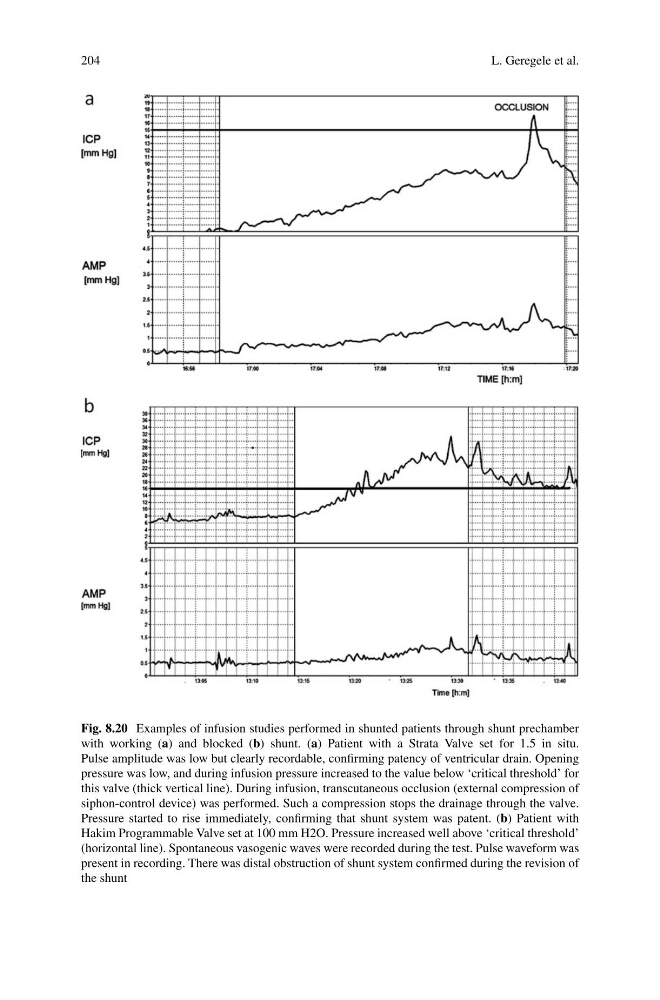
Fig. 8.20 Examples of infusion studies performed in shunted patients through shunt prechamber
with working (a) and blocked (b) shunt. (a) Patient with a Strata Valve set for 1.5 in situ.
Pulse amplitude was low but clearly recordable, confirming patency of ventricular drain. Opening
pressure was low, and during infusion pressure increased to the value below ‘critical threshold’ for
this valve (thick vertical line). During infusion, transcutaneous occlusion (external compression of
siphon-control device) was performed. Such a compression stops the drainage through the valve.
Pressure started to rise immediately, confirming that shunt system was patent. (b) Patient with
Hakim Programmable Valve set at 100 mm H2O. Pressure increased well above ‘critical threshold’
(horizontal line). Spontaneous vasogenic waves were recorded during the test. Pulse waveform was
present in recording. There was distal obstruction of shunt system confirmed during the revision of
the shunt
L. Geregele et al.
Fig. 8.20 Examples of infusion studies performed in shunted patients through shunt prechamber
with working (a) and blocked (b) shunt. (a) Patient with a Strata Valve set for 1.5 in situ.
Pulse amplitude was low but clearly recordable, confirming patency of ventricular drain. Opening
pressure was low, and during infusion pressure increased to the value below ‘critical threshold’ for
this valve (thick vertical line). During infusion, transcutaneous occlusion (external compression of
siphon-control device) was performed. Such a compression stops the drainage through the valve.
Pressure started to rise immediately, confirming that shunt system was patent. (b) Patient with
Hakim Programmable Valve set at 100 mm H2O. Pressure increased well above ‘critical threshold’
(horizontal line). Spontaneous vasogenic waves were recorded during the test. Pulse waveform was
present in recording. There was distal obstruction of shunt system confirmed during the revision of
the shunt