

8 Dynamics of Cerebrospinal Fluid: From Theoretical Models to Clinical Applications
195
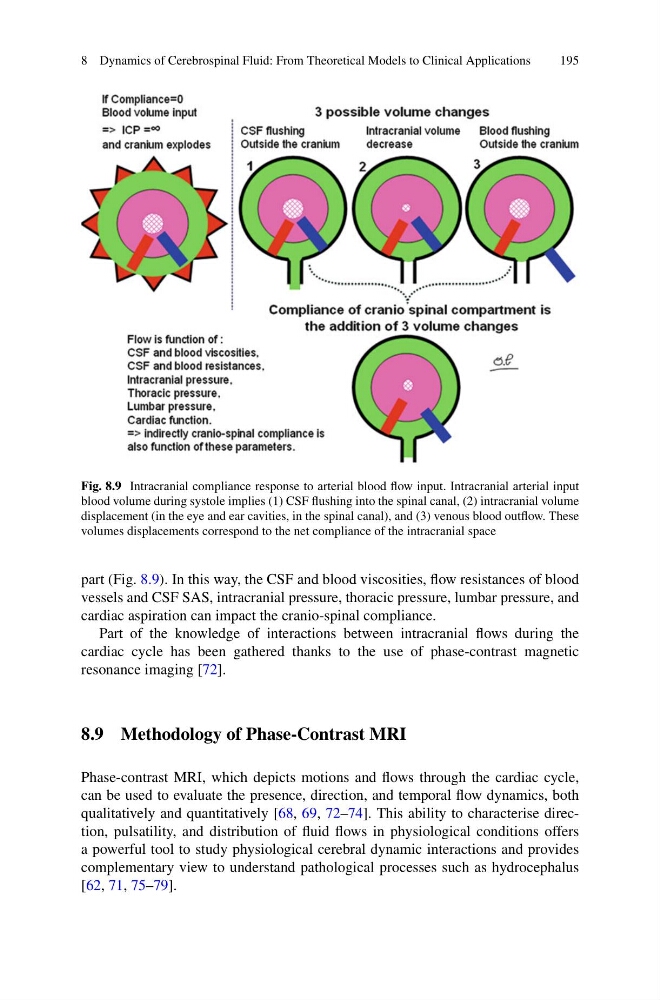
Fig. 8.9 Intracranial compliance response to arterial blood flow input. Intracranial arterial input
blood volume during systole implies (1) CSF flushing into the spinal canal, (2) intracranial volume
displacement (in the eye and ear cavities, in the spinal canal), and (3) venous blood outflow. These
volumes displacements correspond to the net compliance of the intracranial space
part (Fig. 8.9). In this way, the CSF and blood viscosities, flow resistances of blood
vessels and CSF SAS, intracranial pressure, thoracic pressure, lumbar pressure, and
cardiac aspiration can impact the cranio-spinal compliance.
Part of the knowledge of interactions between intracranial flows during the
cardiac cycle has been gathered thanks to the use of phase-contrast magnetic
resonance imaging [72].
8.9 Methodology of Phase-Contrast MRI
Phase-contrast MRI, which depicts motions and flows through the cardiac cycle,
can be used to evaluate the presence, direction, and temporal flow dynamics, both
qualitatively and quantitatively [68, 69, 72–74]. This ability to characterise direction, pulsatility, and distribution of fluid flows in physiological conditions offers
a powerful tool to study physiological cerebral dynamic interactions and provides
complementary view to understand pathological processes such as hydrocephalus
[62, 71, 75–79].
195
Fig. 8.9 Intracranial compliance response to arterial blood flow input. Intracranial arterial input
blood volume during systole implies (1) CSF flushing into the spinal canal, (2) intracranial volume
displacement (in the eye and ear cavities, in the spinal canal), and (3) venous blood outflow. These
volumes displacements correspond to the net compliance of the intracranial space
part (Fig. 8.9). In this way, the CSF and blood viscosities, flow resistances of blood
vessels and CSF SAS, intracranial pressure, thoracic pressure, lumbar pressure, and
cardiac aspiration can impact the cranio-spinal compliance.
Part of the knowledge of interactions between intracranial flows during the
cardiac cycle has been gathered thanks to the use of phase-contrast magnetic
resonance imaging [72].
8.9 Methodology of Phase-Contrast MRI
Phase-contrast MRI, which depicts motions and flows through the cardiac cycle,
can be used to evaluate the presence, direction, and temporal flow dynamics, both
qualitatively and quantitatively [68, 69, 72–74]. This ability to characterise direction, pulsatility, and distribution of fluid flows in physiological conditions offers
a powerful tool to study physiological cerebral dynamic interactions and provides
complementary view to understand pathological processes such as hydrocephalus
[62, 71, 75–79].