

194
L. Geregele et al.
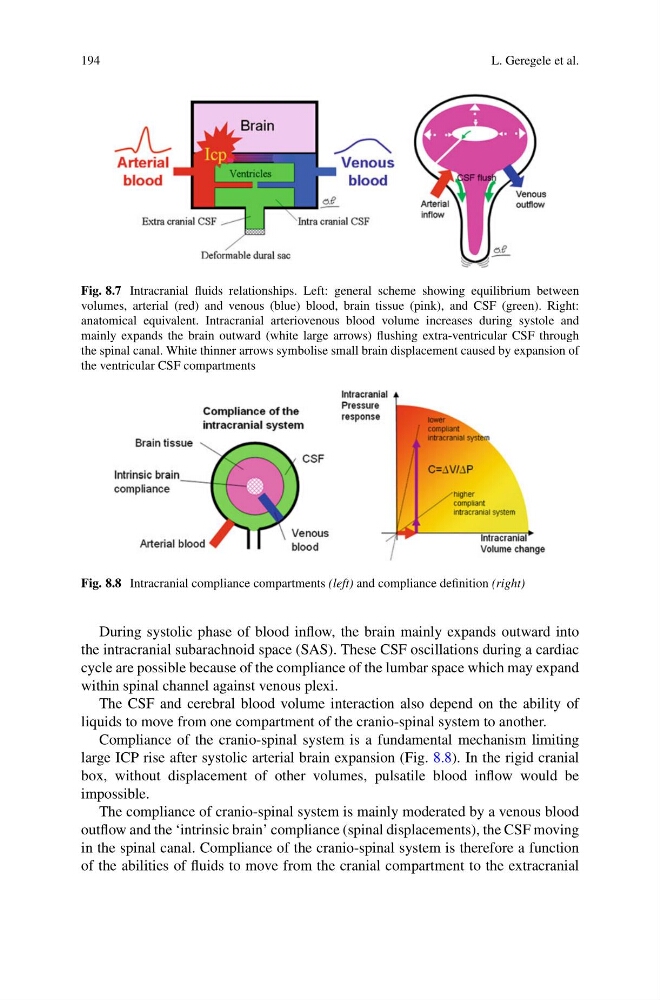
Fig. 8.7 Intracranial fluids relationships. Left: general scheme showing equilibrium between
volumes, arterial (red) and venous (blue) blood, brain tissue (pink), and CSF (green). Right:
anatomical equivalent. Intracranial arteriovenous blood volume increases during systole and
mainly expands the brain outward (white large arrows) flushing extra-ventricular CSF through
the spinal canal. White thinner arrows symbolise small brain displacement caused by expansion of
the ventricular CSF compartments
Fig. 8.8 Intracranial compliance compartments (left) and compliance definition (right)
During systolic phase of blood inflow, the brain mainly expands outward into
the intracranial subarachnoid space (SAS). These CSF oscillations during a cardiac
cycle are possible because of the compliance of the lumbar space which may expand
within spinal channel against venous plexi.
The CSF and cerebral blood volume interaction also depend on the ability of
liquids to move from one compartment of the cranio-spinal system to another.
Compliance of the cranio-spinal system is a fundamental mechanism limiting
large ICP rise after systolic arterial brain expansion (Fig. 8.8). In the rigid cranial
box, without displacement of other volumes, pulsatile blood inflow would be
impossible.
The compliance of cranio-spinal system is mainly moderated by a venous blood
outflow and the ‘intrinsic brain’ compliance (spinal displacements), the CSF moving
in the spinal canal. Compliance of the cranio-spinal system is therefore a function
of the abilities of fluids to move from the cranial compartment to the extracranial
L. Geregele et al.
Fig. 8.7 Intracranial fluids relationships. Left: general scheme showing equilibrium between
volumes, arterial (red) and venous (blue) blood, brain tissue (pink), and CSF (green). Right:
anatomical equivalent. Intracranial arteriovenous blood volume increases during systole and
mainly expands the brain outward (white large arrows) flushing extra-ventricular CSF through
the spinal canal. White thinner arrows symbolise small brain displacement caused by expansion of
the ventricular CSF compartments
Fig. 8.8 Intracranial compliance compartments (left) and compliance definition (right)
During systolic phase of blood inflow, the brain mainly expands outward into
the intracranial subarachnoid space (SAS). These CSF oscillations during a cardiac
cycle are possible because of the compliance of the lumbar space which may expand
within spinal channel against venous plexi.
The CSF and cerebral blood volume interaction also depend on the ability of
liquids to move from one compartment of the cranio-spinal system to another.
Compliance of the cranio-spinal system is a fundamental mechanism limiting
large ICP rise after systolic arterial brain expansion (Fig. 8.8). In the rigid cranial
box, without displacement of other volumes, pulsatile blood inflow would be
impossible.
The compliance of cranio-spinal system is mainly moderated by a venous blood
outflow and the ‘intrinsic brain’ compliance (spinal displacements), the CSF moving
in the spinal canal. Compliance of the cranio-spinal system is therefore a function
of the abilities of fluids to move from the cranial compartment to the extracranial