

156
K. Miller et al.
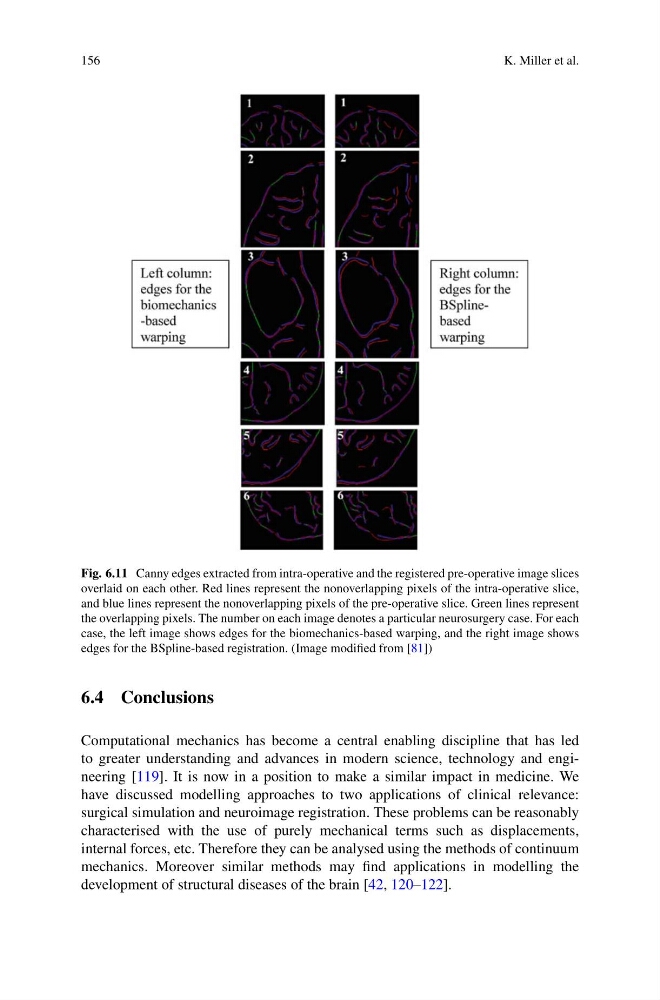
Fig. 6.11 Canny edges extracted from intra-operative and the registered pre-operative image slices
overlaid on each other. Red lines represent the nonoverlapping pixels of the intra-operative slice,
and blue lines represent the nonoverlapping pixels of the pre-operative slice. Green lines represent
the overlapping pixels. The number on each image denotes a particular neurosurgery case. For each
case, the left image shows edges for the biomechanics-based warping, and the right image shows
edges for the BSpline-based registration. (Image modified from [81])
6.4 Conclusions
Computational mechanics has become a central enabling discipline that has led
to greater understanding and advances in modern science, technology and engineering [119]. It is now in a position to make a similar impact in medicine. We
have discussed modelling approaches to two applications of clinical relevance:
surgical simulation and neuroimage registration. These problems can be reasonably
characterised with the use of purely mechanical terms such as displacements,
internal forces, etc. Therefore they can be analysed using the methods of continuum
mechanics. Moreover similar methods may find applications in modelling the
development of structural diseases of the brain [42, 120–122].
K. Miller et al.
Fig. 6.11 Canny edges extracted from intra-operative and the registered pre-operative image slices
overlaid on each other. Red lines represent the nonoverlapping pixels of the intra-operative slice,
and blue lines represent the nonoverlapping pixels of the pre-operative slice. Green lines represent
the overlapping pixels. The number on each image denotes a particular neurosurgery case. For each
case, the left image shows edges for the biomechanics-based warping, and the right image shows
edges for the BSpline-based registration. (Image modified from [81])
6.4 Conclusions
Computational mechanics has become a central enabling discipline that has led
to greater understanding and advances in modern science, technology and engineering [119]. It is now in a position to make a similar impact in medicine. We
have discussed modelling approaches to two applications of clinical relevance:
surgical simulation and neuroimage registration. These problems can be reasonably
characterised with the use of purely mechanical terms such as displacements,
internal forces, etc. Therefore they can be analysed using the methods of continuum
mechanics. Moreover similar methods may find applications in modelling the
development of structural diseases of the brain [42, 120–122].