

71
exportation. It is approximated that than 80% of 50 million tonnes of E-waste generated from developed countries is shipped as E-waste export to developing countries
(Perkins et al. 2014).
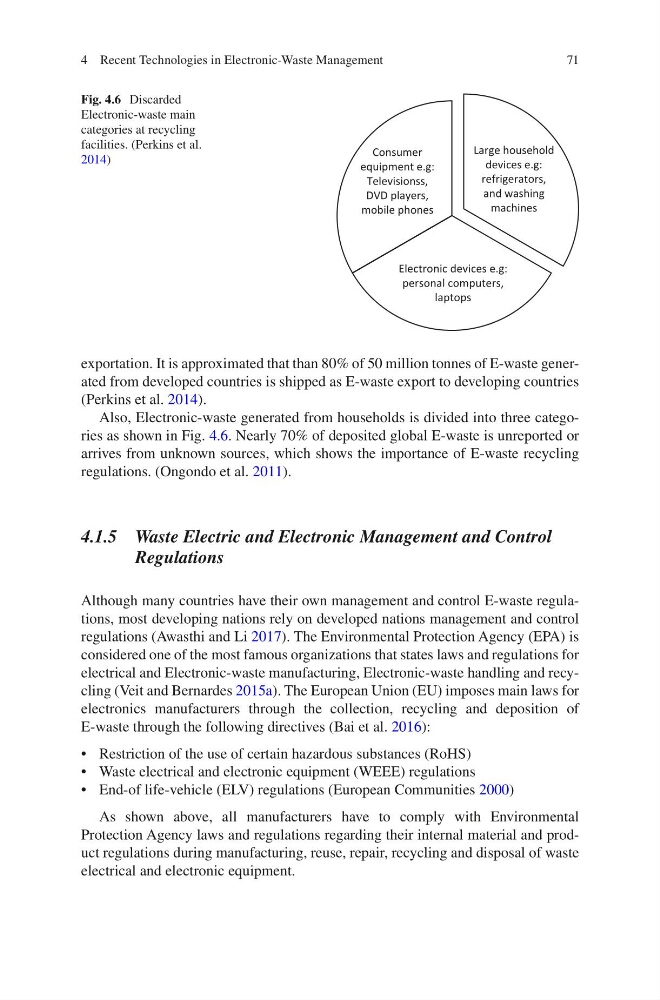
Also, Electronic-waste generated from households is divided into three categories as shown in Fig. 4.6. Nearly 70% of deposited global E-waste is unreported or
arrives from unknown sources, which shows the importance of E-waste recycling
regulations. (Ongondo et al. 2011).
4.1.5 Waste Electric and Electronic Management and Control
Regulations
Although many countries have their own management and control E-waste regulations, most developing nations rely on developed nations management and control
regulations (Awasthi and Li 2017). The Environmental Protection Agency (EPA) is
considered one of the most famous organizations that states laws and regulations for
electrical and Electronic-waste manufacturing, Electronic-waste handling and recycling (Veit and Bernardes 2015a). The European Union (EU) imposes main laws for
electronics manufacturers through the collection, recycling and deposition of
E-waste through the following directives (Bai et al. 2016):
• Restriction of the use of certain hazardous substances (RoHS)
• Waste electrical and electronic equipment (WEEE) regulations
• End-of life-vehicle (ELV) regulations (European Communities 2000)
As shown above, all manufacturers have to comply with Environmental
Protection Agency laws and regulations regarding their internal material and product regulations during manufacturing, reuse, repair, recycling and disposal of waste
electrical and electronic equipment.
Large household
devices e.g:
refrigerators,
and washing
machines
Electronic devices e.g:
personal computers,
laptops
Consumer
equipment e.g:
Televisionss,
DVD players,
mobile phones
Fig. 4.6 Discarded
Electronic-waste main
categories at recycling
facilities. (Perkins et al.
2014)
4 Recent Technologies in Electronic-Waste Management
exportation. It is approximated that than 80% of 50 million tonnes of E-waste generated from developed countries is shipped as E-waste export to developing countries
(Perkins et al. 2014).
Also, Electronic-waste generated from households is divided into three categories as shown in Fig. 4.6. Nearly 70% of deposited global E-waste is unreported or
arrives from unknown sources, which shows the importance of E-waste recycling
regulations. (Ongondo et al. 2011).
4.1.5 Waste Electric and Electronic Management and Control
Regulations
Although many countries have their own management and control E-waste regulations, most developing nations rely on developed nations management and control
regulations (Awasthi and Li 2017). The Environmental Protection Agency (EPA) is
considered one of the most famous organizations that states laws and regulations for
electrical and Electronic-waste manufacturing, Electronic-waste handling and recycling (Veit and Bernardes 2015a). The European Union (EU) imposes main laws for
electronics manufacturers through the collection, recycling and deposition of
E-waste through the following directives (Bai et al. 2016):
• Restriction of the use of certain hazardous substances (RoHS)
• Waste electrical and electronic equipment (WEEE) regulations
• End-of life-vehicle (ELV) regulations (European Communities 2000)
As shown above, all manufacturers have to comply with Environmental
Protection Agency laws and regulations regarding their internal material and product regulations during manufacturing, reuse, repair, recycling and disposal of waste
electrical and electronic equipment.
Large household
devices e.g:
refrigerators,
and washing
machines
Electronic devices e.g:
personal computers,
laptops
Consumer
equipment e.g:
Televisionss,
DVD players,
mobile phones
Fig. 4.6 Discarded
Electronic-waste main
categories at recycling
facilities. (Perkins et al.
2014)
4 Recent Technologies in Electronic-Waste Management