

10.2 Scattering of a Plane Wave from a Rough Surface
169
the expression which connects the frequency of natural oscillations of the optical
resonator loaded with the sample of the biological tissue under investigation with
electrophysical parameters of this biological structure such as real and imaginary
parts of their refractive indices and sizes are described in Chap. 9.
10.3 Numerical Calculations for a Resonator with Chosen
Parameters and Conclusions
Let us consider an optical resonator with a model medium (sample of biotissue) with
the following parameters: the distance L = 11 cm between the mirrors, radii of the
mirrors are M 1 = 100 cm and M 2 = 46.3 cm. The arbitrarily chosen constants are
a = −0.0024, b = 0.020, c = 10
−2 . The values of parameters a, b and c are chosen
for the interface between the layer being simulated so that the shape of the surface is
in the best conformity with the shape of the interface of the corresponding layer in the
structure of the biological sample being simulated; the thickness of the sample being
simulated was 0.3 µm. All calculations were made for the fundamental transverse
mode of a linear resonator.
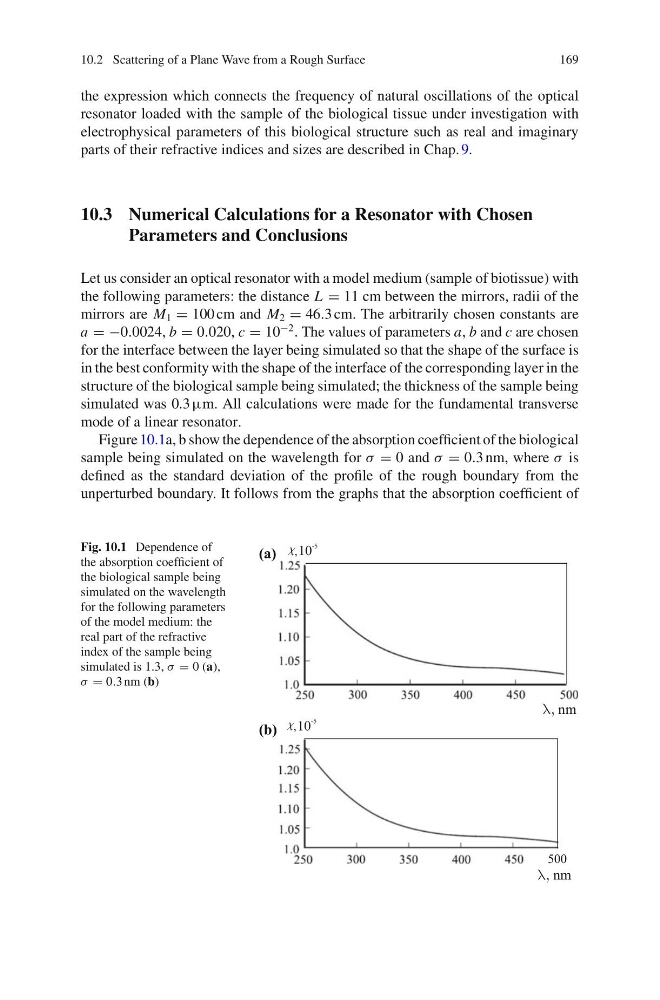
Figure 10.1a, b show the dependence of the absorption coefficient of the biological
sample being simulated on the wavelength for σ = 0 and σ = 0.3 nm, where σ is
defined as the standard deviation of the profile of the rough boundary from the
unperturbed boundary. It follows from the graphs that the absorption coefficient of
Fig. 10.1 Dependence of
the absorption coefficient of
the biological sample being
simulated on the wavelength
for the following parameters
of the model medium: the
real part of the refractive
index of the sample being
simulated is 1.3, σ = 0 (a),
σ = 0.3 nm (b)
nm
nm
500
10
-5
,
10
-5
,
(a)
(b)
169
the expression which connects the frequency of natural oscillations of the optical
resonator loaded with the sample of the biological tissue under investigation with
electrophysical parameters of this biological structure such as real and imaginary
parts of their refractive indices and sizes are described in Chap. 9.
10.3 Numerical Calculations for a Resonator with Chosen
Parameters and Conclusions
Let us consider an optical resonator with a model medium (sample of biotissue) with
the following parameters: the distance L = 11 cm between the mirrors, radii of the
mirrors are M 1 = 100 cm and M 2 = 46.3 cm. The arbitrarily chosen constants are
a = −0.0024, b = 0.020, c = 10
−2 . The values of parameters a, b and c are chosen
for the interface between the layer being simulated so that the shape of the surface is
in the best conformity with the shape of the interface of the corresponding layer in the
structure of the biological sample being simulated; the thickness of the sample being
simulated was 0.3 µm. All calculations were made for the fundamental transverse
mode of a linear resonator.
Figure 10.1a, b show the dependence of the absorption coefficient of the biological
sample being simulated on the wavelength for σ = 0 and σ = 0.3 nm, where σ is
defined as the standard deviation of the profile of the rough boundary from the
unperturbed boundary. It follows from the graphs that the absorption coefficient of
Fig. 10.1 Dependence of
the absorption coefficient of
the biological sample being
simulated on the wavelength
for the following parameters
of the model medium: the
real part of the refractive
index of the sample being
simulated is 1.3, σ = 0 (a),
σ = 0.3 nm (b)
nm
nm
500
10
-5
,
10
-5
,
(a)
(b)