

23.1 Introduction
Radionanomedicine is a newly coined word that indicates the combined use of
nuclear medicine and nanomedicine [1]. This new field of medicine can be considered as the extension of nuclear medicine utilizing nanomaterial technology and
platforms. Nuclear medicine is often considered as a branch of medical imaging,
but the core of nuclear medicine consists in the utilization of radioactive substances
whether it deals with the diagnosis or treatment of disease. For the treatment of
cancer, nuclear medicine can be versatile not only for its imaging capability but also
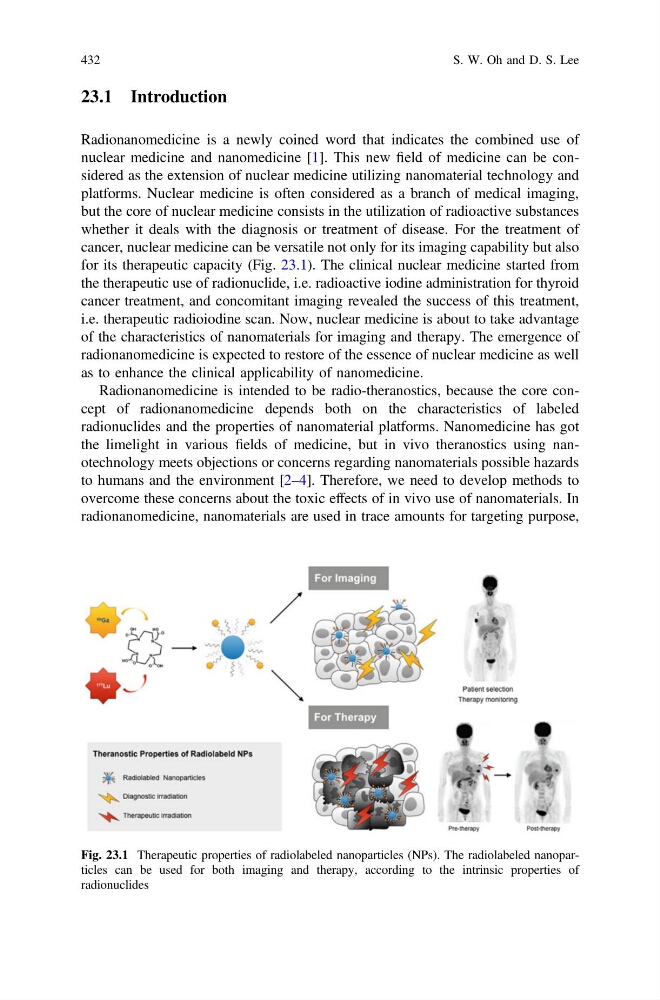
for its therapeutic capacity (Fig. 23.1). The clinical nuclear medicine started from
the therapeutic use of radionuclide, i.e. radioactive iodine administration for thyroid
cancer treatment, and concomitant imaging revealed the success of this treatment,
i.e. therapeutic radioiodine scan. Now, nuclear medicine is about to take advantage
of the characteristics of nanomaterials for imaging and therapy. The emergence of
radionanomedicine is expected to restore of the essence of nuclear medicine as well
as to enhance the clinical applicability of nanomedicine.
Radionanomedicine is intended to be radio-theranostics, because the core concept of radionanomedicine depends both on the characteristics of labeled
radionuclides and the properties of nanomaterial platforms. Nanomedicine has got
the limelight in various fields of medicine, but in vivo theranostics using nanotechnology meets objections or concerns regarding nanomaterials possible hazards
to humans and the environment [2–4]. Therefore, we need to develop methods to
overcome these concerns about the toxic effects of in vivo use of nanomaterials. In
radionanomedicine, nanomaterials are used in trace amounts for targeting purpose,
Fig. 23.1 Therapeutic properties of radiolabeled nanoparticles (NPs). The radiolabeled nanoparticles can be used for both imaging and therapy, according to the intrinsic properties of
radionuclides
432
S. W. Oh and D. S. Lee
Radionanomedicine is a newly coined word that indicates the combined use of
nuclear medicine and nanomedicine [1]. This new field of medicine can be considered as the extension of nuclear medicine utilizing nanomaterial technology and
platforms. Nuclear medicine is often considered as a branch of medical imaging,
but the core of nuclear medicine consists in the utilization of radioactive substances
whether it deals with the diagnosis or treatment of disease. For the treatment of
cancer, nuclear medicine can be versatile not only for its imaging capability but also
for its therapeutic capacity (Fig. 23.1). The clinical nuclear medicine started from
the therapeutic use of radionuclide, i.e. radioactive iodine administration for thyroid
cancer treatment, and concomitant imaging revealed the success of this treatment,
i.e. therapeutic radioiodine scan. Now, nuclear medicine is about to take advantage
of the characteristics of nanomaterials for imaging and therapy. The emergence of
radionanomedicine is expected to restore of the essence of nuclear medicine as well
as to enhance the clinical applicability of nanomedicine.
Radionanomedicine is intended to be radio-theranostics, because the core concept of radionanomedicine depends both on the characteristics of labeled
radionuclides and the properties of nanomaterial platforms. Nanomedicine has got
the limelight in various fields of medicine, but in vivo theranostics using nanotechnology meets objections or concerns regarding nanomaterials possible hazards
to humans and the environment [2–4]. Therefore, we need to develop methods to
overcome these concerns about the toxic effects of in vivo use of nanomaterials. In
radionanomedicine, nanomaterials are used in trace amounts for targeting purpose,
Fig. 23.1 Therapeutic properties of radiolabeled nanoparticles (NPs). The radiolabeled nanoparticles can be used for both imaging and therapy, according to the intrinsic properties of
radionuclides
432
S. W. Oh and D. S. Lee