

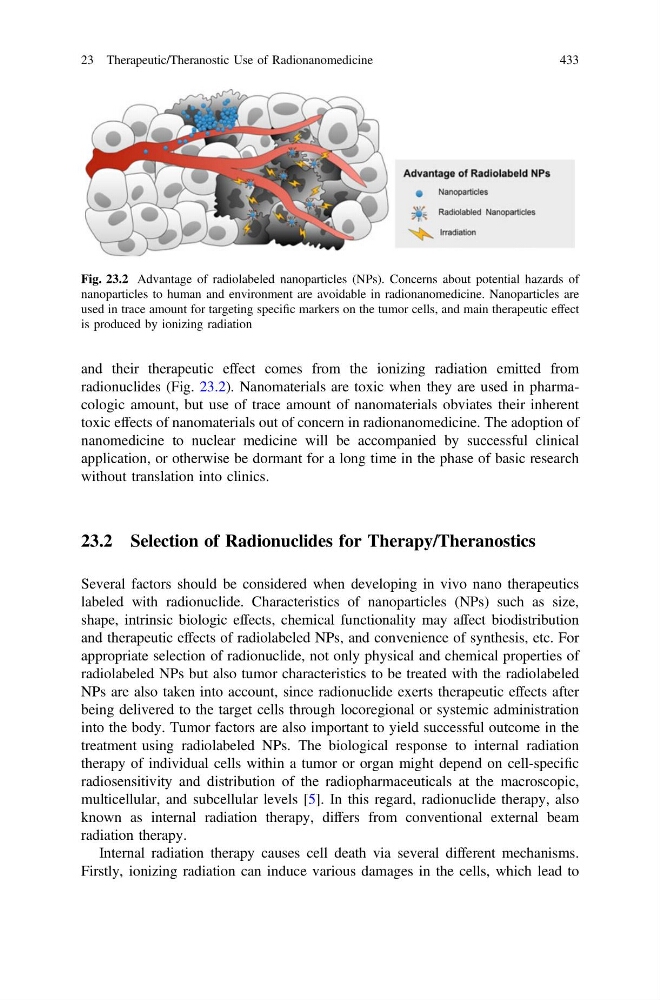
and their therapeutic effect comes from the ionizing radiation emitted from
radionuclides (Fig. 23.2). Nanomaterials are toxic when they are used in pharmacologic amount, but use of trace amount of nanomaterials obviates their inherent
toxic effects of nanomaterials out of concern in radionanomedicine. The adoption of
nanomedicine to nuclear medicine will be accompanied by successful clinical
application, or otherwise be dormant for a long time in the phase of basic research
without translation into clinics.
23.2 Selection of Radionuclides for Therapy/Theranostics
Several factors should be considered when developing in vivo nano therapeutics
labeled with radionuclide. Characteristics of nanoparticles (NPs) such as size,
shape, intrinsic biologic effects, chemical functionality may affect biodistribution
and therapeutic effects of radiolabeled NPs, and convenience of synthesis, etc. For
appropriate selection of radionuclide, not only physical and chemical properties of
radiolabeled NPs but also tumor characteristics to be treated with the radiolabeled
NPs are also taken into account, since radionuclide exerts therapeutic effects after
being delivered to the target cells through locoregional or systemic administration
into the body. Tumor factors are also important to yield successful outcome in the
treatment using radiolabeled NPs. The biological response to internal radiation
therapy of individual cells within a tumor or organ might depend on cell-specific
radiosensitivity and distribution of the radiopharmaceuticals at the macroscopic,
multicellular, and subcellular levels [5]. In this regard, radionuclide therapy, also
known as internal radiation therapy, differs from conventional external beam
radiation therapy.
Internal radiation therapy causes cell death via several different mechanisms.
Firstly, ionizing radiation can induce various damages in the cells, which lead to
Fig. 23.2 Advantage of radiolabeled nanoparticles (NPs). Concerns about potential hazards of
nanoparticles to human and environment are avoidable in radionanomedicine. Nanoparticles are
used in trace amount for targeting specific markers on the tumor cells, and main therapeutic effect
is produced by ionizing radiation
23 Therapeutic/Theranostic Use of Radionanomedicine
433
radionuclides (Fig. 23.2). Nanomaterials are toxic when they are used in pharmacologic amount, but use of trace amount of nanomaterials obviates their inherent
toxic effects of nanomaterials out of concern in radionanomedicine. The adoption of
nanomedicine to nuclear medicine will be accompanied by successful clinical
application, or otherwise be dormant for a long time in the phase of basic research
without translation into clinics.
23.2 Selection of Radionuclides for Therapy/Theranostics
Several factors should be considered when developing in vivo nano therapeutics
labeled with radionuclide. Characteristics of nanoparticles (NPs) such as size,
shape, intrinsic biologic effects, chemical functionality may affect biodistribution
and therapeutic effects of radiolabeled NPs, and convenience of synthesis, etc. For
appropriate selection of radionuclide, not only physical and chemical properties of
radiolabeled NPs but also tumor characteristics to be treated with the radiolabeled
NPs are also taken into account, since radionuclide exerts therapeutic effects after
being delivered to the target cells through locoregional or systemic administration
into the body. Tumor factors are also important to yield successful outcome in the
treatment using radiolabeled NPs. The biological response to internal radiation
therapy of individual cells within a tumor or organ might depend on cell-specific
radiosensitivity and distribution of the radiopharmaceuticals at the macroscopic,
multicellular, and subcellular levels [5]. In this regard, radionuclide therapy, also
known as internal radiation therapy, differs from conventional external beam
radiation therapy.
Internal radiation therapy causes cell death via several different mechanisms.
Firstly, ionizing radiation can induce various damages in the cells, which lead to
Fig. 23.2 Advantage of radiolabeled nanoparticles (NPs). Concerns about potential hazards of
nanoparticles to human and environment are avoidable in radionanomedicine. Nanoparticles are
used in trace amount for targeting specific markers on the tumor cells, and main therapeutic effect
is produced by ionizing radiation
23 Therapeutic/Theranostic Use of Radionanomedicine
433