

19.5 Perspectives
Understanding the mechanism of clearance and excretion of the NPs is the key to
open the wide gate to the clinical translation of nanomedicines. Renal clearance
can be achieved more easily by utilizing the NPs with ultrasmall core than hepatobiliary clearance. However short circulation time may be the fundamental
shortcoming for the renal clearable NPs. While the strategies to enhance the
hepatobiliary excretion and circulation time are similar, strategy to enhance
hepatobiliary excretion has not been well established, and not all NPs with
extended circulation time can be excreted via hepatobiliary pathway. There is a
strong need for a better understanding of the interaction between the NPs and the
liver structures especially hepatocytes. Further investigation should be done to
reveal the way to develop NPs with sufficient blood circulation and good hepatobiliary excretion property.
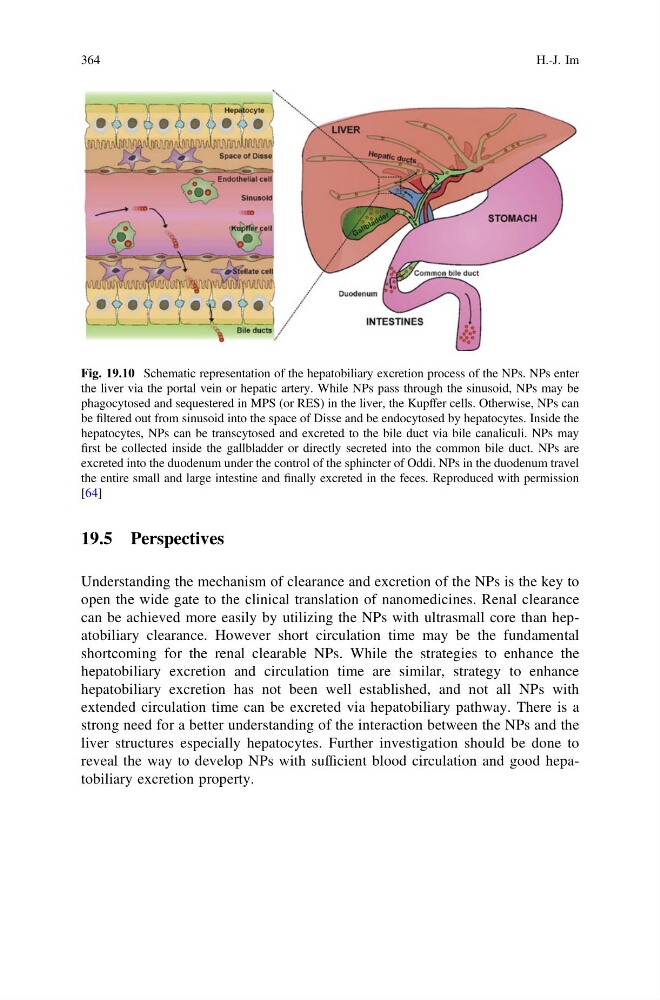
Fig. 19.10 Schematic representation of the hepatobiliary excretion process of the NPs. NPs enter
the liver via the portal vein or hepatic artery. While NPs pass through the sinusoid, NPs may be
phagocytosed and sequestered in MPS (or RES) in the liver, the Kupffer cells. Otherwise, NPs can
be filtered out from sinusoid into the space of Disse and be endocytosed by hepatocytes. Inside the
hepatocytes, NPs can be transcytosed and excreted to the bile duct via bile canaliculi. NPs may
first be collected inside the gallbladder or directly secreted into the common bile duct. NPs are
excreted into the duodenum under the control of the sphincter of Oddi. NPs in the duodenum travel
the entire small and large intestine and finally excreted in the feces. Reproduced with permission
[64]
364
H.-J. Im
Understanding the mechanism of clearance and excretion of the NPs is the key to
open the wide gate to the clinical translation of nanomedicines. Renal clearance
can be achieved more easily by utilizing the NPs with ultrasmall core than hepatobiliary clearance. However short circulation time may be the fundamental
shortcoming for the renal clearable NPs. While the strategies to enhance the
hepatobiliary excretion and circulation time are similar, strategy to enhance
hepatobiliary excretion has not been well established, and not all NPs with
extended circulation time can be excreted via hepatobiliary pathway. There is a
strong need for a better understanding of the interaction between the NPs and the
liver structures especially hepatocytes. Further investigation should be done to
reveal the way to develop NPs with sufficient blood circulation and good hepatobiliary excretion property.
Fig. 19.10 Schematic representation of the hepatobiliary excretion process of the NPs. NPs enter
the liver via the portal vein or hepatic artery. While NPs pass through the sinusoid, NPs may be
phagocytosed and sequestered in MPS (or RES) in the liver, the Kupffer cells. Otherwise, NPs can
be filtered out from sinusoid into the space of Disse and be endocytosed by hepatocytes. Inside the
hepatocytes, NPs can be transcytosed and excreted to the bile duct via bile canaliculi. NPs may
first be collected inside the gallbladder or directly secreted into the common bile duct. NPs are
excreted into the duodenum under the control of the sphincter of Oddi. NPs in the duodenum travel
the entire small and large intestine and finally excreted in the feces. Reproduced with permission
[64]
364
H.-J. Im