

patented and commercialized (Table 18.1) [11]. Similarity (or uniqueness) of
PEGylated nanomaterials to PEGylated peptides/macromolecules should be
unraveled very soon so that the product can be approved, marketed and clinically
used. Especially development of the simultaneous binding of ligands and PEGs
over the surface of the nanomaterials shall facilitate the clinical translation of
nanomaterials owing to their advantage over sequential labeling of ligands and
PEGs.
Recent introduction of corona proteins and their consequences made our
understanding explicit in terms of elucidation of the effect or impact of corona
modification of the surface of the PEGylated nanomaterials injected into the body
systemically via intravenous routes [14–18]. Corona proteins were previously
supposed to change over the surface of surface-modified nanomaterials along the
time lapse after administration, that is to say, the components are changing over the
hours until being taken up by the cells or excretion [14–18]. However, based on
the laborious characterization of hard and soft corona proteins, investigators conclude that the changes are more quantitative than not changing dramatically the
component proteins over the surface of nanomaterials [19–21]. Living organisms
have evolved to cope with the invading live infectious materials immediately and in
a consistent way and thus they seem to use the same strategy to handle extraneous
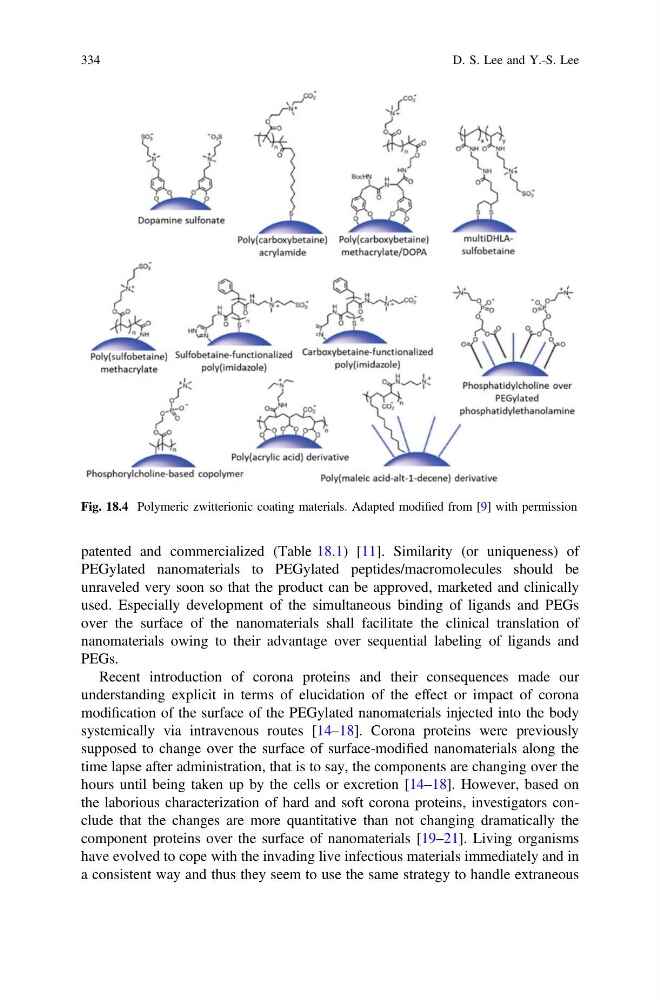
Fig. 18.4 Polymeric zwitterionic coating materials. Adapted modified from [9] with permission
334
D. S. Lee and Y.-S. Lee
PEGylated nanomaterials to PEGylated peptides/macromolecules should be
unraveled very soon so that the product can be approved, marketed and clinically
used. Especially development of the simultaneous binding of ligands and PEGs
over the surface of the nanomaterials shall facilitate the clinical translation of
nanomaterials owing to their advantage over sequential labeling of ligands and
PEGs.
Recent introduction of corona proteins and their consequences made our
understanding explicit in terms of elucidation of the effect or impact of corona
modification of the surface of the PEGylated nanomaterials injected into the body
systemically via intravenous routes [14–18]. Corona proteins were previously
supposed to change over the surface of surface-modified nanomaterials along the
time lapse after administration, that is to say, the components are changing over the
hours until being taken up by the cells or excretion [14–18]. However, based on
the laborious characterization of hard and soft corona proteins, investigators conclude that the changes are more quantitative than not changing dramatically the
component proteins over the surface of nanomaterials [19–21]. Living organisms
have evolved to cope with the invading live infectious materials immediately and in
a consistent way and thus they seem to use the same strategy to handle extraneous
Fig. 18.4 Polymeric zwitterionic coating materials. Adapted modified from [9] with permission
334
D. S. Lee and Y.-S. Lee