

(–SH), azide (–N 3 ), or maleimide ends which might interact with plasma proteins
and moreover with innate immune cells or endothelial cells.
PEGylation had been more popularly used for decorating peptide drugs and
other macromolecules including monoclonal antibodies (Fig. 18.5) [11–13].
Investigators assumed and confirmed that the circulation time is increased and thus
injected molecules had more time to reach the target or to be taken up by the target
cells. The problem to solve was which PEGs to choose and how to bind them with
peptides or monoclonal antibodies while not decreasing biological activity of the
peptides or macromolecules. There have been a lot of progresses which were
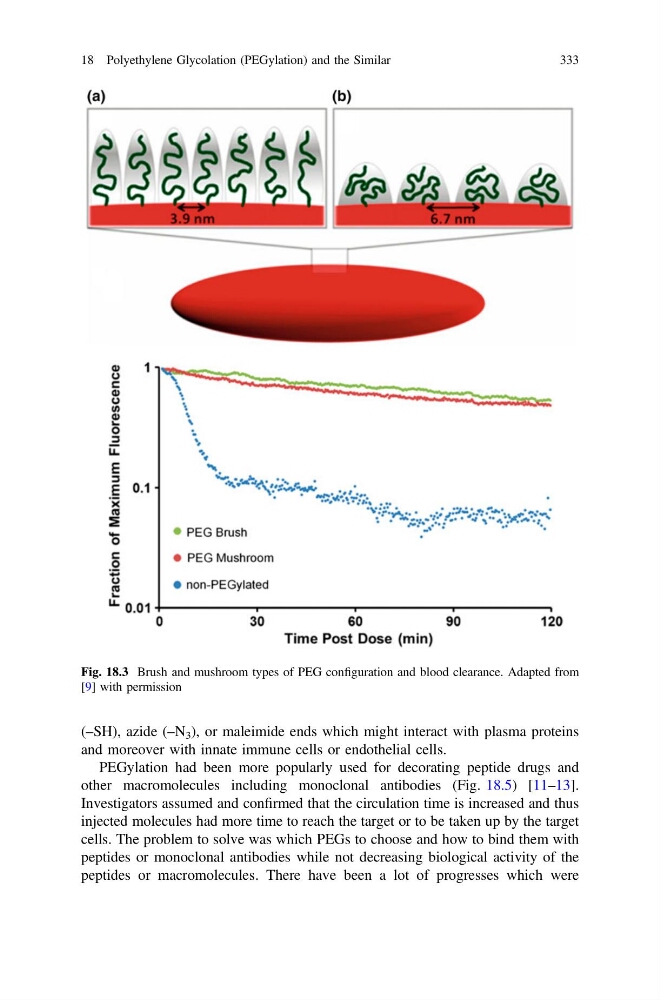
Fig. 18.3 Brush and mushroom types of PEG configuration and blood clearance. Adapted from
[9] with permission
18 Polyethylene Glycolation (PEGylation) and the Similar
333
and moreover with innate immune cells or endothelial cells.
PEGylation had been more popularly used for decorating peptide drugs and
other macromolecules including monoclonal antibodies (Fig. 18.5) [11–13].
Investigators assumed and confirmed that the circulation time is increased and thus
injected molecules had more time to reach the target or to be taken up by the target
cells. The problem to solve was which PEGs to choose and how to bind them with
peptides or monoclonal antibodies while not decreasing biological activity of the
peptides or macromolecules. There have been a lot of progresses which were
Fig. 18.3 Brush and mushroom types of PEG configuration and blood clearance. Adapted from
[9] with permission
18 Polyethylene Glycolation (PEGylation) and the Similar
333