

accumulation accompanying the expression of the exogenous protein (Tremblay
et al. 2010). Among cereals, maize, rice and barley (Nandi et al. 2005; Sabalza et al.
2013) have been tried along with soybean, among legumes. While the watery tissues
of leaves impose to extract rapidly the target protein in order to minimize degradation, desiccated seeds allow protein to remain stable and are suitable for a possible
oral administration.
Despite the large array of plant systems available and the great advantage of
playing a seminal role in the development of “green” bioreactors, the “whole-plant”
transgenic approach is labour-intensive and time-consuming due to the necessary
steps for plant regeneration and selection, with an average lead time ranging
from 12 to 18 months to engineer plants that often show non-competitive contents
of the target protein (Gleba et al. 2005).
Stable introduction of target genes into chloroplast genome (transplastomics)
allows for higher levels of expression if compared to nuclear transformation, due
to the lack of gene silencing phenomena and high gene copy numbers. The technique
is also advantageous since it prevents possible transgene escape (plastids are
inherited through the maternal tissue in the majority of species) and absence of
chloroplasts in pollen and improbability of their transfer, which quells environmental concerns (Meyers et al. 2010; Cardi et al. 2010). This method allows high
concentration of recombinant protein (Oey et al. 2009). Nevertheless, it is technically difficult since several generations of plant regeneration are needed to select
transformed plants with all chloroplasts bearing the gene of interest (homoplasmic
state). In addition, this platform lacks most post-translational modifications being
successful in a limited number of species.
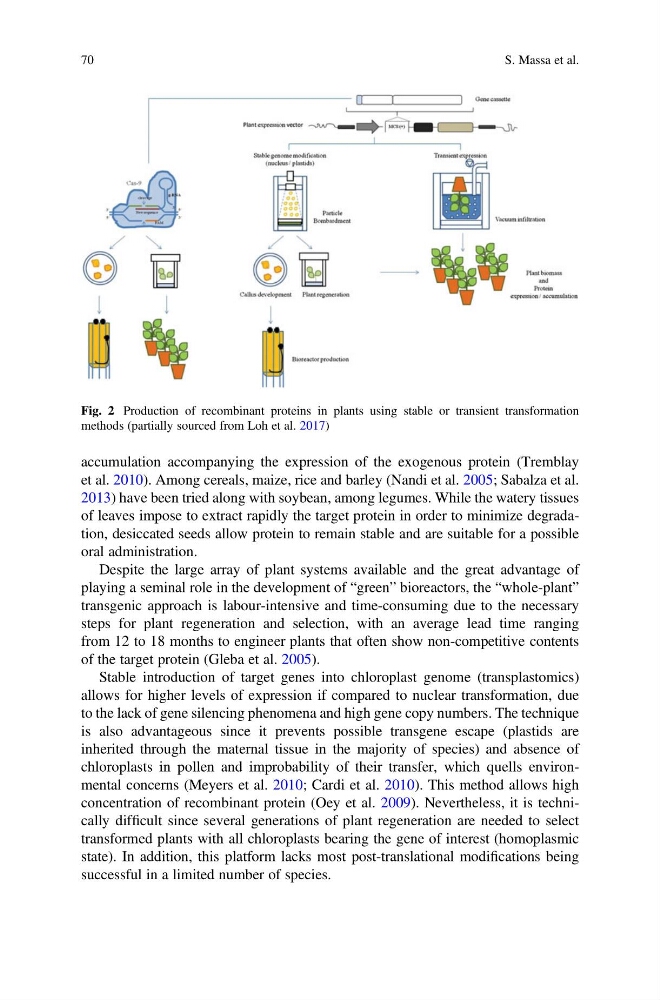
Fig. 2 Production of recombinant proteins in plants using stable or transient transformation
methods (partially sourced from Loh et al. 2017)
70
S. Massa et al.
et al. 2010). Among cereals, maize, rice and barley (Nandi et al. 2005; Sabalza et al.
2013) have been tried along with soybean, among legumes. While the watery tissues
of leaves impose to extract rapidly the target protein in order to minimize degradation, desiccated seeds allow protein to remain stable and are suitable for a possible
oral administration.
Despite the large array of plant systems available and the great advantage of
playing a seminal role in the development of “green” bioreactors, the “whole-plant”
transgenic approach is labour-intensive and time-consuming due to the necessary
steps for plant regeneration and selection, with an average lead time ranging
from 12 to 18 months to engineer plants that often show non-competitive contents
of the target protein (Gleba et al. 2005).
Stable introduction of target genes into chloroplast genome (transplastomics)
allows for higher levels of expression if compared to nuclear transformation, due
to the lack of gene silencing phenomena and high gene copy numbers. The technique
is also advantageous since it prevents possible transgene escape (plastids are
inherited through the maternal tissue in the majority of species) and absence of
chloroplasts in pollen and improbability of their transfer, which quells environmental concerns (Meyers et al. 2010; Cardi et al. 2010). This method allows high
concentration of recombinant protein (Oey et al. 2009). Nevertheless, it is technically difficult since several generations of plant regeneration are needed to select
transformed plants with all chloroplasts bearing the gene of interest (homoplasmic
state). In addition, this platform lacks most post-translational modifications being
successful in a limited number of species.
Fig. 2 Production of recombinant proteins in plants using stable or transient transformation
methods (partially sourced from Loh et al. 2017)
70
S. Massa et al.