

often said that greening of deserts, using halophytes, could partially help increase the
biomass on the land surface and thus reduce global warming. But it would be much
wiser to stop further deforestation in all of the humid climatic zones, especially in the
tropics and in the Siberian and Canadian taiga, and to let all secondary forests grow,
instead of transforming them from highly biodiverse primary forests into poor
McDonald’s beef sources (Breckle 2009). Additional costs to maintain sustainable
irrigation and leaching systems to keep the salinity of the soil low pay more in the
long run. The take-home message “no irrigation without drainage” means that it pays
more to invest in desalination systems. This is especially important under very dry
climatic conditions (Breckle et al. 2003) and when using urban water, as is done in
southern Israel in the Yotvata farming area with brackish sewage water from Eilat.
3 Heavy Metals, Root Growth and Forest Dieback
Stress in plants is not only a result of salinity; many other factors cause stress. One is
heavy metals. One of the first studies on lead (Pb) effects started in Bonn; along
highways, the accumulation of Pb was checked (Lerche and Breckle 1975). When do
trace metals have a measurable effect on the ecological behaviour of plants and
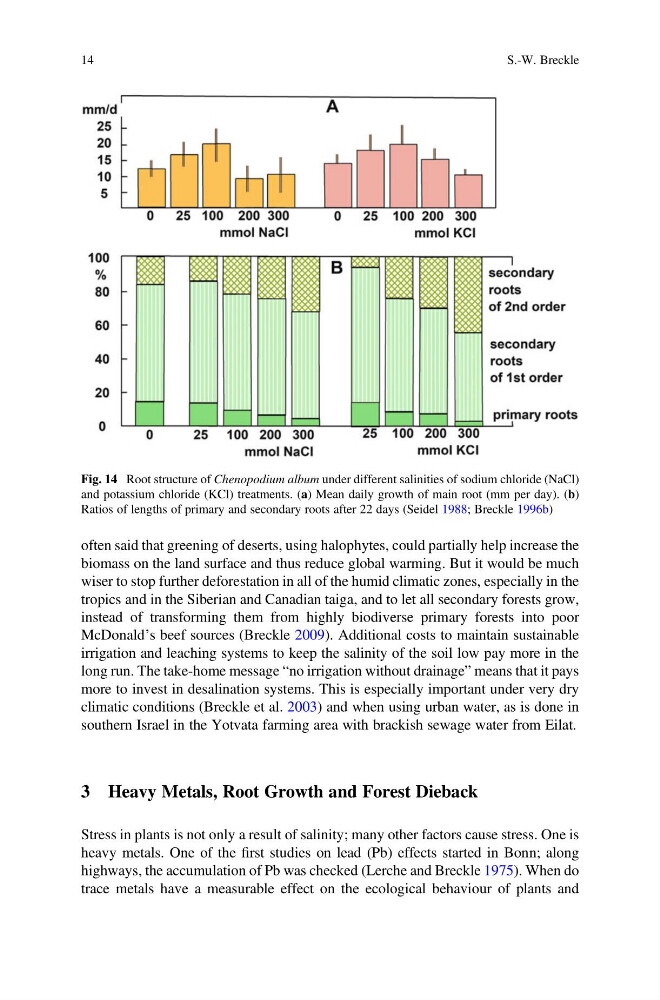
Fig. 14 Root structure of Chenopodium album under different salinities of sodium chloride (NaCl)
and potassium chloride (KCl) treatments. (a) Mean daily growth of main root (mm per day). (b)
Ratios of lengths of primary and secondary roots after 22 days (Seidel 1988; Breckle 1996b)
14
S.-W. Breckle
biomass on the land surface and thus reduce global warming. But it would be much
wiser to stop further deforestation in all of the humid climatic zones, especially in the
tropics and in the Siberian and Canadian taiga, and to let all secondary forests grow,
instead of transforming them from highly biodiverse primary forests into poor
McDonald’s beef sources (Breckle 2009). Additional costs to maintain sustainable
irrigation and leaching systems to keep the salinity of the soil low pay more in the
long run. The take-home message “no irrigation without drainage” means that it pays
more to invest in desalination systems. This is especially important under very dry
climatic conditions (Breckle et al. 2003) and when using urban water, as is done in
southern Israel in the Yotvata farming area with brackish sewage water from Eilat.
3 Heavy Metals, Root Growth and Forest Dieback
Stress in plants is not only a result of salinity; many other factors cause stress. One is
heavy metals. One of the first studies on lead (Pb) effects started in Bonn; along
highways, the accumulation of Pb was checked (Lerche and Breckle 1975). When do
trace metals have a measurable effect on the ecological behaviour of plants and
Fig. 14 Root structure of Chenopodium album under different salinities of sodium chloride (NaCl)
and potassium chloride (KCl) treatments. (a) Mean daily growth of main root (mm per day). (b)
Ratios of lengths of primary and secondary roots after 22 days (Seidel 1988; Breckle 1996b)
14
S.-W. Breckle