

Roots of plants – the invisible half – have also been studied. In collaboration with
Yoav Waisel from Tel Aviv [author of volumes on Plant Roots: the Hidden Half
(Waisel et al. 1991, 1996, 2002; Eshel and Beeckman 2013)], some methods with
hydroponics and aeroponics have been tested (Waisel and Breckle 1987). The
question was: How do roots behave under salt stress? Large aeroponic chambers
(Breckle et al. 2001a), more than 2 m high, were constructed in a new greenhouse in
Bielefeld, similar to the Racine lab in Tel Aviv. Yoav Waisel stayed very often with
us in Bielefeld. The sophisticated technique for keeping a constant pH and constant
temperature of the nutrient solution could be managed for a period of several weeks.
Tomato plants grown under different salt stress developed huge root systems in
Bielefeld, as well as in Tel Aviv (Fig. 13); cutting of 90% of the roots did not have
any effect on the transpiration of the upper plant parts. The architecture of root
systems is very adaptive; the ratio of primary and secondary roots exhibits a strong
shift to secondary roots with salt stress (Fig. 14). Field studies with mini-rhizotrons
(glass tubes of 5 cm diameter) and TV cameras on roots of desert plants in the Negev
Desert gave interesting results, but evaluation with automatic processing software is
still not sufficiently resolved (Breckle et al. 2001c; Erz et al. 2005; Veste et al. 2005).
It is a challenge for all root studies.
An interesting example of salinity effects was studied in the parasitic Loranthus
growing on various halophytic hosts (Todt et al. 2000). In the southern Arava Valley
(Negev Desert), L. acaciae was checked on five halophytic and ten non-halophytic
host plants. Water content and succulence of mistletoes increased on halophytic
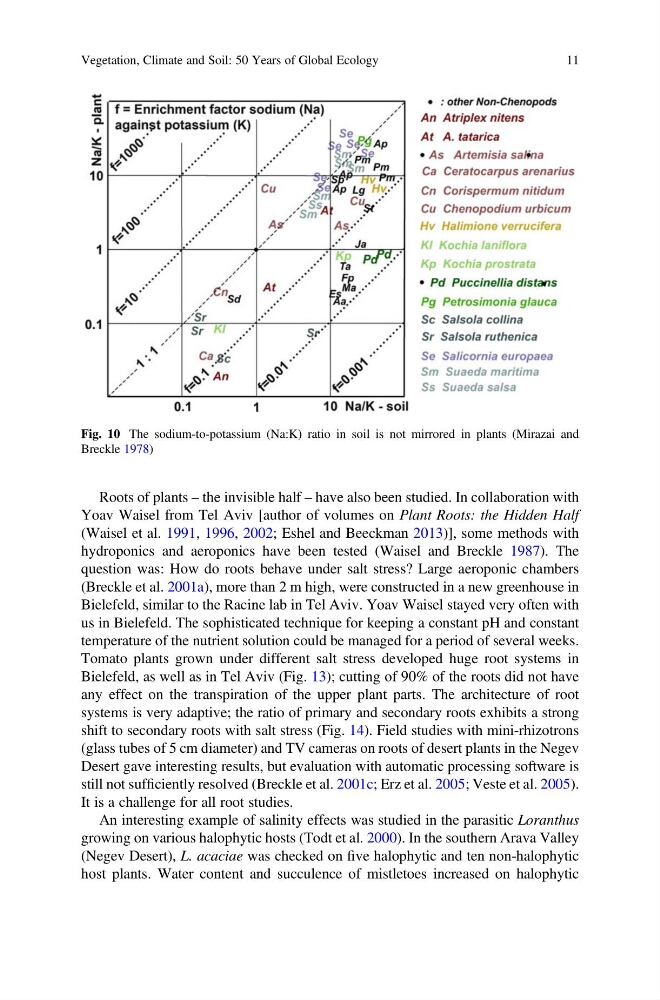
Fig. 10 The sodium-to-potassium (Na:K) ratio in soil is not mirrored in plants (Mirazai and
Breckle 1978)
Vegetation, Climate and Soil: 50 Years of Global Ecology
11
Yoav Waisel from Tel Aviv [author of volumes on Plant Roots: the Hidden Half
(Waisel et al. 1991, 1996, 2002; Eshel and Beeckman 2013)], some methods with
hydroponics and aeroponics have been tested (Waisel and Breckle 1987). The
question was: How do roots behave under salt stress? Large aeroponic chambers
(Breckle et al. 2001a), more than 2 m high, were constructed in a new greenhouse in
Bielefeld, similar to the Racine lab in Tel Aviv. Yoav Waisel stayed very often with
us in Bielefeld. The sophisticated technique for keeping a constant pH and constant
temperature of the nutrient solution could be managed for a period of several weeks.
Tomato plants grown under different salt stress developed huge root systems in
Bielefeld, as well as in Tel Aviv (Fig. 13); cutting of 90% of the roots did not have
any effect on the transpiration of the upper plant parts. The architecture of root
systems is very adaptive; the ratio of primary and secondary roots exhibits a strong
shift to secondary roots with salt stress (Fig. 14). Field studies with mini-rhizotrons
(glass tubes of 5 cm diameter) and TV cameras on roots of desert plants in the Negev
Desert gave interesting results, but evaluation with automatic processing software is
still not sufficiently resolved (Breckle et al. 2001c; Erz et al. 2005; Veste et al. 2005).
It is a challenge for all root studies.
An interesting example of salinity effects was studied in the parasitic Loranthus
growing on various halophytic hosts (Todt et al. 2000). In the southern Arava Valley
(Negev Desert), L. acaciae was checked on five halophytic and ten non-halophytic
host plants. Water content and succulence of mistletoes increased on halophytic
Fig. 10 The sodium-to-potassium (Na:K) ratio in soil is not mirrored in plants (Mirazai and
Breckle 1978)
Vegetation, Climate and Soil: 50 Years of Global Ecology
11