

In recreting halophytes such as Atriplex, only a few strongly halophytic species
exhibit intensive NaCl turnover by bladders (Jones 1970; Lüttge 1971, 2016; Waisel
1972; Breckle 2002a; Osmond 1974; Reimann and Breckle 1988; Schirmer and
Breckle 1982). The ratio of total bladder volume to leaf lamina volume in Atriplex
confertifolia in very young leaves is above 2, keeping young growing tissues low in
salt content; with ageing, it declines to about 0.4, and the bladders start to shrink or
are blown away, thus eliminating NaCl from the leaves (Breckle 1976). In particular,
Atriplex was studied very intensively (Tiedemann et al. 1984). Yuan et al. (2016)
reported on how recretion in recreto-halophytes may occur. But salt tolerance and
the genetic background in halophytes are still not really understood (Song and Wang
2015). Despite major efforts in analysing single genes responsible for salinity
tolerance, some old questions (Breckle 1990, 1995) are still unresolved.
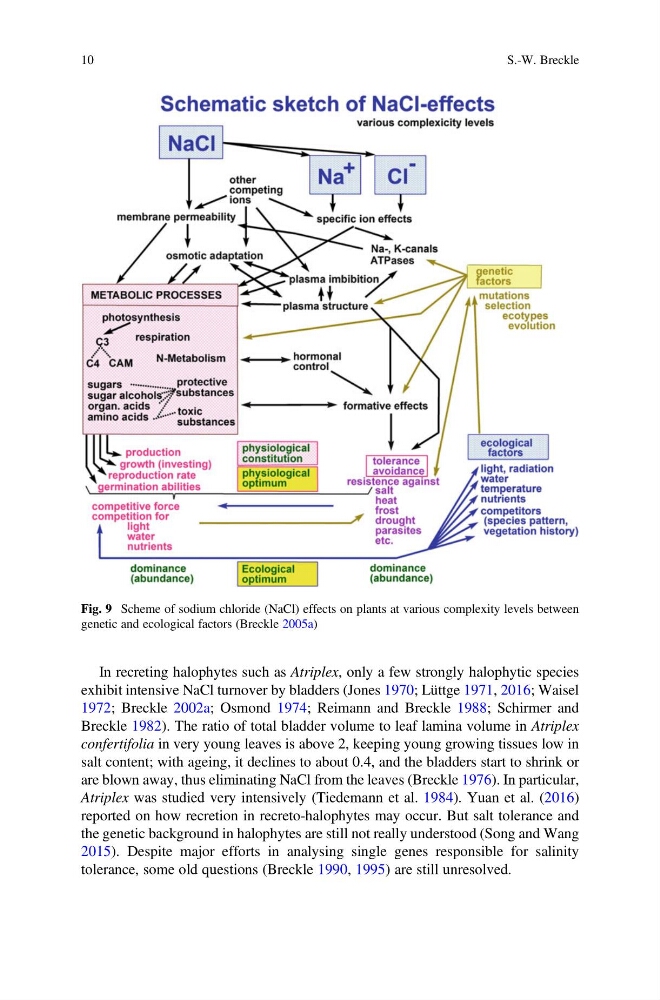
Fig. 9 Scheme of sodium chloride (NaCl) effects on plants at various complexity levels between
genetic and ecological factors (Breckle 2005a)
10
S.-W. Breckle
exhibit intensive NaCl turnover by bladders (Jones 1970; Lüttge 1971, 2016; Waisel
1972; Breckle 2002a; Osmond 1974; Reimann and Breckle 1988; Schirmer and
Breckle 1982). The ratio of total bladder volume to leaf lamina volume in Atriplex
confertifolia in very young leaves is above 2, keeping young growing tissues low in
salt content; with ageing, it declines to about 0.4, and the bladders start to shrink or
are blown away, thus eliminating NaCl from the leaves (Breckle 1976). In particular,
Atriplex was studied very intensively (Tiedemann et al. 1984). Yuan et al. (2016)
reported on how recretion in recreto-halophytes may occur. But salt tolerance and
the genetic background in halophytes are still not really understood (Song and Wang
2015). Despite major efforts in analysing single genes responsible for salinity
tolerance, some old questions (Breckle 1990, 1995) are still unresolved.
Fig. 9 Scheme of sodium chloride (NaCl) effects on plants at various complexity levels between
genetic and ecological factors (Breckle 2005a)
10
S.-W. Breckle