

polluted soils, smoldering occurs on the surface of NAPL. Limited by oxygen input
at the surface of a condensed phase, it is slow, low temperature combustion (does not
reach temperatures as high as with incineration). Given the lower temperatures and
limited heat loss, the process can be self-sustaining, and will propagate as long as air
and the combustible pollutants are at high enough concentrations (Howell et al.
1996; Pironi et al. 2011; Scholes et al. 2015; Switzer et al. 2009). This process is still
at the research and development stage. However, a full-scale pilot test was run in situ
and produced a considerable remediation rate (above 99%) (Scholes et al. 2015).
3.5 Decision-Making in Selecting Main In Situ Thermal
Treatment Options
The available thermal techniques allow different temperature plateaus to be reached
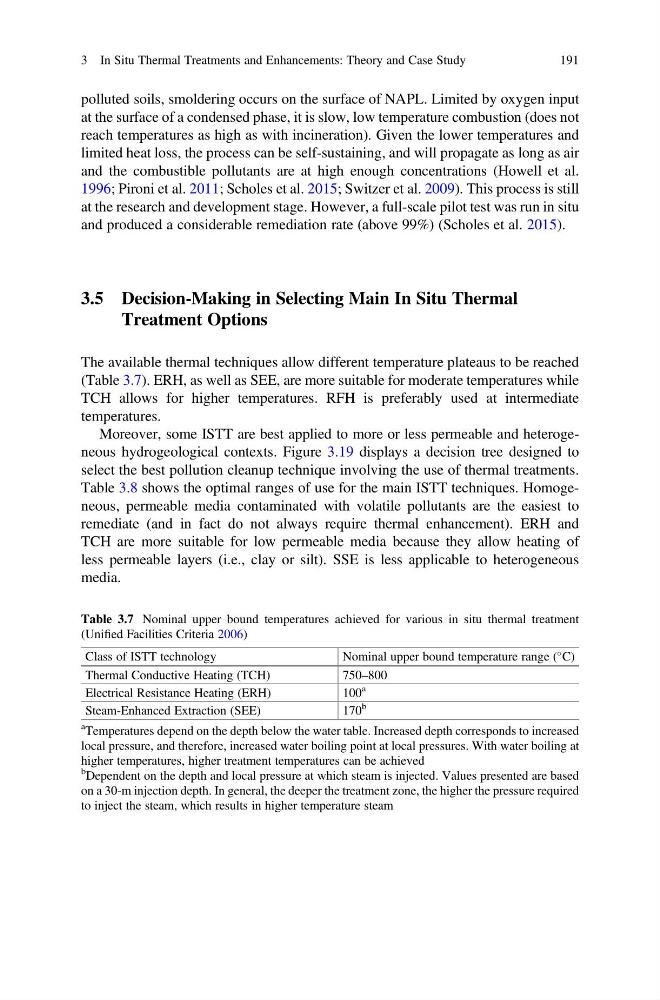
(Table 3.7). ERH, as well as SEE, are more suitable for moderate temperatures while
TCH allows for higher temperatures. RFH is preferably used at intermediate
temperatures.
Moreover, some ISTT are best applied to more or less permeable and heterogeneous hydrogeological contexts. Figure 3.19 displays a decision tree designed to
select the best pollution cleanup technique involving the use of thermal treatments.
Table 3.8 shows the optimal ranges of use for the main ISTT techniques. Homogeneous, permeable media contaminated with volatile pollutants are the easiest to
remediate (and in fact do not always require thermal enhancement). ERH and
TCH are more suitable for low permeable media because they allow heating of
less permeable layers (i.e., clay or silt). SSE is less applicable to heterogeneous
media.
Table 3.7 Nominal upper bound temperatures achieved for various in situ thermal treatment
(Unified Facilities Criteria 2006)
Class of ISTT technology
Nominal upper bound temperature range (
C)
Thermal Conductive Heating (TCH)
750–800
Electrical Resistance Heating (ERH)
100
a
Steam-Enhanced Extraction (SEE)
170
b
a Temperatures depend on the depth below the water table. Increased depth corresponds to increased
local pressure, and therefore, increased water boiling point at local pressures. With water boiling at
higher temperatures, higher treatment temperatures can be achieved
b
Dependent on the depth and local pressure at which steam is injected. Values presented are based
on a 30-m injection depth. In general, the deeper the treatment zone, the higher the pressure required
to inject the steam, which results in higher temperature steam
3 In Situ Thermal Treatments and Enhancements: Theory and Case Study
191
at the surface of a condensed phase, it is slow, low temperature combustion (does not
reach temperatures as high as with incineration). Given the lower temperatures and
limited heat loss, the process can be self-sustaining, and will propagate as long as air
and the combustible pollutants are at high enough concentrations (Howell et al.
1996; Pironi et al. 2011; Scholes et al. 2015; Switzer et al. 2009). This process is still
at the research and development stage. However, a full-scale pilot test was run in situ
and produced a considerable remediation rate (above 99%) (Scholes et al. 2015).
3.5 Decision-Making in Selecting Main In Situ Thermal
Treatment Options
The available thermal techniques allow different temperature plateaus to be reached
(Table 3.7). ERH, as well as SEE, are more suitable for moderate temperatures while
TCH allows for higher temperatures. RFH is preferably used at intermediate
temperatures.
Moreover, some ISTT are best applied to more or less permeable and heterogeneous hydrogeological contexts. Figure 3.19 displays a decision tree designed to
select the best pollution cleanup technique involving the use of thermal treatments.
Table 3.8 shows the optimal ranges of use for the main ISTT techniques. Homogeneous, permeable media contaminated with volatile pollutants are the easiest to
remediate (and in fact do not always require thermal enhancement). ERH and
TCH are more suitable for low permeable media because they allow heating of
less permeable layers (i.e., clay or silt). SSE is less applicable to heterogeneous
media.
Table 3.7 Nominal upper bound temperatures achieved for various in situ thermal treatment
(Unified Facilities Criteria 2006)
Class of ISTT technology
Nominal upper bound temperature range (
C)
Thermal Conductive Heating (TCH)
750–800
Electrical Resistance Heating (ERH)
100
a
Steam-Enhanced Extraction (SEE)
170
b
a Temperatures depend on the depth below the water table. Increased depth corresponds to increased
local pressure, and therefore, increased water boiling point at local pressures. With water boiling at
higher temperatures, higher treatment temperatures can be achieved
b
Dependent on the depth and local pressure at which steam is injected. Values presented are based
on a 30-m injection depth. In general, the deeper the treatment zone, the higher the pressure required
to inject the steam, which results in higher temperature steam
3 In Situ Thermal Treatments and Enhancements: Theory and Case Study
191