

3.6 Case Study: Thermal Conduction Heating
in Unsaturated Zone
3.6.1 Context
Feasibility tests for thermal conduction heating were performed by using a portion of
a petrochemical factory in eastern France. This factory specializes in chlorine
chemistry (producing solvents, pesticides, etc.). The site is located on sand and
gravel alluvium. The water table is about 9.5 m deep. The feasibility study was only
performed on the unsaturated zone. The pilot test was conducted on an area that is
mainly polluted by trichlorobenzenes (TCB) and lindane (gammahexachlorocyclohexane, γ-HCH). TCB and lindane displayed the following concentration ranges of 7200–11,000 mgÁkg
À1 and 40–100 mgÁkg
À1 . The detailed pollutant
concentrations are displayed in Table 3.9. TCB makes up 80% of the chlorobenzenes. HCH is the main compound in lindane.
Other pollutants were also present below the site:
• Dichlorodiphenyldichloroethylene (DDE), dichlorodiphenyltrichloroethane
(DDT), dichlorodiphenyldichloroethane (DDD); the sum of DDE, DDT, and
DDD concentrations was lower than 75 mgÁkg
À1
• Total petroleum hydrocarbons concentration was below 4400 mgÁkg
À1
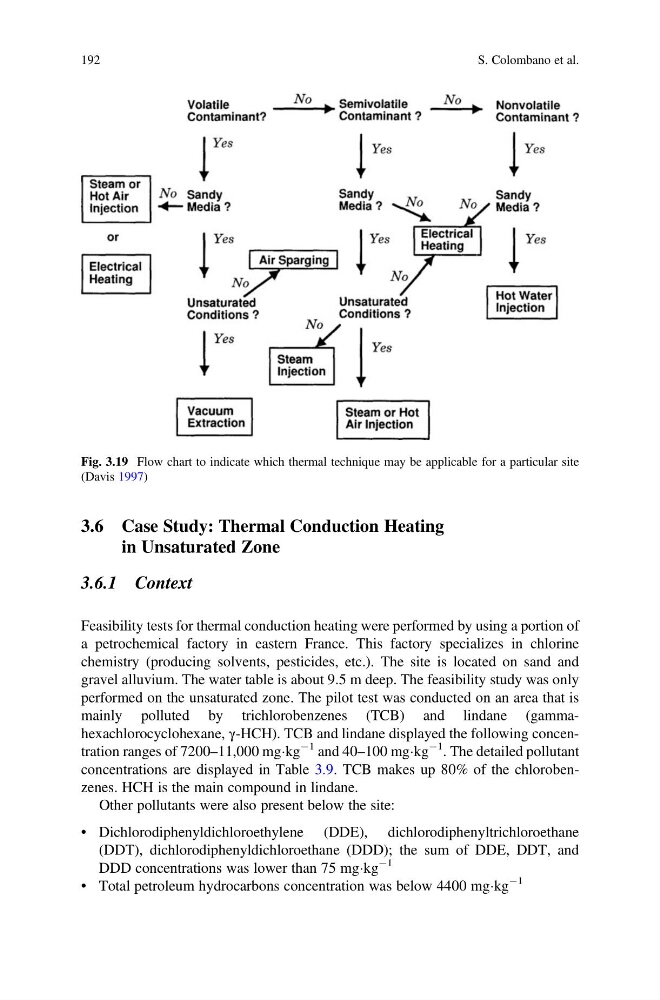
Fig. 3.19 Flow chart to indicate which thermal technique may be applicable for a particular site
(Davis 1997)
192
S. Colombano et al.
in Unsaturated Zone
3.6.1 Context
Feasibility tests for thermal conduction heating were performed by using a portion of
a petrochemical factory in eastern France. This factory specializes in chlorine
chemistry (producing solvents, pesticides, etc.). The site is located on sand and
gravel alluvium. The water table is about 9.5 m deep. The feasibility study was only
performed on the unsaturated zone. The pilot test was conducted on an area that is
mainly polluted by trichlorobenzenes (TCB) and lindane (gammahexachlorocyclohexane, γ-HCH). TCB and lindane displayed the following concentration ranges of 7200–11,000 mgÁkg
À1 and 40–100 mgÁkg
À1 . The detailed pollutant
concentrations are displayed in Table 3.9. TCB makes up 80% of the chlorobenzenes. HCH is the main compound in lindane.
Other pollutants were also present below the site:
• Dichlorodiphenyldichloroethylene (DDE), dichlorodiphenyltrichloroethane
(DDT), dichlorodiphenyldichloroethane (DDD); the sum of DDE, DDT, and
DDD concentrations was lower than 75 mgÁkg
À1
• Total petroleum hydrocarbons concentration was below 4400 mgÁkg
À1
Fig. 3.19 Flow chart to indicate which thermal technique may be applicable for a particular site
(Davis 1997)
192
S. Colombano et al.