

3.4 Thermal Treatment Techniques
The most popular thermal soil remediation techniques are described and discussed in
detail in this section.
3.4.1 Thermal Conduction Heating
Thermal conduction heating (TCH), also called in situ thermal desorption (ISTD),
consists in heating the underground by conduction and simultaneously applying
negative pressure. The pollutants are desorbed and volatilized through a progressive
rise in temperature in the bulk polluted soil. The pollutants migrate to recovery wells
under negative pressure and are collected at the surface for additional treatment. Heat
transfer occurs via conduction and convection.
The heat can be produced by different heating elements:
• Burners: These heating elements are made of two coaxial steel tubes with gas
running through them (resulting from propane or methane combustion with an
excess of oxygen) at high temperature (700–750
C) from a burner located at the
end of the tube (at soil surface). These gases circulate in the coaxial tubes and
supply heat to the soil by conduction (Haemers 2015).
• Electrically powered resistance heaters: These elements are placed in a casing in
contact with the soils, and allow heat transmission to the surrounding soil by
radiation and conduction. Temperatures can reach 500–800
C (Kingston et al.
2014).
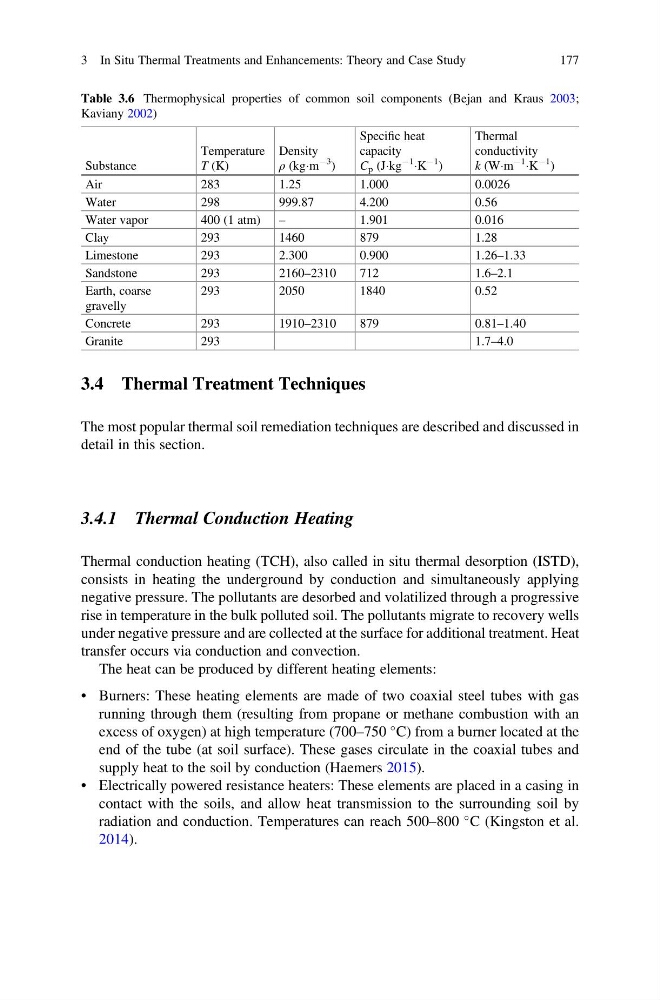
Table 3.6 Thermophysical properties of common soil components (Bejan and Kraus 2003;
Kaviany 2002)
Substance
Temperature
T (K)
Density
ρ (kgÁm
À3
)
Specific heat
capacity
C p (JÁkg
À1
ÁK
À1
)
Thermal
conductivity
k (WÁm
À1
ÁK
À1
)
Air
283
1.25
1.000
0.0026
Water
298
999.87
4.200
0.56
Water vapor
400 (1 atm) –
1.901
0.016
Clay
293
1460
879
1.28
Limestone
293
2.300
0.900
1.26–1.33
Sandstone
293
2160–2310
712
1.6–2.1
Earth, coarse
gravelly
293
2050
1840
0.52
Concrete
293
1910–2310
879
0.81–1.40
Granite
293
1.7–4.0
3 In Situ Thermal Treatments and Enhancements: Theory and Case Study
177
The most popular thermal soil remediation techniques are described and discussed in
detail in this section.
3.4.1 Thermal Conduction Heating
Thermal conduction heating (TCH), also called in situ thermal desorption (ISTD),
consists in heating the underground by conduction and simultaneously applying
negative pressure. The pollutants are desorbed and volatilized through a progressive
rise in temperature in the bulk polluted soil. The pollutants migrate to recovery wells
under negative pressure and are collected at the surface for additional treatment. Heat
transfer occurs via conduction and convection.
The heat can be produced by different heating elements:
• Burners: These heating elements are made of two coaxial steel tubes with gas
running through them (resulting from propane or methane combustion with an
excess of oxygen) at high temperature (700–750
C) from a burner located at the
end of the tube (at soil surface). These gases circulate in the coaxial tubes and
supply heat to the soil by conduction (Haemers 2015).
• Electrically powered resistance heaters: These elements are placed in a casing in
contact with the soils, and allow heat transmission to the surrounding soil by
radiation and conduction. Temperatures can reach 500–800
C (Kingston et al.
2014).
Table 3.6 Thermophysical properties of common soil components (Bejan and Kraus 2003;
Kaviany 2002)
Substance
Temperature
T (K)
Density
ρ (kgÁm
À3
)
Specific heat
capacity
C p (JÁkg
À1
ÁK
À1
)
Thermal
conductivity
k (WÁm
À1
ÁK
À1
)
Air
283
1.25
1.000
0.0026
Water
298
999.87
4.200
0.56
Water vapor
400 (1 atm) –
1.901
0.016
Clay
293
1460
879
1.28
Limestone
293
2.300
0.900
1.26–1.33
Sandstone
293
2160–2310
712
1.6–2.1
Earth, coarse
gravelly
293
2050
1840
0.52
Concrete
293
1910–2310
879
0.81–1.40
Granite
293
1.7–4.0
3 In Situ Thermal Treatments and Enhancements: Theory and Case Study
177