

swelling of chlorinated solvents is limited (less than 10% swelling of the DNAPL)
(Heron et al. 2005).
The main reason is that density is not greatly influenced by increasing temperatures. Mobilization of the DNAPL was mainly studied by adding swelling solvents
(alcohols for example) to increase DNAPL volume, thereby reducing its density
(Simpkin et al. 1999).
3.2.6 Summary
The main changes in the physicochemical properties of the various pollutants with
temperature variations are reported in Table 3.5.
3.3 Heat Transfer in Porous Media
3.3.1 Main Heat Transfer Mechanisms
Heat transfer in porous media can occur via convection of fluids, conduction in
solids and liquids, and radiation (Daïan 2013; Dong et al. 2015; Farouki 1981;
Kaviany 1999). The total heat flux is then the sum of the conduction (J k ), convection
(J u ), and radiation (J r ) fluxes.
0.0
FLU
y = 42.205 - 105.33x R
2 = 0.99046
–0.5
–1.0
–1.5
In(k
des
)
–2.0
–2.5
–3.0
–3.5
0.405
0.410
0.415
(RT )
–1
0.420
0.425
0.430
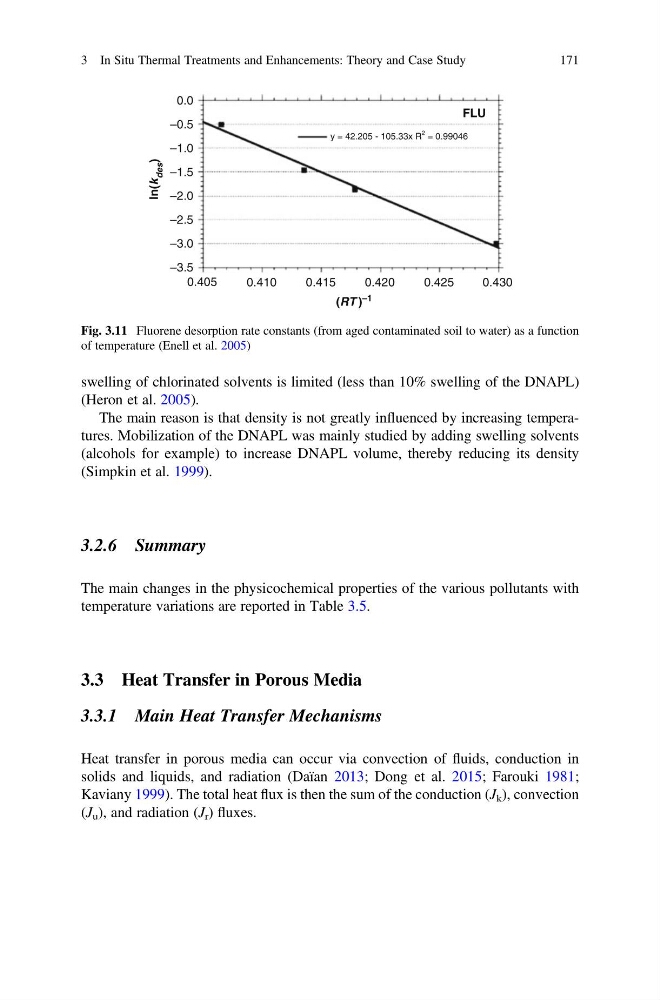
Fig. 3.11 Fluorene desorption rate constants (from aged contaminated soil to water) as a function
of temperature (Enell et al. 2005)
3 In Situ Thermal Treatments and Enhancements: Theory and Case Study
171
(Heron et al. 2005).
The main reason is that density is not greatly influenced by increasing temperatures. Mobilization of the DNAPL was mainly studied by adding swelling solvents
(alcohols for example) to increase DNAPL volume, thereby reducing its density
(Simpkin et al. 1999).
3.2.6 Summary
The main changes in the physicochemical properties of the various pollutants with
temperature variations are reported in Table 3.5.
3.3 Heat Transfer in Porous Media
3.3.1 Main Heat Transfer Mechanisms
Heat transfer in porous media can occur via convection of fluids, conduction in
solids and liquids, and radiation (Daïan 2013; Dong et al. 2015; Farouki 1981;
Kaviany 1999). The total heat flux is then the sum of the conduction (J k ), convection
(J u ), and radiation (J r ) fluxes.
0.0
FLU
y = 42.205 - 105.33x R
2 = 0.99046
–0.5
–1.0
–1.5
In(k
des
)
–2.0
–2.5
–3.0
–3.5
0.405
0.410
0.415
(RT )
–1
0.420
0.425
0.430
Fig. 3.11 Fluorene desorption rate constants (from aged contaminated soil to water) as a function
of temperature (Enell et al. 2005)
3 In Situ Thermal Treatments and Enhancements: Theory and Case Study
171