

• Injection into sewers prior to reaching the municipal wastewater treatment plant:
– Risk of inhibiting the municipal biological wastewater treatment processes due
to presence of low quantities of hydrocarbons
– Increased volume of water to treat (1.5 times the current capacity of the
municipal wastewater treatment plant)
– Unable to isolate the sludge used for agricultural purposes, in case of problems
with hydrocarbons
– Affects costs of effluent discharge
• Injection into the river:
– Risks of significant disturbance to the watercourse
– Substantial river vulnerability affecting fish quality, and the physical and
chemical quality of the river
– Disturbance to waterborne fauna (in case of effluent discharge during
egg-laying season)
– Low reactivity in the event of problems with water effluent treatment (the
necessary buffer tanks would have been too large to be considered for
installation)
• Injection into the groundwater via the gravel quarry (reinjection upstream of the
plant):
– No constraints due to low water table periods (water table reinjection)
– Onsite monitoring of effluent quality (visual and chemical analyses)
– Possibility of rapid intervention in the event of accidental contamination
(using floating boom and barriers)
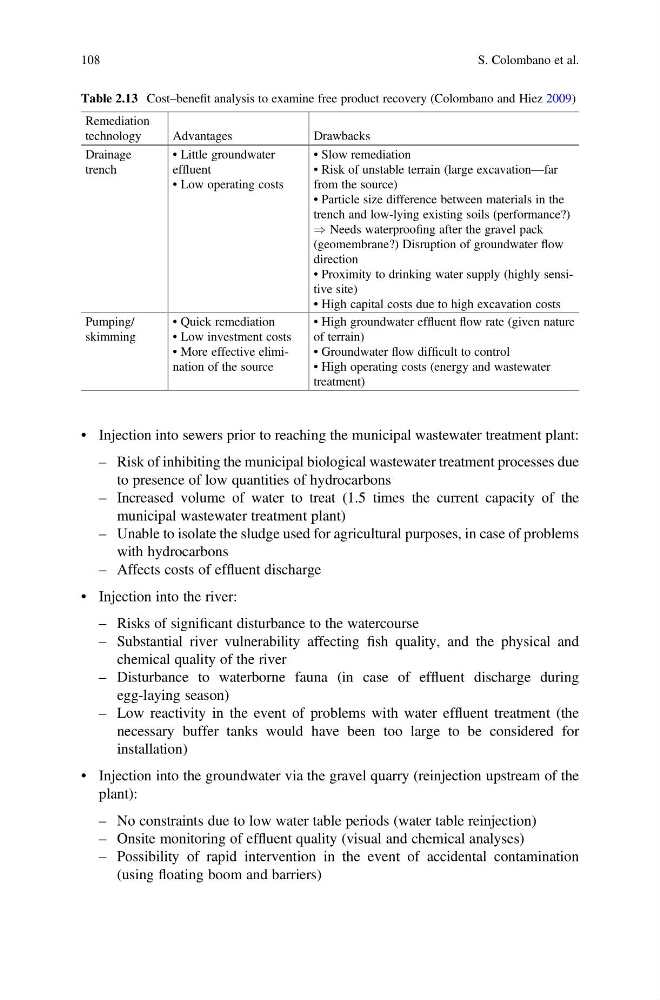
Table 2.13 Cost–benefit analysis to examine free product recovery (Colombano and Hiez 2009)
Remediation
technology
Advantages
Drawbacks
Drainage
trench
• Little groundwater
effluent
• Low operating costs
• Slow remediation
• Risk of unstable terrain (large excavation—far
from the source)
• Particle size difference between materials in the
trench and low-lying existing soils (performance?)
) Needs waterproofing after the gravel pack
(geomembrane?) Disruption of groundwater flow
direction
• Proximity to drinking water supply (highly sensitive site)
• High capital costs due to high excavation costs
Pumping/
skimming
• Quick remediation
• Low investment costs
• More effective elimination of the source
• High groundwater effluent flow rate (given nature
of terrain)
• Groundwater flow difficult to control
• High operating costs (energy and wastewater
treatment)
108
S. Colombano et al.
– Risk of inhibiting the municipal biological wastewater treatment processes due
to presence of low quantities of hydrocarbons
– Increased volume of water to treat (1.5 times the current capacity of the
municipal wastewater treatment plant)
– Unable to isolate the sludge used for agricultural purposes, in case of problems
with hydrocarbons
– Affects costs of effluent discharge
• Injection into the river:
– Risks of significant disturbance to the watercourse
– Substantial river vulnerability affecting fish quality, and the physical and
chemical quality of the river
– Disturbance to waterborne fauna (in case of effluent discharge during
egg-laying season)
– Low reactivity in the event of problems with water effluent treatment (the
necessary buffer tanks would have been too large to be considered for
installation)
• Injection into the groundwater via the gravel quarry (reinjection upstream of the
plant):
– No constraints due to low water table periods (water table reinjection)
– Onsite monitoring of effluent quality (visual and chemical analyses)
– Possibility of rapid intervention in the event of accidental contamination
(using floating boom and barriers)
Table 2.13 Cost–benefit analysis to examine free product recovery (Colombano and Hiez 2009)
Remediation
technology
Advantages
Drawbacks
Drainage
trench
• Little groundwater
effluent
• Low operating costs
• Slow remediation
• Risk of unstable terrain (large excavation—far
from the source)
• Particle size difference between materials in the
trench and low-lying existing soils (performance?)
) Needs waterproofing after the gravel pack
(geomembrane?) Disruption of groundwater flow
direction
• Proximity to drinking water supply (highly sensitive site)
• High capital costs due to high excavation costs
Pumping/
skimming
• Quick remediation
• Low investment costs
• More effective elimination of the source
• High groundwater effluent flow rate (given nature
of terrain)
• Groundwater flow difficult to control
• High operating costs (energy and wastewater
treatment)
108
S. Colombano et al.