

10.3.2 Traditional Knowledge About Forest Use and Forest
Agriculture
10.3.2.1 Forest Use
As identified in Sect. 10.3.1, the forest plays a very important role in the life of local
communities. However, based on interviews, we identify that forests are not homogeneous, but have different characteristics and cater for different human needs and
uses (Table 10.3). Overall, forests can be roughly divided into virgin forest (afan
adam) and different types of secondary forest (Table 10.3). Virgin forest has never
experienced human activity in the collective memory, and there is no history of
human disturbance (although it is associated with some uses). Different types of
secondary forest include old secondary forest (Ilion nyok afan/mbiam), intermediate
secondary forest (nnom ekorogo), pre-secondary forest fallow (ekorogo) and young
fallow (npwaman ekorogo) (Table 10.3).
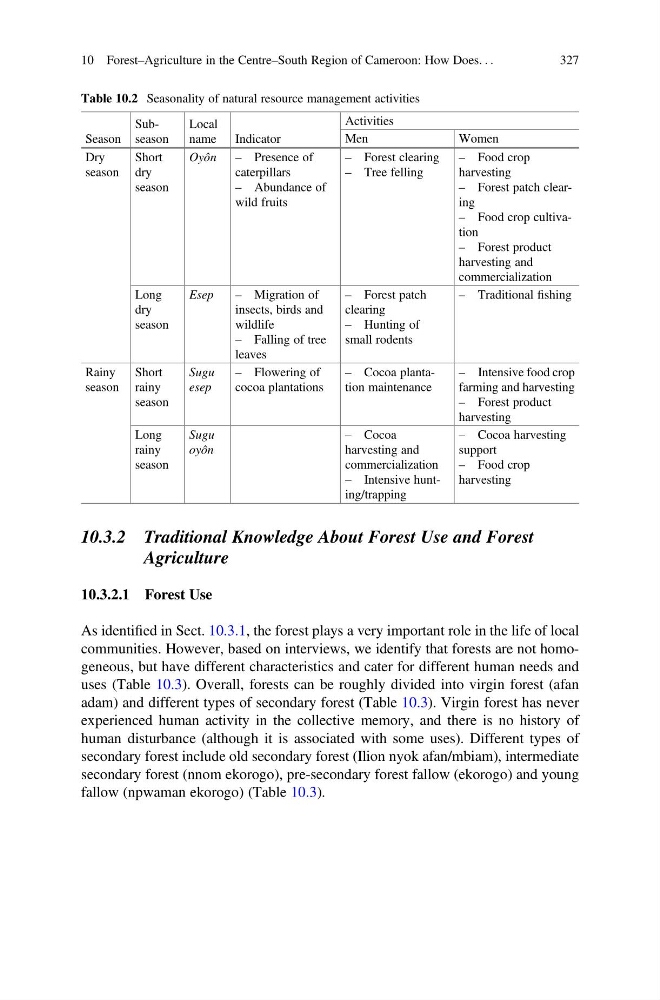
Table 10.2 Seasonality of natural resource management activities
Season
Subseason
Local
name Indicator
Activities
Men
Women
Dry
season
Short
dry
season
Oyôn – Presence of
caterpillars
– Abundance of
wild fruits
– Forest clearing
– Tree felling
– Food crop
harvesting
– Forest patch clearing
– Food crop cultivation
– Forest product
harvesting and
commercialization
Long
dry
season
Esep
– Migration of
insects, birds and
wildlife
– Falling of tree
leaves
– Forest patch
clearing
– Hunting of
small rodents
– Traditional fishing
Rainy
season
Short
rainy
season
Sugu
esep
– Flowering of
cocoa plantations
– Cocoa plantation maintenance
– Intensive food crop
farming and harvesting
– Forest product
harvesting
Long
rainy
season
Sugu
oyôn
– Cocoa
harvesting and
commercialization
– Intensive hunting/trapping
– Cocoa harvesting
support
– Food crop
harvesting
10 Forest–Agriculture in the Centre–South Region of Cameroon: How Does. . .
327
Agriculture
10.3.2.1 Forest Use
As identified in Sect. 10.3.1, the forest plays a very important role in the life of local
communities. However, based on interviews, we identify that forests are not homogeneous, but have different characteristics and cater for different human needs and
uses (Table 10.3). Overall, forests can be roughly divided into virgin forest (afan
adam) and different types of secondary forest (Table 10.3). Virgin forest has never
experienced human activity in the collective memory, and there is no history of
human disturbance (although it is associated with some uses). Different types of
secondary forest include old secondary forest (Ilion nyok afan/mbiam), intermediate
secondary forest (nnom ekorogo), pre-secondary forest fallow (ekorogo) and young
fallow (npwaman ekorogo) (Table 10.3).
Table 10.2 Seasonality of natural resource management activities
Season
Subseason
Local
name Indicator
Activities
Men
Women
Dry
season
Short
dry
season
Oyôn – Presence of
caterpillars
– Abundance of
wild fruits
– Forest clearing
– Tree felling
– Food crop
harvesting
– Forest patch clearing
– Food crop cultivation
– Forest product
harvesting and
commercialization
Long
dry
season
Esep
– Migration of
insects, birds and
wildlife
– Falling of tree
leaves
– Forest patch
clearing
– Hunting of
small rodents
– Traditional fishing
Rainy
season
Short
rainy
season
Sugu
esep
– Flowering of
cocoa plantations
– Cocoa plantation maintenance
– Intensive food crop
farming and harvesting
– Forest product
harvesting
Long
rainy
season
Sugu
oyôn
– Cocoa
harvesting and
commercialization
– Intensive hunting/trapping
– Cocoa harvesting
support
– Food crop
harvesting
10 Forest–Agriculture in the Centre–South Region of Cameroon: How Does. . .
327